Popular Posts

Friday, July 3, 2020

IMSA Restart July 3-4 at Daytona

The event, dubbed “240 at Daytona”, is shorter than previous rounds, and is over just two days. Free practice is held on Friday (3 July), with staggered practices, the qualifying and race held on Saturday. The Porsche GT Team faces a major challenge in finding an optimal setup for the two 911 RSR within a short timeframe and with reduced personnel. Opened in 1959, the Daytona International Raceway in Florida differs from other circuits, most notably by its banked turns: The angle of the banking in the oval passage of the 5.73-kilometre racetrack is 31 degrees. This requires a special vehicle setup.

The Porsche GT Team drivers

Works drivers Earl Bamber (New Zealand) and Laurens Vanthoor (Belgium) share driving duties in the No. 912 Porsche 911 RSR. At the opening round of the season at Daytona, the reigning GTLM-class champions secured second place with Frenchman Mathieu Jaminet. Briton Nick Tandy and Frédéric Makowiecki from France share the cockpit of the No. 911 sister car. Supported by Matt Campbell (Australia) at the 24-hour race in late January, they finished on third place. Porsche currently ranks second overall. In order to step closer to defending the title, the successful factory squad has now set its sights on claiming the first victory of the season.

Customer team

The seasoned customer team Wright Motorsports fields a Porsche 911 GT3 R in the GTD class. At the wheel of the No. 16 vehicle, the American works driver Patrick Long joins forces with his compatriot Ryan Hardwick. At the season-opening round, the squad from the U.S. state of Ohio yielded fourth place in the GTD category.

Comments prior to the race

Pascal Zurlinden (Director Factory Motorsport): “First of all, I’d like to thank the IMSA management for making it possible to resume racing at the beginning of July. Huge collaboration with local authorities as well as manufacturers and teams was needed to get the green light for these upcoming events. We fully support the protocols to protect the health of everyone involved. We’re tackling the next races with the clear goal to defend our GTLM titles this season. With this in mind, we’re hoping that, when we return to Florida after our successful start at Daytona in January, we’ll bring home our first victory in the USA with the new 911 RSR.”

Steffen Höllwarth (Head of Operations IMSA Championship): “The excitement of returning to Daytona is huge. At the first outing with the two new Porsche 911 RSR we achieved two podium results. Now we aim to build on this. Although we’re returning to the same venue, the conditions will be completely different compared to January. The race is a sprint. We have to be prepared for very high temperatures in Florida in July, but short and heavy downpours can also happen at this time of the year. The reduced number of personnel and the shortened race weekend to two days play a major role. We have to prepare ourselves as best we can by the start of the first practice session. That means, we have to do our homework meticulously in the days leading up to the event.”


Live streaming of the race

Round two of the IMSA WeatherTech SportsCar Championship season at Daytona takes off on Saturday, 4 July, at 6:10 p.m. local time.  The race over 2:40 hours can be viewed outside the USA and Canada on www.imsa.com.

The schedule (local time)

Friday, 3 July
6:15 - 7:15 p.m. – Free practice

Saturday, 4 July
10:15 - 11:15 a.m. – Free practice
1:55 - 2:10 p.m. – Qualifying GTD
2:20 - 2:35 p.m. – Qualifying GTLM
2:45 - 3:00 p.m. – Qualifying DPi
6:10 - 8:50 p.m. – Race

911 RSR, IMSA, 2020, Porsche AG
Porsche 911 RSR

The Porsche 911 RSR

The new Porsche 911 RSR (2019 model year) celebrated its debut in the IMSA SportsCar Championship at the 24 Hours of Daytona. The vehicle from Weissach is based on the high-performance 911 GT3 RS road-going sports car. Compared to its extremely successful predecessor model, the car received improvements, most notably to areas such as driveability, efficiency, ergonomics and serviceability. About 95 percent of all components are new. The 911 RSR is powered by a 4.2-litre, six-cylinder boxer engine.

This is the IMSA SportsCar Championship

The IMSA SportsCar Championship was founded in the USA and Canada in 2013 after the merger of the American Le Mans Series and the Grand-Am Series. A year later the new sports car race series, which is organised by the International Motor Sports Association (IMSA), was contested for the first time. Sports prototypes and sports cars start in four different classes: GTLM (GT Le Mans), GTD (GT Daytona), Dpi (Daytona Prototype international) and LMP2 (Le Mans Prototype 2). The new Porsche 911 RSR is fielded in the GTLM class, and the Porsche 911 GT3 R contests the GTD class. The Porsche GT Team tackles the 2020 season in North America as the title defenders in the manufacturers’, drivers’ and team classifications.

Thursday, July 2, 2020

Lincoln Continental Production to End in December, 2020


2017 Continental


2020 Continental

Ford Motor Co. confirmed on Wednesday that it plans to end production of the luxury Lincoln Continental sedan in the U.S. at the end of 2020. A 2021 model year vehicle will be offered to the China market before the sedan says goodbye.

"It will end for both China and the U.S. at the end of the year," Angie Kozleski, Lincoln spokeswoman, told the Free Press. "Production is done at the end of this year. The name will go back into the vault. It has a long and rich history. But production for this vehicle will be ending at the end of this year." 

The 2021 Lincoln Continental, which is built at the Flat Rock Assembly Plant, will be available for purchase in China only.

The Ford Mustang is made at Flat Rock, too.

The company issued a statement:

"Lincoln is investing in growth segments and the brand will feature a full portfolio of SUVs, including a fully electric vehicle in the future. Lincoln will continue to keep its newest SUVs fresh and we will have more news to share later this year; however, as the full-size premium sedan segment continues to decline in the U.S., we plan to end production of the Lincoln Continental at the end of this year."

The large premium sedan segment has been declining over the past five years, Kozleski said. "In China, while it's declining, it's not declining at the same rate."

Ford, which is scheduled to release second-quarter sales data on Thursday, said consumers in the U.S. and China are responding to the Lincoln SUVs — the Corsair, the Aviator and the Navigator.

"We look forward to building our strong portfolio of SUVs," Kozleski said.

The Continental sedan reflects a time in history. It is often linked to an era when smoking was sexy and executives sipped cocktails during business lunches. The 1961 Lincoln Continental introduced America to a new design that transformed a failing luxury brand into a hot sedan carrying world leaders, industrial barons and the Hollywood elite.  

President John F. Kennedy rode through Dallas in a dark blue Continental convertible. It is the association with American history and pop culture that inspires admiration from consumers in China. 

But U.S. consumer tastes have changed to favor larger silhouettes.

A Pothole with Covid-19! Only in West Virginia!

From Ed!


CHARLESTON, W.Va. — Gov. Jim Justice on Wednesday defended his proposal to spend federal coronavirus relief funding after U.S. Sen. Joe Manchin, D-W.Va., criticized the proposal for dedicated highways spending. 

There is $100 million for “COVID-19 related highway projects.” Justice said Friday state officials have classified highway work as coronavirus related.

Manchin questioned Justice’s priorities for the funding.

“I don’t know of a pothole that has had the COVID virus. I haven’t found one yet,” the senator told host Neil Cavuto.  

“These roads didn’t get in this shape on my watch. These roads got in this kind of shape simply because we went decades and neglected our roads and pulled money away from the maintenance of our roads in every way,” he said.“Our expert opinions and our legal opinions said absolutely these roads qualify.”


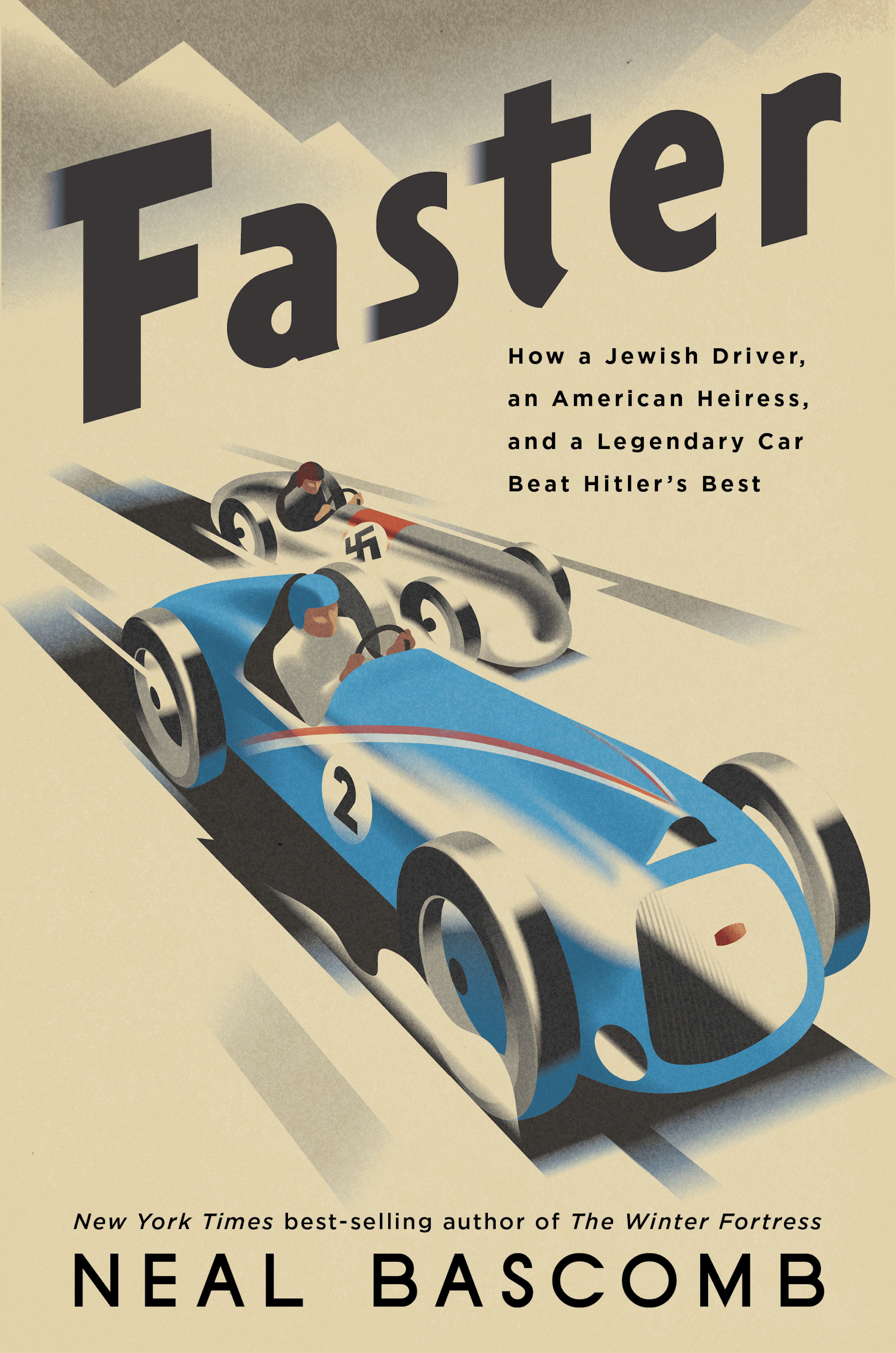
A Brief Review of Neal Bascomb's Faster: How a Jewish Driver, an American Heiress and a Legendary Car Beat Hitler's Best


Neal Bascomb, Faster: How a Jewish Driver, and American Heiress, and a Legendary Car Beat Hitler’s Best.New York: Houghton Mifflin Harcourt, 2020.


The power of the narrative line. An enduring story focusing on motorsport history that features Many of the people involved without neglecting the car. An historical era that we never tire reading about. All of that wrapped up in a most entertaining read. In a few words, that is Neal Bascomb’s Faster: How a Jewish Driver, an American Heiress, and a Legendary Car Best Hitler’s Best.


At the heart of this story is French driver and later New York restaurateur René Dreyfus. Dreyfus was always fast, but rarely won during the 1930s because the cars he drove were not as good as the best in competition. As the book unfolds, Dreyfus is paired in this chronologically told story with German driver Rudi Caracciola, the “Rainmaster.” Caracciola was perhaps the most famous driver during the golden Grand Prix era of the 1930s, eventually becoming the lead pilot of the Mercedes-Benz Silver Arrows. Both Dreyfus and Caracciola’s stories have been told before, but not in the framework of such skilled prose and historical context. The climax of this rivalry takes place at the French town of Pau, where in 1938 the first Grand Prix race of 1938 takes place and an epic battle between the two protagonists is played out. It proves to be a clash between two men, organizations, automobiles, and nations.


The heiress who made Dreyfus’ bid at Pau possible was Lucy Jeanne O’Reilly Schell, American born but French adopted. It is Lucy Schell, a Monte Carlo rally driver with deep pockets, who sees to it that a once ailing car company, Delahaye, develops the 145, a model that is competitive with the Mercedes Silver Arrows. Schell put Dreyfus in the driver’s seat, and one remarkable win at Pau is the result. 


Along the way to Pau many characters are woven into this auto racing tale – Manfred von Brauchitsch, Jean Bugatti, Charly Caracciola, Louis Chiron, Alfred Neubauer, Tazio Nuvolari, Berd Rosemeyer, Hans Stuck, and many more. Indeed, the book brings in a cast of hundreds, including Adolf Hitler who lurks in the background.


The main elements of the story have been told elsewhere by Dreyfus, Beverly Rae Kimes, Rudi Caracciola, and others. However, Bascomb, starting little knowledge of automotive history and racing technologies – has pulled it all together in a masterful way. This work lifts the human spirit, while exploring human foibles and flaws. It is simply a great read.


Wednesday, July 1, 2020

The 911 Targa 4S Heritage Design Edition


Icons remain.

Beliefs that made history. An attitude to life that shaped generations. 

Porsche - 911 Targa 4S Heritage Design EditionPorsche - 911 Targa 4S Heritage Design EditionPorsche - 911 Targa 4S Heritage Design Edition


Wouldn’t it be great if we could repeat all this? And revive the spirit of the times? The good news: we can. Because what stirred people's hearts and made them rejoice is returning. In the form of the Porsche Heritage Design models. Inspired by the spirit of the 50s, 60s, 70s and 80s, they’re bringing the lifestyle of bygone times back to the road.

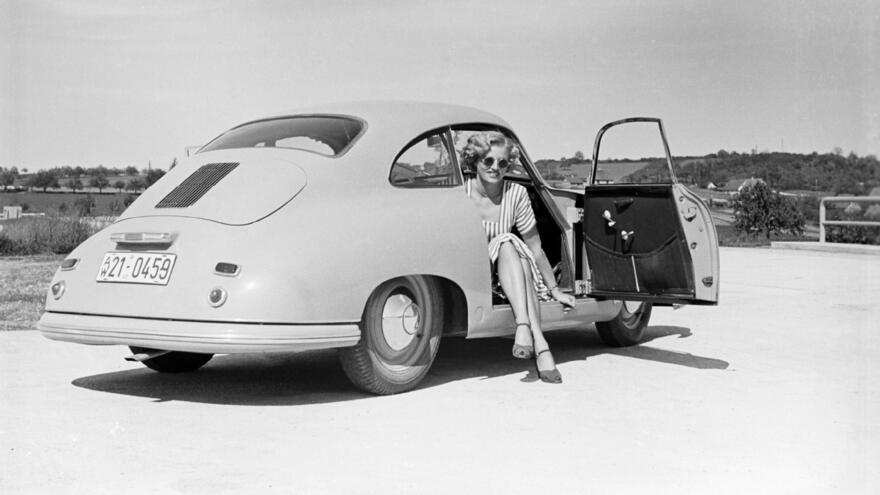
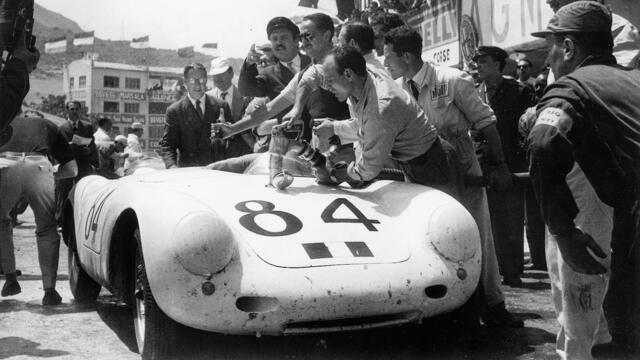
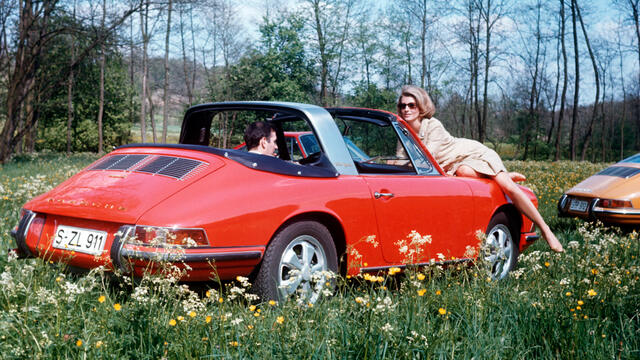
It all began in the 1950s – the era in which "made in Germany" sports car emotion asserted itself on the world's roads and race tracks. The starting flag came down with the legendary Porsche 356, which along with the revolutionary 911 Targa was the inspiration for our first model – the 911 Targa 4S Heritage Design Edition. Equipped with state-of-the-art sports car technology and historic design features, this Edition revives what was once considered cool.

In short: thanks to its distinctive design highlights, the 911 Targa 4S Heritage Design Editionis an icon that is as fascinating today as its role models were back then.

Sunday, June 28, 2020

Sleeping Around: Custom Cars and Their Custom Small Trailers

It is all the rage these days -- small trailers and campers to avoid risks from Covid. But the photos below are not typical of the cars and trailers that most Americans are putting on the road. What follows are photos of rolling art, expressions of individuals who are not content to be homogenized by mass production!

1947 Buick


1949 Studebaker Pickup


1951 Hudson Commodore


1955Ford Wagon


1952 Buick


1956 Ford


1959 Chevrolet El Camino


1959 Pink Cadillac