Popular Posts

Sunday, May 9, 2021

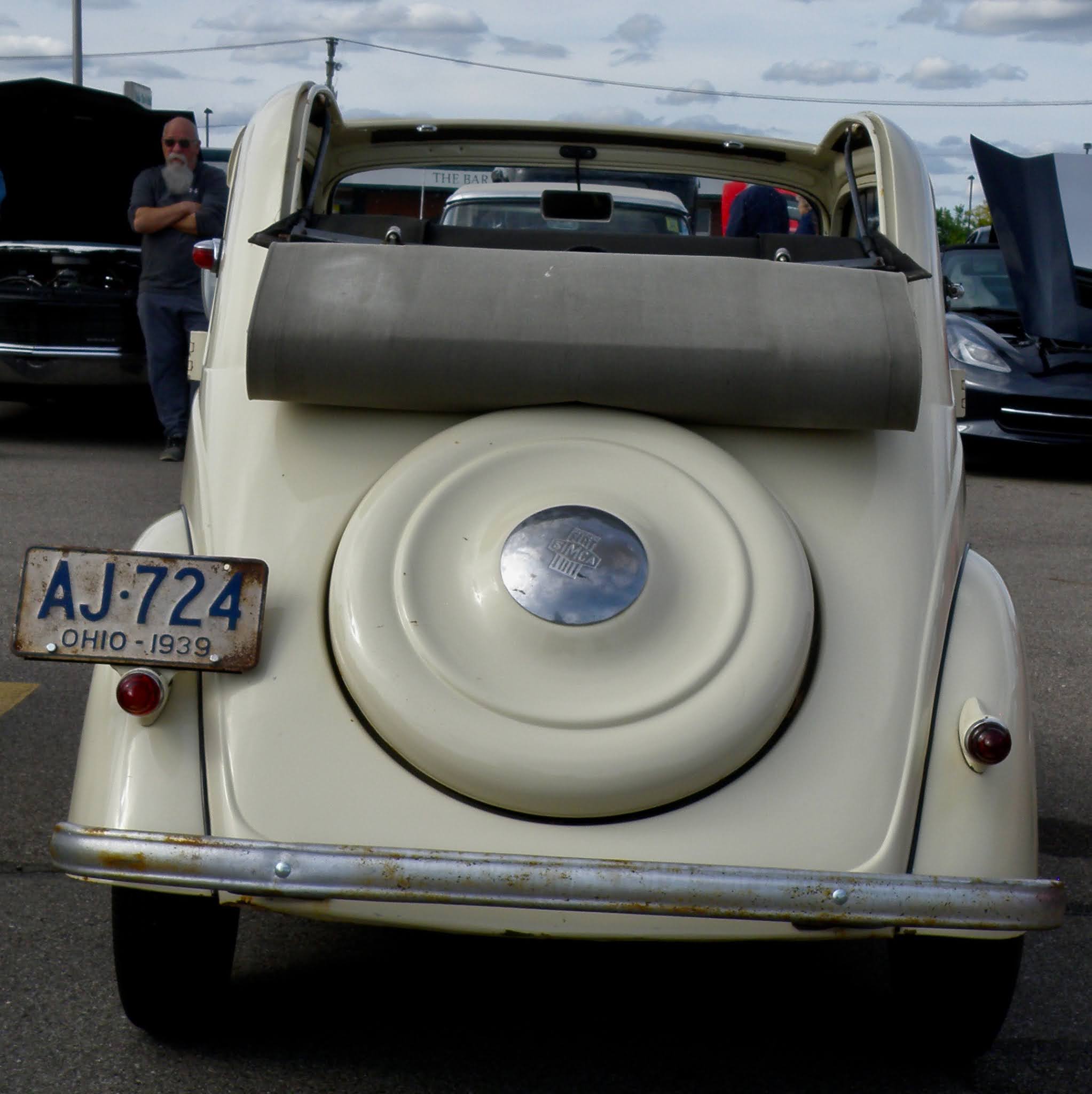
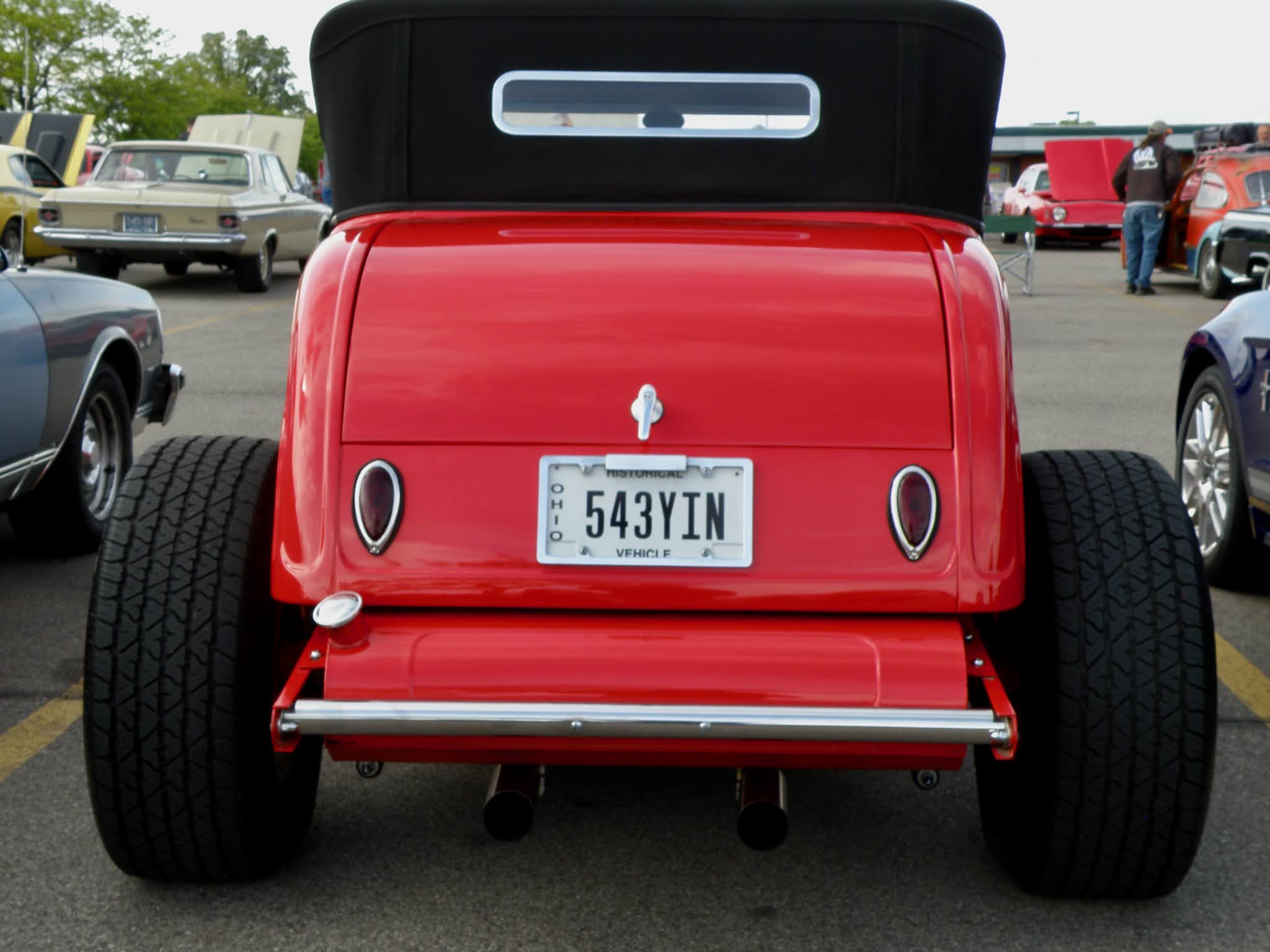
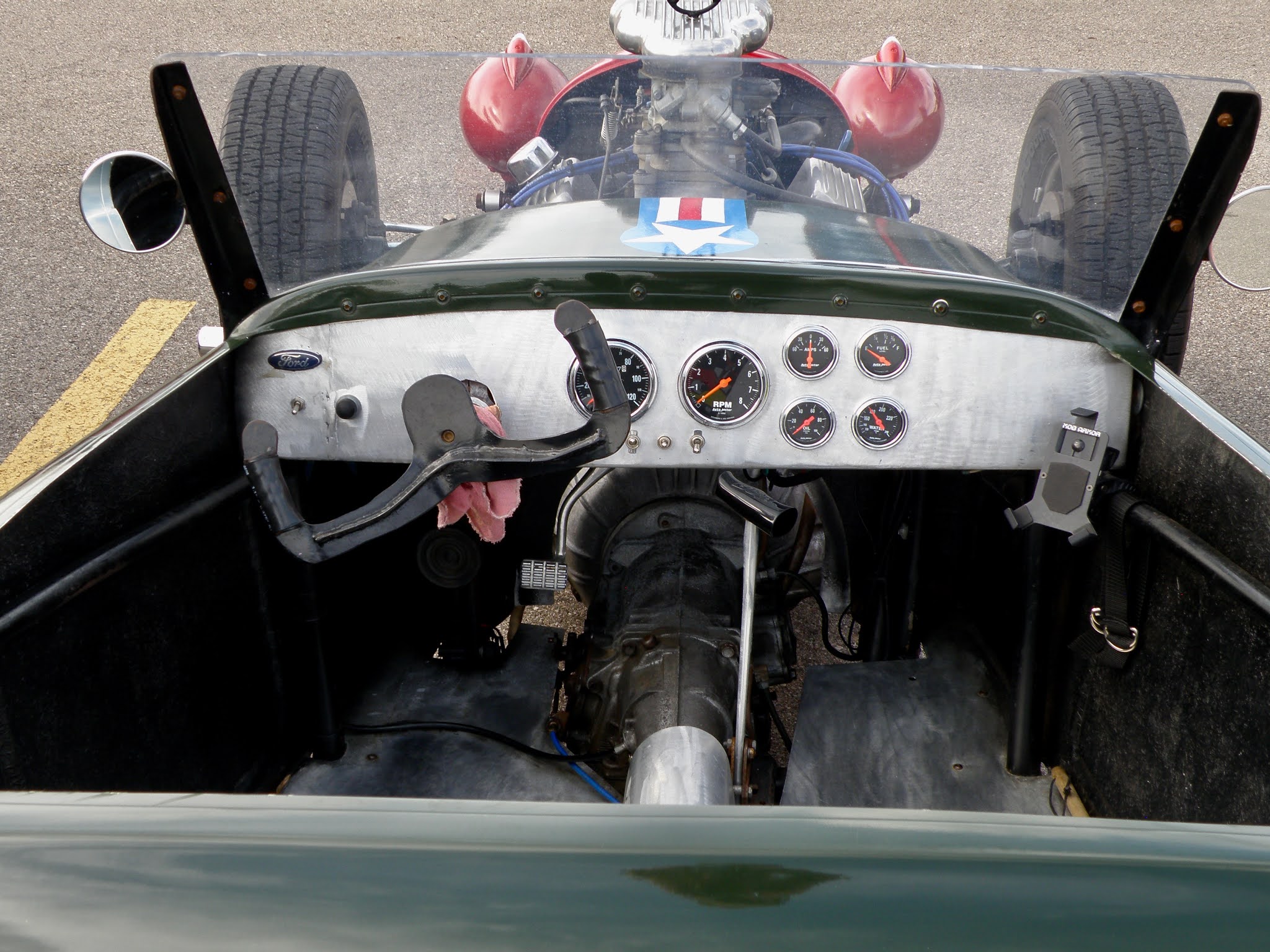
Kettering, OH, Cruise-In, May 8, 2021: A 1939 Simca and Three Hot Rods

 A nice evening before rain and cold hit us on Mother's Day. The Simca is special -- you won't find many in the U.S. What did come over here were modified into dragsters.  This one, an open top car, is a very original and nice car. It may be underpowered, but it is a time machine that will take you back to the era right before WWII.

The hot rods were interesting to me.  The red one is a true class and wonderful.  The other two are great examples of rodding at its best, with owners doing things their way, right or wrong.


Friday, May 7, 2021

The Mercedes-Benz Radiator Emblem

An application was filed on 18 February 1925 with the Patent Office for registration as a trademark of the Mercedes star in a laurel wreath, a combination of the trademarks of Daimler-Motoren-Gesellschaft and Benz & Cie. (Photo signature in the Mercedes-Benz Classic archive: 3524)


The radiator emblem

An eye-catcher: Positioned proudly for all to see as a brand emblem – or a small sculpture – at the very front of the vehicle – the figure atop the radiator. This emblem is both a distinguishing feature and an ornament.

Spotlight on: The first cars did not need a radiator emblem. That was only logical because, at that time, they did not have modern-style radiators with a closed water circuit. Those systems were introduced as engine power increased at the transition from the 19th to the 20th century. The outstanding protagonist of this development was the Mercedes 35 hp, which, in 1901, was the first car to sport an efficient honeycomb radiator. The radiator presented the face of the Mercedes and, from 1909, became the stage for the three-pointed Mercedes star, which initially adorned the radiator as a raised badge.

A powerful symbol: It was the sons of motoring pioneer Gottlieb Daimler, who died in 1900, who came up with the idea for the Mercedes star. The emblem with its three rays symbolised the vision of Gottlieb Daimler, who envisaged Daimler engines being used in land vehicles, in ships and in aviation. On 24 June 1909, Daimler-Motoren-Gesellschaft (DMG) applied for a design patent for the three-pointed star. It was entered into the trademark register on 9 February 1911.

Perfect positioning: An application for registration of the three-pointed star as a radiator emblem was filed on 5 November 1921 and it was registered as a trademark on 2 August 1923. At the same time, it decorated the cooling water screw cap, which upgraded the cap to a pedestal. In this way, the radiator mascot combined aesthetics with practical purpose. The star was even available with an integrated cooling water thermometer. Benz & Cie. did not yet use a radiator mascot but continued to apply badges and lettering on the upper radiator surround.

Prestige: Many car manufacturers used the radiator mascot as a prominent identifying emblem. When Maybach also launched its premium cars on the market in the 1920s, the company chose the double‑M for “Maybach-Motorenbau” as a trademark. It was used as a radiator emblem as well.

Creativity: At this time, the radiator was not hidden under the bonnet and was designed and decorated accordingly. In the 1920s, radiator fittings became works of art. From that time on, figures of cross-eyed fauns, unclothed ladies and animals made of silver took up this position. One such radiator mascot is the exhibit among the “33 Extras” at the Mercedes-Benz Museum: a lady is seen in a perfectly balanced, flowing posture holding a round object. It may be an apple or a ball – it is not easy to tell exactly what it is. The most unusual radiator figures were designed in the 1920s by the French artist René Jules Lalique – and they were made of glass.

Personal choice: In rare cases, customers had the Mercedes star replaced with their own emblems. The Mercedes-Benz 770 “Grand Mercedes” Cabriolet F (W 07), built in 1932 for the exiled Kaiser Wilhelm II, sported the Hohenzollern coat of arms on the radiator grille. That particular car can be seen in the Mercedes-Benz Museum in Collection Room 4: Gallery of Celebrities.

Change places: Aerodynamically enhanced bodies became increasingly popular after the Second World War. The front of the cars was designed accordingly – and the radiator as a functional item was moved to a position under the bonnet. The grille remained at the front to allow for the incoming cooling air. On Mercedes-Benz vehicles, this radiator grille still showed the same figure: the Mercedes star. In the 1990s, when the integrated radiator was introduced, the star moved from the chrome surround a little way to the rear onto the bonnet.

Freedom of movement: By this time, the star had long since been integrated into the brand’s safety philosophy. It was mounted on a universal joint to protect pedestrians in the event of a collision – and had been that way since the early 1950s. It was already a sought-after collector’s item and was often stolen. That made it the most frequently required Mercedes-Benz spare part.

Alternative: Customer tastes changed over the years. In the 204 model series C-Class, Mercedes-Benz offered a choice of two vehicle fronts for the first time – either with a large central star in the radiator grille or with the classic, free-standing star on the bonnet. In one respect, however, it did not change: it remained one of the best known trademarks in the world.

A different dimension: Anyone who wants to get a close-up look at a Mercedes star with a diameter of five metres is welcome to come to the Mercedes-Benz Museum. Until 2025, the Mercedes star from the Stuttgart railway station tower will be on show in front of the museum building. After that construction has been renovated and modernised, the two-tonne sign will be returned there and will, once again, rotate, illuminated at night, as a landmark above the city.

Thursday, May 6, 2021

The Mercedes-Benz W 124 Series -- a Thirty Year History


124 model series Mercedes-Benz Cabriolets are sought-after modern classics. They perfectly combine the passion for elegant, open-top cruising with the Stuttgart-based brand’s high technical standard in the luxury mid-range series. The vehicles premiered 30 years ago at the International Motor Show (IAA) in Frankfurt/Main between 12 and 22 September 1991 – seven years after the presentation of 124 model series Saloons.

With this convertible four-seater, Mercedes-Benz successfully bridged a 20-year gap to a sporty and luxurious tradition, as legendary W 111/W 112 Cabriolets were produced until 1971. 124 model series Cabriolets, which were renamed Mercedes-Benz E-Class Cabriolet in 1993 as part of the change in nomenclature, were succeeded by the following convertible four-seaters with a soft top: CLK Cabriolets A 208 (1998 to 2003) and A 209 (2003 to 2010) as well as E-Class Cabriolets A 207 (2010 to 2017) and A 238 (since 2017). In 2015, four-seater Cabriolets also celebrated their premiere in the Mercedes-Benz S-Class (A 217) and in the Mercedes-Benz C-Class (A 205) in 2016.

Flagship project for the luxury mid-range series

The Cabriolet of what would later become the E-Class was based on the 124 model series Coupé. After the 500 E high-performance Saloon was introduced in autumn 1990, the convertible four-seater represented a further flagship project for the 124 model series. Engineers went to great lengths to make the project a reality: they modified around 1,000 parts or designed them from scratch to comply with stringent demands in terms of passive safety and driving comfort despite the omitted roof structure. Compared with the Coupés, Mercedes-Benz consequently produced numerous load-bearing Cabriolet parts from thicker or stronger sheet metal. Following complex, computer-based simulation calculations, areas subject to high levels of stress were also equipped with additional reinforcements by doubling up sheets or installing gussets and struts. Elements including the sheet metal thickness at A- and B-pillars as well as on the lateral frame side members were reinforced, the soft top compartment was installed as a cross brace and a die-cast member was screwed to the floor assembly tunnel and the instrument panel’s cross member. Diagonal struts at the front (between the front-axle bracket and the two outer frame side members) and rear (between the spare wheel well and the outer frame side members) boost torsional rigidity. In these areas engineers applied their experience from the development of the R 129 model series Mercedes-Benz SL.

Vibration dampers were additionally employed to optimise driving comfort. Developers had already used such elements in the W 100 model series Mercedes-Benz 600 Landaulet, which was introduced in 1965. A total of four of these spring-mass systems altogether weighing a total of 26 kilograms were installed in critical areas of the Cabriolet: on the front left suspension strut dome, in the roof frame and in the rear boot wells. A comparative test conducted by “auto motor und sport” specialist magazine (Issue 19/1994) consequently came to the following conclusion: “No other four-seater convertible is more rigid than the Mercedes.” US-American “Road & Track” magazine recognised the qualities of the E 320 Cabriolet as part of a comparative test in Issue 7/1994: “A good portion of the price difference is to be found in the structure of the car. It is noticeably quieter than the other two with the top down. Road surface irregularities are noted by the suspension and announced to the driver in a subtle way without upsetting anyone’s aplomb. On the highway, the E 320 is almost as quiet as its coupe and sedan siblings, thanks to remarkably solid body structure and the excellent fit of the convertible top.”

Linear roll-over bar

The levels of passive safety were also exemplary: in the event of a frontal, rear or side impact, the Cabriolets met the high standards of the Saloon, Estate and Coupé. A-pillars had been welded to internally installed profiled sheets to form a sturdy unit, also offering occupants adequate safety in the event of the vehicle rolling over. A newly developed and patented linearly operating roll bar was installed behind the rear seats featuring the shape of two individual head restraints at the top. The bar would extend upwards on a slightly elliptical trajectory within 0.3 seconds once the vehicle’s sensors detected an impending rollover. It could optionally also be manually extended and retracted to act as a head restraint for occupants in the rear.

The fully retractable soft top also met stringent demands in terms of driving comfort. The highly accurate design weighing 43 kilograms consisted of 27 linkage parts and 34 joints. When folded up it had a volume of a mere 80 litres. The soft top was insulated by a 20-millimetre-thick layer of fibre fleece between the outer liner and the inner soft-top headliner. The outer skin was also permanently connected to the front and central frames to prevent the soft top from puffing out, a characteristic otherwise fairly common in cabriolets. As a result, the 124 model series Cabriolet felt almost like the Coupé when it was moving along with the soft top closed. The large, heated rear window was made of safety glass. Thanks to a double frame it was flush with the outer skin to thus provide an undistorted view towards the rear. An electrohydraulic soft-top mechanism was available as convenient optional equipment, which became part of the standard equipment scope following the facelift in 1993.

Design-based partnership

The Mercedes-Benz Cabriolet was developed in cooperation with Porsche. Work on the convertible four-seater initially began at Karmann in Osnabrück in 1988. In January 1989 Porsche then took over the development order. The company had been working on a potential Cabriolet for the upcoming model series 202 C-Class up to this point. Porsche had previously already been awarded an order to carry out development activities relating to a potential Cabriolet variant for the 201 model series Mercedes-Benz compact class. The two Stuttgart-based automotive companies had already cooperated within the context of the development and production of the Mercedes-Benz 500 E high-performance vehicle. Work on the A 124 was carried out by Porsche at the Weissach site. The Cabriolet was tested for reliability and fatigue strength at Mercedes-Benz and Porsche as part of various endurance tests.

From solitary variant to type family

The 300 CE-24 Cabriolet with a 3-litre in-line six-cylinder engine generating 162 kW (220 hp) premiered in 1991. Its series production launched at the Mercedes-Benz plant in Sindelfingen in March 1992. The model initially remained an elegant and sporty solitary variant within the brand’s model range. The convertible four-seater had already undergone a facelift by the 1993 model year, which was externally identifiable by elements including the “integrated radiator” that was based on the 140 model series S-Class, front signal lamps with transparent lenses and bumper protection strips in the same colour as the vehicle’s detachable parts. Driver’s airbag and electrically adjustable outside mirrors on the left and right had by now become part of the standard equipment, while a central locking system and five-speed transmission had already formed part of the convertible four-seaters’ previous standard scope. From that point onwards the vehicle was known as Mercedes-Benz E-Class Cabriolet.

The model range now included a total of four variants with two four- and six-cylinder engines each. The E 200 Cabriolet (100 kW/136 hp) was initially and up until 1994 produced exclusively for export to Greece, Italy and Portugal. Hence, the actual entry-level model in 1993 was the E 220 Cabriolet (110 kW/150 hp). The 300 CE-24 Cabriolet was succeeded by the E 320 Cabriolet (162 kW/220 hp), and the E 36 AMG Cabriolet (200 kW/272 hp) became the new top-of-the-range model. A total of exactly 33,952 124 model series Cabriolets were produced until July 1997. In this process, most customers (18,572) opted for a six-cylinder engine variant.

Saturday, May 1, 2021

Kettering Towne Center Cruise-In, May 1, 2021

 It was packed this evening. Pent-up energy is now being released, and the crowd was the largest I have ever seen at this event. Two cars proved most interesting to me -- a 1957 Rolls-Royce and a 1958 DeSoto,

You can buy the Rolls-Royce, but to get it in shape will take couple the initial outlay if one pays the asking price -- $26,5000. The DeSoto was a rare Sportsman Coupe, and from where I was standing it looked really good. Two survivors from another era.


Stirling Moss and the 300 SLR (W 196S)


Mille Miglia (Brescia/Italy), 1 May 1955. Preparing for the start in Brescia. Stirling Moss and Denis Jenkinson, later to be overall winners, in the Mercedes-Benz 300 SLR racing sports car (W 196 S) with start number 722. (Photo signature in the Mercedes-Benz Classic archive: R7453)

Mille Miglia (Brescia/Italy), 1 May 1955. Stirling Moss and Denis Jenkinson, later to be overall winners, in the Mercedes-Benz 300 SLR racing sports car (W 196 S) with start number 722, on the starting ramp. (Photo signature in the Mercedes-Benz Classic archive: R314)

 Sir Stirling Moss is unforgotten. In his honour, Mercedes-Benz Classic will present the 300 SLR (W 196 S) at exclusive appearances in England in the summer of 2021. This is the most famous racing car used by Englishman Stirling Moss: with starting number 722, the Stirling Moss/Denis Jenkinson team won the legendary Mille Miglia in 1955 with a record set up for eternity. It took them just 10 hours, 7 minutes and 48 seconds to cover the 1,000 miles from Brescia in northern Italy to Rome and back. Their average speed of 157.65 km/h was never surpassed in this classic road race, which was held until 1957. Stirling Moss was born in London on 17 September 1929 and was knighted in 2000 for his services to British motorsport. He passed away in London on 12 April 2020 at the age of 90.

“As a tribute to a great man and racing driver, Sir Stirling Moss, Mercedes-Benz Classic will take the original 300 SLR ‘722’ to the UK again this year,” says Christian Boucke, Head of Mercedes-Benz Classic. The 300 SLR is initially scheduled to be on display at the Goodwood Festival of Speed from 8 to 11 July. At the Goodwood Revival from 17 to 19 September, the two-seater racing sports car with its unmistakable sound will also be doing some fast laps. The 300 SLR is powered by an enhanced Grand Prix engine with eight cylinders, three litres of displacement and 228 kW (310 hp). Its top speed is over 300 km/h.

The Mille Miglia winner will be accompanied at both Goodwood events by a Mercedes-Benz W 196 R with exposed wheels. Juan Manuel Fangio won the Formula One World Championship in 1954 and 1955 in racing cars of this model, and Stirling Moss was runner-up in 1955. The legendary high-speed racing car transporter, also known as the “Blue Wonder” by its fans, rounds off the two racing cars’ visit to the UK this summer. Further events in memory of Sir Stirling Moss with the 300 SLR in the UK are being planned. All measures are subject to changes according to the current situation.

In 1955, Stirling Moss participated in both the World Sports Car Championship and Formula One World Championship as a Mercedes-Benz works driver in the 300 SLR and the W 196 R. In the six races making up the World Sports Car Championship, Moss not only won the Mille Miglia, but also, together with John Fitch, the RAC Tourist Trophy in Northern Ireland and, with Peter Collins, the Targa Florio in Sicily. It was as a result of these victories that Moss was able to make a decisive contribution to Mercedes-Benz securing the championship just ahead of Ferrari. In the Formula One World Championship, local man Moss celebrated his first of a total of 16 Grand Prix victories in the British Grand Prix at Aintree on 16 July 1955 and finished second in both the Belgian and Dutch Grand Prix.

Even if he was never crowned Formula One world champion, Moss was an outstanding and successful racing driver. In 1955, 1956, 1957 and 1958 he was runner-up in Grand Prix racing and in each of the years 1959 to 1961 he finished third. His career came to an end on 30 April 1962 as a result of an accident in a Lotus at the “100 Miles of Goodwood”. He recovered to a large extent from the severe head injuries he had sustained, but his reaction time was not what it had been before the accident. This was why, at the age of 32, Moss decided to end his career as an active racing driver. He became a Brand Ambassador for Mercedes-Benz and continued to drive “his” cars from the Mercedes-Benz Classic collection at many historic motorsport events right up to an advanced age. A comment he was often heard saying: “I’ve always been proud to be part of the Mercedes-Benz family.”

Greene County Cruise-In, April 30, at the Vineyard

 I got there quite late. It was a bit chilly, but very bright with a very tough sun to drive into if you were leaving after 7:30. Frankly, I was not impressed with most of the cars there, although there was a diversity of makes, models and years. I made just a few photos -- a 1936 Chevy pickup stood out, along with a nice Riviera with an intriguing young woman sitting in the passenger seat. It is just the beginning of the 2021 season!


Note the 1955 modified VW Beetle in the background. One of the more interesting cars there in terms of patina and historical significance.