Popular Posts

Monday, December 24, 2018

Ed's first car -- a 1949 Hudson Commodore


Likely where my love of cars began........the 1949 Hudson Commodore (which I nicknamed the "Black Roach") -- the car that carried me to most days to my senior year in high school.  While I don't have a photo of the car back then, attached is a photo of an identical car although mine had blackwall tires.  

The second photo is of what the engine looked like -- a straight six -- but look at the massive hinges on both sides!  My stepfather and I (mostly him) rebuilt the engine in the summer of 1963.

The third photo is not of my car but shows exactly what the dashboard looked like in that car.  The clock was huge and of the same size as the speedometer to the left.  Two glove compartments, one on each side of the dash.  I used to sit in the driver's seat of this Hudson and just stare at the beautiful dashboard -- really elegant for the time.

Let's just say that I loved this care for the short time that I drove it to high school but, nonetheless, it certainly held little ability to attract the girls.  Hudsons were what they were, massive, over-engineered, but certainly not sexy.  That said, as I recall, the car cost all of $250.

When I went off to college, my next car was a  1959 Plymouth Fury which cost around $400.  This was "moving up in the world" for me.

Sunday, December 23, 2018

Henry Ford and the Significant Others who Pioneered Mass Production at Highland Park

Mass Production at Highland Park

Ford Motor Company plant, Highland Park, Detroit, Michigan (LC)


Model T's coming off the assembly line at the Highland Park plant(LC)


Assembly line at the Ford Motor Company's Highland Park plant (LC)


The offshoot of scientific management – mass production – was put into practice for the first time around 1913. Only later in 1926 did Ford articulate it as “focusing upon … the principles of power, accuracy, economy, system, continuity, and speed.” How mass production fit in with organization and the market was further articulated by Ford in this way:
The interpretation of these principles, through studies of operation and machine development and their coordination, is the conspicuous task of management. And the normal result is a productive organization that delivers in quantities a useful commodity of standard materials, workmanship and design at a minimal cost. The necessary, precedent condition of mass production is a capacity, latent or developed, of mass consumption, the ability to absorb large production. The two go together, and in the latter may be traced the reasons for the former.17

The assembly line that followed, contrary to popular thought both then and now, was not simply the idea or the result of the efforts of Henry Ford alone. During a tour of Henry Ford’s Rouge, I watched a film on the history of mass production that gave total credit to Henry Ford for both the concept and implementation of this system of manufacturing. The film, shown every day to thousands of visitors, perpetuates a lie; for there were many unnamed individuals who contributed to what became mass production at the Ford Motor Company.  Indeed, James Flink summarized the story as one in which mass production developed upward from the shop floor rather than downward from Henry, with key individuals that included skilled tool makers like Carl Emde and staff members C. Harold Wills, Joseph Galamb, Charles Sorenson, Clarence Avery, William C. Klann, and P. E. Martin.18It was this group and others, who through experiment and trial and error gradually perfected a way of making automobiles at the Highland Park factory. Fixed workbenches, where the assembly of component parts took place, gave way to a series of positions along a moving line where one small component after another was added.19
Businessman. Employed by Henry Ford until 1919 when Ford bought Wills' stock for $1.5 million. Created the Wills St. Claire which was produced in Marysville, Michigan from 1921 to 1926. He built 14,000 cars before the company went out of business.

Joseph A. Galamb (3 February 1881 – 4 December 1955).

Charles Sorenson. Charles Sorensen (1881-1968), a Danish immigrant, joined the Ford Motor Company in 1904 as a pattern maker and foundryman. He was instrumental in the development of the moving assembly line, the Model T, the 1928 Model A, and the innovative foundry work that resulted in the casting of the 1932 V-8 engine and crankcase in a single piece. He was in charge of all Ford production from 1925 to 1944. He opposed Harry Bennett’s influence on Henry Ford in relation to Edsel Ford, but he agreed with their opposition to unionization. He became a vice-president and board member in 1941. His inability to reach expected airplane production at the Willow Run plant west of Detroit during World War II ended his tenure at Ford in 1944. http://www.autolife.umd.umich.edu/Design/Gartman/D_Casestudy/Charles_Sorensen.htm      


William "Pa" Klann apparently visited the stockyards in Chicago and reported what he found related to the disassembly line to P.E. Martin, head of production at Ford. How the story changed to that attributing the story to Henry Ford is beyond me at this time!
P.E. Martin, d. 1944. In charge of assembly at Ford after 1906.


Clarence Avery was born in Dansville MI, in 1882. He became in teacher op manual training, working in Battle Creek and Ishpeming before becoming director of manual training at the Detroit University School in 1907. In 1912, one of his students, Edsel Ford, introduced Avery to his father.  Henry Ford, seeing potential in Avery, hired him for a summer job. Avery learned quickly, and soon left his teaching job to become Charles E. Sorensen's assistant. Beginning in 1913, Avery and Sorensen focused on developing the moving assembly line. Although the originator of this idea is uncertain, Avery certainly had the biggest hand in developing it. By timing each step to maximize the speed of production, Avery and Sorensen reduced the assembly time of the Model T from 12.5 hours to 2.7. As the company grew, Avery worked as Ford's chief development. engineer, developing a reputation as a problem-solver. He developed methods to increase the clarity of automotive glass, and ran Ford's operations in northern Michigan for a time. In 1927, Avery resigned to join Murray Body Corporation, a automobile body manufacturer (and Ford supplier) that was then recovering from bankruptcy. Avery began as an assistant to then-president William R. Wilson, but quickly became president or Murray and eventually Chairman of the Board. He remained with Murray, successfully steering the firm, until his death in 1949.https://www.historicbostonedison.org/Automobile-Pioneers-of-BE

Carl F. Emde (1869-1944). Born in 1869 Carl Emde graduated from technical school as an engineer and travelled to Johannesburg, South Africa where he established a mining engineering business. In 1898 he married Helene Stampe and returned to Germany where he attended the Ilmenau School of Technology graduating as a Master of Mechanical Engineering. He emigrated to the United States in 1903 and worked briefly in the St. Louis area before moving to Detroit in 1905 where he was joined by his wife and 3 children, Clare, Ludwig, and Hermann. A daughter, Margaret, was born there in 1909.  In 1907 Carl went to work with the recently formed Ford Motor Company. As a chief design engineer he worked to develop the methods and machinery used in mass producing the revolutionary Ford Model T automobile. During WWI he is credited with designing a machine that helped make possible the mass production of the Liberty Motor. And was also involved with production of the Eagle Boat. Carl left Ford in the early 1930's to head up his own design firm and retired by 1940. For the last several years of his life he lived with his daughter Margaret and family in Naperville, Illinois where he died in 1944 at the age of 74.Based on an obituary published in the The Naperville Clarion newspaper, Tuesday, October 13, 1944.        
            The impact of the assembly line at Ford was staggering, as the volume of production was unprecedented and cost reductions unparalleled. Once governed by skilled mechanics, scientific management and the assembly line conquered the shop floor. This process was nearly completed by 1914. 
            Joyce Shaw Peterson has described the creation of the assembly line as a series of processes that began with arranging production in an orderly sequence and ended with the development of overhead conveyors. By 1913 an assembly line operated at Ford, and by 1916, helped by Ford’s openness to journalists and visitors, it was institutionalized in various forms throughout the automobile industry. The gradual perfection of the assembly line inaugurated a second phase of automobile production between 1908 and 1925, producing the Model T in volume. It entailed rigid standardization, extensive division and subdivision of tasks, and progressive line production. It was an inflexible process, as opposed to a more flexible mass production system that emerged in the late 1920s. Under Fordism, semiskilled/unskilled workers operated highly specialized machines. In 1910, nearly 75 percent of all jobs were classified as skilled work, but by 1924 expert work declined to 5 to 10 percent.21The development of machine technology was crucial to the control of the production process because it eliminated the need for strength or training. James Flink explained that, “Fordism meant that neither physical strength nor the long apprenticeship required for becoming a competent craftsmen were any long prerequisites for industrial employment. The creativity and experience on the job that had been valued in the craftsmen were considered liabilities in the assembly-line worker.”22Furthermore, Flink lamented that “the American myth of unlimited individual social mobility, based on ability and the ideal of the self-made man, became a frustrating impossibility for the assembly-line worker.”23Dexterity, speed, and concentration replaced craft and experience. 
            By 1913, a majority of workers were semiskilled or unskilled and operated a highly specialized machine that nearly eliminated the “human element.” The process is evinced in Arnold and Faroute’s observations in Ford Methods and the Ford Shops: “When the moving-assembly line was placed in work with 29 men, splitting the one man operations into 29 operations, the 29 men began turning out 132 magneto assemblies per hour, or 1,188 per 9-hour day, one man’s time producing one fly-wheel magneto assembly in 13 minutes 10 seconds, a saving of 7 minutes time on each assembly or more than one-third of the best one-man time.”24
            In addition to descriptions of the production process, Arnold and Faroute took iconic photographs of Ford’s workers, but their “classic” observations were about machines, not laborers. In a description of “Assembling the Steering and Front Axle,” they wrote, “there are two operations to be performed: (1) to press the arm in its seat in the sub-axle hub boss; (2) to screw the nut on the threaded end of the steering arm.”25No attempt was made to describe the three men in the photograph.
           

Saturday, December 22, 2018

The Inscrutable Henry Ford (Part II), Frederick Winslow Taylor and Taylorism


Henry Ford, 1919 (LC)

Ford’s first prototype was constructed in 1891. 

Quadricycle -- 1996
In 1896 a refined model was built, the Quadricycle, and if we are to believe the legend, Ford found it too big for the woodshed door. He then knocked down a wall, and pushed the car on a rainy street. With wife Clara holding an umbrella and a friend on a bicycle warning horsemen along the way, Ford started his engine and took his first ride.
 Ford faced many more obstacles and challenges along the way before founding the Ford Motor Company in 1903. Two precursor companies failed, as Ford and his financial backers differed as to the target market and the role of racing in publicizing his cars.
           Racing was extremely important to Henry Ford and others during the pioneer days of the automobile industry. As now, racing results in publicity that cannot be acquired any other way. It cultivates a following interested in speed, a powerful and attractive quality associated with any form of transportation. Racing success was reflective of technological sophistication, and racing tested, both then and now, demonstrator technologies that were eventually introduced into everyday vehicles.  

Henry Ford, standing, and Barney Oldfield in 1902, with the "999" racing automobile
            At the turn of the twentieth century no production automobile in America had a greater sophistication or reputation than the Winton, a car made in Cleveland, Ohio. In 1903, a Winton driven by Horatio Nelson Jackson would be the first to cross transcontinental America. In October 1901, Ford challenged Alexander Winton to a match race, and won. A year later, Ford built the famous 999 and set a new speed record.8Consequently, he was known all over America and recognized as a key player on the Detroit automobile scene. 
            It was from racing that Ford recognized the importance of shedding weight at every instance to gain more speed. A powerful engine is only one part of a racer’s equation, for the ratio of horsepower to weight is far more critical than just total horsepower alone in a racing machine. It was that quest for strength and lightness that led Henry to his discovery of vanadium alloy metal. He did not originate the use of vanadium in the automobile industry, for the French manufacturer Peugeot used it in racing machines prior to Ford’s discovery. But he understood the alloy’s utility in a production vehicle, and vanadium alloy steel became a critical material used in the Model T. Until metal could be alloyed into a very hard material, it could not be machined with the precision needed for parts interchangeability. The alternative was softer metal pieces that had to be “fitted” with files and jigs, one by one, to each vehicle. As the story goes, Ford was on the beach after a race in Florida where there had been an accident. Ford would later recount that, “There was a big smashup and a French car was wrecked . . . After the wreck I picked up a little valve strip stem. It was very light and very strong. I asked what it was. Nobody knew.”9Ford had the valve stem analyzed, discovered that it was vanadium steel, and that this material gave three times the strength per weight when compared to production steel. 
Saturday Evening Post, 1911
          In 1903, Henry Ford made a third attempt to establish an automobile firm with himself at the helm, and the Ford Motor Company as we know it today was founded. It began with $28,000 in capital, and the firm never raised another cent by selling stock until after Henry Ford died in 1947. A number of early models were produced between 1904 and 1908 that sold for a low price and had a reputation for reliability. In 1906 Ford produced the Model N, a $600 car, and the firm sold a record 9,000 cars and had revenues of $5.8 million. In the wake of this success with the Model N during the winter of 1906 and 1907, plans began to evolve for the production of Model T, one most important vehicles in the history of the automobile.
Ford Model N
            Once the T was designed, it was fixed, thus eliminating expensive retooling costs. With the design “frozen,” the focus of activities at the Ford Motor Company shifted to production. While the practice of mass production emerged at Ford after 1908, it was both a reflection of distinctively American developments within the nascent auto industry beyond those taking place at the Ford Motor Company.10

(LC)

            From the mid-1890s to 1908, skilled machinists dominated automobile production. They commanded the production processes of small-scale firms. Usually British, German, or generational Americans, they moved to the automobile industry from carriage making operations, bicycle manufacturing, or other trades. The highly-skilled machinists determined the pace of work, set the standards for the finished product, and hired/fired unskilled workers. “As the aristocrat of the shop,” wrote Stephen Meyer “the all-around machinist knew some mechanical drawing and mathematics, how to operate different classes of machine tools, and how to perform fitting, filing, and assembly operations at the bench.”11The machinist used finely-honed skills while leading a team of apprentices and laborers. Meyer concluded that “Their knowledge represented their power in the production process and resulted in the powerful shop traditions of the autonomous craftsmen . . . this shop culture controlled and regulated production through various output quotas and restrictions on the amount of effort exerted or output manufactured.”12As a result, production was slow and car prices were high. Early automobiles were novel, and sold to the elite. James Flink asserted that “so long as and wherever such artisanal production persisted, labor productivity was extremely low.”13


Interior Of Piquette Avenue plant, prior to mass production, www.autolife.umd.umich.edu.
          

However, throughout the nineteenth century these and other artisanal skills were challenged by new technologies aimed at supplanting manual labor and raising production volume. Americans had been fascinated with motion and its role in production going back to Oliver Evans’ late eighteenth century automated flour mill. The nineteenth century pork disassembly line as perfected in Cincinnati, Ohio, was another example of the American interest in production flow. While Ford claimed the meat processing disassembly line had influenced his thinking, his assistant, Charlie Sorenson, later denied it. 
            Others in Detroit were also thinking of economies of scale and efficiencies during this time. For example, Billy Durant’s Buick, under the helpful guidance of Walter P. Chrysler, was making 5,000 cars a year in 1912. Indeed, many elements of mass production existed long before events would unfold at Ford’s Highland Park factory.
Frederick Winslow Taylor and “One Best Way”
To understand the context of the development of the assembly line at Ford’s Highland Park facility, one must first discuss the work of Frederick Winslow Taylor. In Principles of Scientific Management Frederick W. Taylor acknowledged the power of the craftsman and railed against their “systematic soldiering,” or output restriction.14Stephen Meyer has pointed out this aspect of scientific management, as he asserted that “With Frederick W. Taylor, early automobile industry engineers and managers found such skilled workers an obstacle to their plans for a more systematic organization of production.”15   For Taylor and his followers, the task was to either subtly, or forcefully, shift power relations on the shop floor.  
Frederick Winslow Taylor, Stevens Institute of Technology, Williams Library, Hoboken, NJ.

Taylor was born in 1856 to a wealthy Philadelphia family. After an abortive semester at Harvard, where young Taylor temporarily lost his eyesight due to a nervous condition, he returned home where he became an apprentice at the Midvale Steel Company. Midvale Steel was to Taylor what the Big Horn Mountains would be for future president Theodore Roosevelt, as his health was restored and life purpose defined. Of course, Taylor was no ordinary apprentice at Midvale, returning as he did each night to his family’s residence in exclusive Germantown and maintaining his membership at the Germantown Cricket and Tennis Club. 
            At Midvale, Taylor would begin to formulate ideas that would later form the basis of scientific management. Scientific management, with an emphasis on efficiency and time and motion studies, sought to place within the purview of management the control of the work process, empowering the industrial engineer rather than the shop foreman or floor worker. At the heart of scientific management was a piece rate system, a ‘carrot or stick’ approach that rewarded or punished workers depending on whether output matched or exceeded predetermined goals or fell short of them. In theory, scientific management proposed that there was one best way to do anything, from building a car to hitting a golf ball.16


Friday, December 21, 2018

The Inscrutable Henry Ford and the Rise of the Machine Age -- Part I

The Inscrutable Henry Ford and the Rise of the Machine Age
            I don’t know anything about history, and I wouldn’t give a nickel for all the history in the world. The only history that is worth while is the history we make day by day. Those fellows over there in Europe knew all about history; they knew all about how wars are started; and yet they went and plunged Europe into the biggest war that ever was. And by the same old mistakes, too. Besides, history is being rewritten every year from a new point of view; so how can anybody claim to know the truth about history?
            History is more or less bunk. It is tradition. We want to live in the present, and the only history that is worth a tinker’s dam is the history we make today.1
            The man who possibly did more to alter the history of the twentieth century than any other had little use for history, or so it was commonly thought. As reflected in the artifacts and shops of Greenfield Village, however, he did have a passion for the history of the common person. Like all of us, he was a person of contradictions, with both a public and a private face. But with Henry Ford, the inconsistencies were stark and the appearances clouded. On one hand he was a simple man, tied to rural American folkways; yet he was also a driven and quixotic individual, an anti-Semite who proved to be an inspiration to fascist leaders in Europe. Purportedly a champion of the common man, he drove his son Edsel mercilessly and hired thug Harry Bennett to run his company and keep the union at bay during the 1930s and 1940s. He preached old-fashion morality, yet met furtively with his mistress by taking a small boat moored behind his Fairlane mansion. While his Model Ts and As created a new place beyond the haystack for lovemaking, Ford personally designed front seat dimensions that supposedly prevented lovers from having sex. John Rae’s conclusion about Ford remains true to this day: “His personality . . . continues to elude us:  was he a simple man erroneously assumed to be complex, or an enormously complex individual with a misleading aura of simplicity?”2At the heart of Ford was a drive to control – his son, his employees, the firm he founded, and perhaps even the world that he lived in.
            In sum, Ford did much to create a world in which paradoxically he was far from comfortable. Perhaps it was because this world driven by machines and organizations was so complex and inherently so uncontrollable. As historian Robert Wiebe once argued about the 1880 to 1920 era, America was searching for order, impossible perhaps to attain, given the host of forces at work, including those of globalization and industrialization.3
            Henry Ford was a child of the nineteenth century, but his leadership in developing mass production created a Machine Age in which individuality and worker satisfaction was diminished. Increasingly, rapid change took place, at times capriciously. It was a world where efficiency rather than close human relationships reigned supreme.
From a Dearborn Farm to the World Stage
            So much has been written about Henry Ford that it is difficult to say something new about his life or work. He was born in the midst of the Civil War on July 30, 1863, in Dearborn, Michigan.4

His father was a well-to-do farmer, and by the time young Henry was thirteen, his mother and a number of siblings had died. Left with five surviving brothers and sisters and plenty of farm chores, young Henry was not keen on farm life; however, that would not stop him from later interrupting his career as a machinist or from celebrating rural living after he became famous. There seems to have been questions about young Henry’s abilities, for it is said that his father once remarked “Henry had wheels in his head. John and William [two other sons] are all right, but Henry worries me. He doesn’t seem to settle down and I don’t know what will become of him.”5
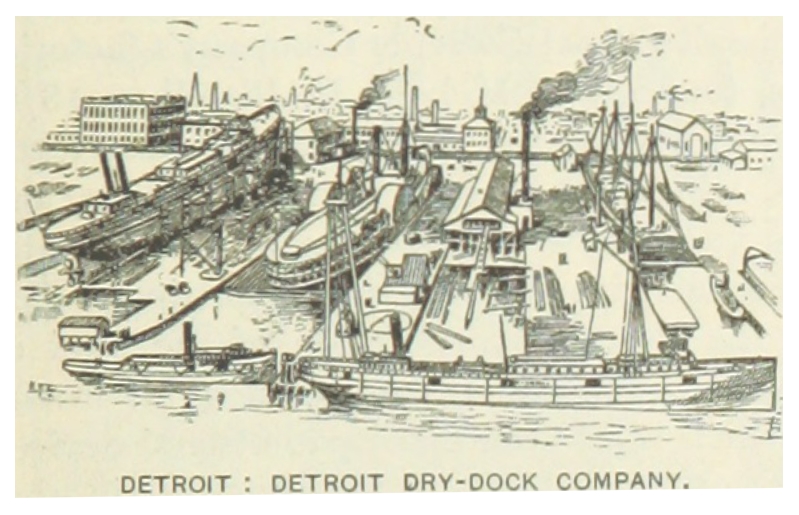
            Henry did find joy in the farm workshop, however. As he matured, he became increasingly obsessed with machines, including watches, the most complex of all machines of that day. He left the Dearborn family farm at age 16 and found employment in Detroit as a mechanical apprentice. He learned how to repair steam engines, and that experience later convinced him that the steam engine was too heavy for a personal vehicle. He also worked part-time repairing clocks and watches. He next moved to the Flower Brothers machine shop and then to the Detroit Drydock Company, where he continued to learn more about machines and materials. By age 17 he had become a journeyman machinist who possessed the remarkable gift of understanding how machines worked, and how to improve them.


            Ford next worked for noted inventor George Westinghouse on thresher and sawmill steam engines. In 1885 Henry repaired an internal combustion engine while in the employ of the Eagle Ironworks in Detroit. 

It was some time afterwards that he decided to take an internal combustion engine and wed it to a vehicle. What distinguished him from other pioneer tinkerers and engineers of the period was that he wanted to achieve economies of scale and thus make automobiles in large numbers and lower production costs. At first he thought of watches as the product he would focus his energies on, but he soon turned to vehicles powered by the internal combustion engine.
            Despite all that has been written on Henry Ford, it remains somewhat a mystery how he developed the idea that the automobile was to be a universal necessity that would be in demand, both in good times and bad. In part, his thinking was the result of his common sense approach to life shaped by his early life on the farm. While American life was shifting from being predominately rural to urban at the turn of the century, many Americans remained tied to the land and lived in relative isolation without electricity or telephone. In spite of this, Americans were restless and desired mobility, spatial and social, and the automobile would provide both: spatial in terms of a constant desire to move from place to place; and social, as a tool to increase one’s economic opportunities. 
            Certainly, the ideas that resulted in the Model T were well formed by 1906, when Ford wrote the following to readers of The Automobile:
There are more people in this country who can buy automobiles than in any other country on the face of the globe, and in the history of the automobile industry in this country the demand has never yet been filled. . . .
The greatest need today is a light, low-priced car with an up-to-date engine of ample horsepower, and built of the very best material. One that will go anywhere a car of double the horsepower will; that is in every way an automobile and not a toy; . . . It must be powerful enough for American roads and capable of carrying its passengers anywhere that a horse-drawn vehicle will go without the driver being afraid of ruining his car.6
            Perhaps his understanding of the common person and his ability to read the market for automobiles when few could, were derived in part from his understanding of self. Since the Colonial Era, Americans have been on the move, seeking new opportunities or simply to reinvent themselves. Additionally, American society was not nearly as starkly stratified as in Europe, and thus the automobile, with all of its class implications, played a very different role in an America where rigid class lines hardly existed. Equality led to widespread buying power, and this potential buying power of Americans, in Ford’s mind, was enormous. Ford somehow envisioned that as more automobiles were produced, more industrialization would follow. And that would result in even more buying power among the breadth of the middle and working classes. While most of the early pioneers in the automobile industry in America thought of their cars as leisure objects for the well to do, only Ford, Ransom Olds, and Billy Durant thought differently. This triumvirate found ways to meet the demand from a mass consumer market that desired to break the bonds of place.


            In 1891 Ford moved on to the Detroit Edison Company, and five years later he had a fateful encounter with Thomas Edison. Ford later saw that meeting as decisive to his future in the automobile business. 
Detroit Edison 1910

He later claimed that Edison encouraged him to move forward with his car project as Edison advised that: “There is a big future for any light-weight engine that can develop a high horsepower and is self contained. Keep on with your engine. If you can get what you are after, I can see a great future.”7Ford never forgot that moment with Edison, and later he would develop a unique friendship with America’s most useful citizen. Later he would move Edison’s Menlo Park laboratory to Dearborn as a part of his historical Greenfield Village, and in that museum is a glass tube that purportedly contains the last breath of Edison, collected at his deathbed on the wishes of Ford.
Ford, Edison and Harvey Firestone, 1931 (LC)

Henry Ford, Thomas Edison,Warren Harding and Harvey Firestone. Firestone camp (LC)


Who Invented the Self Starter -- Charles Franklin Kettering or Clyde Coleman?


I am very interested in looking at the inventive work of Charles F. Kettering within a broader context of his times. That is moving me into the period 1900-1910  and an incredibly complex story related to starter and ignition systems. There were so many individuals working at the same time on basic and fundamental automotive problems, and it is difficult to determine who was looking over the shoulder of whom. 
In my 2nd edition of The Automobile and American Life, I mention the work of Clyde Coleman. Above is the image from one of his patents, first filed in 1901.

Note that the patent begins with:

According to my invention means are provided for starting the' engine by the application of power thereto and for utilizing the power of the engine when the engine is self actuated fo'r the purpose of storing energy, these means and the engine being connected by differential connecting devices, and according to m y invention these means comprise a. motor-dynamo so connected. 
My invention also includes the provision of means constructed so asto be readily actuated by the operator and initially operating the starting-motor and by further movement connecting the running-gear of the vehicle with the engine, such means permitting the engine to be started by the starting-motor while relieved of its load. 
My invention also includes provision for the discontinuance of the self-actuation of the starting-motor after the engine has been started, so that such starting-motor has only to perform the work of starting the engine.


Now as to Coleman's ignition system see figure 4 and read his description:

The electrical connections are diagram m atically shown in Fig. 4. The source of electric storage battery 40, and this storage battery is charged when the motor-dynamo is operating as a dynamo and supplies electric current to the motor-dynamo to energize and actuate the same when-the motor-dynamo is used as a motor and also during the operation of the engine supplies an electric current to an electric igniting or sparking circuit for igniting the gases within the engine-cylinder. The igniting or sparking circuit is closed at the switchrplates b and b through the controlling-lever 24, which is of conductive material or is conductively connected with its pivot, and the primary cir cuit flows from the battery 40 through the wire 41, a primary coil ofan induction-coil 42 and through a make-and-break device 42 and Wire 43 to the switch-plate b or b, and from either switch-plate through the controland the wire 44 back'to battery. The secondary coil of the induction-coil is thus inductively energized and energizes the sparking device or plug 36, which would be located within the cylinder of the engine 3. 1f the ignition of the engine were accomplished by other than electrical means, this circuit would of course be unnecessary.


I have a long way to go with this research, but any insight you have on this topic would be most appreciated.

Thursday, December 20, 2018

Racing at the Beginning of the Automobile Age in America

The Quest for Speed
In real life, however, an out-of-control automobile could prove to be extremely deadly, especially when it came to racing. The origins and early history of the automobile in America are closely tied to competitions, whether it was endurance and reliability runs, road racing, hill-climbs, or oval track events. Indeed, the automobile took on new significance in American life when, on November 28, 1895, “The Race of the Century” took place in Chicago.54

Sponsored by the Times-Herald and run during a snow storm, Frank Duryea won the race between Chicago and Evanston and back. 


While rival newspapers were harshly critical of the event, the race sparked America’s fascination with the automobile. Racing resulted in considerable publicity and this fact did not elude many of the early manufacturers, including Alexander Winton, Henry Ford, and Ransom Olds. Match races, high-speed runs, competitions on the glass-smooth beaches at Daytona and Ormond Beach, Florida, and the Vanderbilt Cup races on Long Island that began in 1904 became very popular during the first decade of the twentieth century.55The first generation of American race heroes included Willie K. Vanderbilt, and Barney Oldfield. Oldfield’s name would become a household word. All the way to the 1960s, Drivers, when they were passed by a reckless speed demon, commonly said “Who does that guy think he is, Barney Oldfield?”56
Of the early U.S. race drivers, perhaps no one stands out as much as William Kissam Vanderbilt II, affectionately known as "Willie K." His activities reflect important themes related to first decade of auto racing, one in which society's upper crust played a dominant role in the story of the automobile in American life. Born in New York City in 1878 to William Kissam Vanderbilt and thus was called Vanderbilt Jr. until the death of his father, he grew up living in luxury. Raised in Vanderbilt mansions, experiencing European travel at an early age, and sailing around the globe in his father's yachts, Willie K. enrolled at Harvard but left after his first year. For a time, and beginning with a ride in a steam car in France at age 10, the automobile captivated him. In 1898 he purchased a French De Dion-Bouton tricycle, and later other vehicles that he used to speed to his parents Long Island estate, Idle Hour. In 1904 Willie K. set a new land speed record at Ormond Beach near Daytona, and later that year he organized the Vanderbilt Cup, the first important American trophy race. The Vanderbilt Cup was America's answer to the Gordon-Bennett Cup races held in Europe, and showcased the competition between the U.S. and European manufacturers. Europeans dominated the road race until 1908, when American George Robertson finally took home the honors for the U.S. 


Tracey finishing in the Vanderbilt cup race, for racing cars sponsored by W.K. Vanderbilt, Jr.(LC).

Because of crowd control problems and the 1906 death of a spectator, beginning in 1907 Willie K. organized a firm that built the Long Island Motor Parkway. His 48-mile toll road was not only used in future competitions, but led to the economic development of Long Island. Later involved in long-distance sea and air voyages, exploration, and a very messy divorce, the Vanderbilts’ involvement with the automobile ended tragically when Willie K.'s son, William Kissam III, died in an auto accident in South Carolina while traveling back to New York from the family's Florida estate.57

Vanderbilt Race, W.K. Vanderbilt, Jr.'s "Mercedes"


W.K. Vanderbilt, Jr.'s "Mercedes" in cup race [Vanderbilt Cup Auto Race] 1908 (LC).


W.K. Vanderbilt Jr's "Mercedes" taking gasoline [Vanderbilt Cup Auto Race] 1908 (LC)


In contrast to the wealth and privilege that came with being a Vanderbilt, Barney Oldfield was a brash and hardscrabble outsider. Oldfield (1878-1946) lived through an impoverished childhood while working a host of manual jobs before he began racing bicycles towards the end of the 19thcentury. His big break in automobile racing came in 1902, when he agreed to pilot Henry Ford’s 999 racer, and winning a highly publicized match race against Alexander Winton. The first driver to go a mile a minute in a closed course, he doubled that speed a year later. And while he never won the most prestigious of events – the Gordon Bennett Trophy, the Vanderbilt Cup, or the Indianapolis 500, Oldfield, more than any other driver of his era, shifted the focus of auto racing from the car to the driver, and from a sport being dominated by well-to-do elites to the middle classes. Oldfield, seen chomping on a cigar as he waved to the crowd while taking the checkered flag, or coming out of the dust on the outside of the track, excited the public imagination with thoughts of speed, exhilaration and courage. Wearing little protective gear so that spectators could see his face and demeanor, Oldfield became the human face to a sport where drivers were now recognized as being at the heart of competition as much or more than the cars.
Photograph shows Berna Eli "Barney" Oldfield (1878-1946), an early automobile racer. (Source: Flickr Commons project, 2015) (LC)

Race between Lincoln Beechey in airplane and Barney Oldfield in automobile, going around race track, June 28, 1912. (LC).


A second type of competition took place on public roads, emphasizing reliability over speed. Of these contests, the Glidden Tour was preeminent. Typically more than 1000 miles in length, it was held between 1905 and 1913. Automobile owners rather than professionals usually drove the entered vehicles, although a number of manufacturers piloted their own cars. With different locations set from year to year, the Glidden tours were held to demonstrate which makes of cars were best. And indeed, the runs clearly showed that existing suspension and chassis designs were for the most part inadequate for the largely unimproved roads that existed in the America of that day. These results enabled the leading luxury marque Pierce-Arrow to establish an enviable reputation among the well-to-do.58
Events became trans-national as well; the 1908 New York to Paris race featured seven cars from France, Germany, Italy, and the United States, with a Buffalo, New York-made Thomas winning the 17,000-mile event.59And while road racing’s popularity would decline somewhat by 1910, as critics of the blood sport were increasingly heard, the construction of large closed circuits like Indianapolis and wood plank circular racetracks across the country beginning in 1913 ensured that automobile racing was here to stay as an important spectator sport in America.60That same year the mass-produced Ford Model T was introduced. With its low cost and reliability, even an Alabama farmer at the wheel of a modified Model T at the local county fair could at least think he was driving like Barney Oldfield.