Popular Posts

Showing posts with label history of technology. Show all posts

Monday, January 30, 2023

Automobile Theft During the 1920s in America


Gone in Sixty Seconds: Joyriders and Criminals

            With Ford’s “democratization” of the automobile and an explosion in the number of vehicles came an epidemic of automobile theft. Machines produced in mass quantities made easy prey for “joy-riders” and professional criminals. Moreover, the automobile was valuable, mobile, and its parts were interchangeable. Lucrative domestic and international markets for stolen automobiles and stolen parts yielded high profits. Interchangeable parts also gave thieves the opportunity to quickly reconstruct and disguise stolen automobiles. As evinced by thieves’ ability to alter serial numbers, duplicate registration papers, switch radiators, and replace entire engine blocks, a nascent uniformity welcomed theft. Moreover, thieves sought out and stole the most ubiquitous automobile; popular, mid-priced models were most likely to be stolen, along with the easy to steal Model T. As early as 1910 joyriding and automobile theft were problems for the automobilist. Major concerns centered on the unauthorized use of an owner’s vehicle by a chauffeur or a parking attendant. To that end a number of devices were marketed, from a gear shift lever lock to recorders that kept tabs on when a vehicle was actually being driven.84

            Until the introduction of the electric self-starter in 1912, automobiles employed a battery/magneto switch along with a crank.85 The automobilist turned the switch to B (battery), got outside the car, cranked the engine, and then once it started, moved the lever to M (magneto) and adjusted the carburetor. On early Ford Model T’s, the battery/magneto switch had a brass lever key, but there were only two types, with either a round or square shank. Later, in 1919, Ford offered an optional lockable electric starter, but only used twenty-four key patterns. To make things easy for the thief, each pattern was stamped with a code on both the key and the starter plate. Would-be joy-riders needed only a little luck to drive off with any unguarded Model T.

            Unlike other stolen goods, the automobile enabled its own escape. As one author observed in 1919:

            Not only is the motor vehicle a particularly valuable piece of property . . . but it furnishes at the same time an almost ideal getaway . . . With the automobile there is no planning to be done. With a thousand divergent roads open to him and a vehicle possessing almost unlimited speed, escape is practically automatic.86

            A New York Police official commented in 1916 that, “the automobile is a very easy thing to steal and a hard thing to find.”87 As early as 1915, 401 automobiles were stolen in New York and only 338 were recovered.88 By 1920, it was estimated that one-tenth of cars manufactured annually were eventually stolen. Astonishingly, perhaps, in 1925 it was estimated that 200,000 to 250,000 cars were stolen annually.89 Table 2 provides theft data for major American cities.

Table 2.  Automobile Thefts in Major American Cities, 1922-1925

City

Year

1922

1923

1924

1925

New York

7,107

7,959

10,064

11,895

Chicago

3,636

2,334

4,946

7,587

Detroit

3,194

4,428

7,187

11,750

Los Angeles

4,802

4,218

7,326

8,392

San Francisco

1,960

2,154

3,257

3,746

Dayton

249

313

366

485

Source:  Automotive Industries, 56 (February 19, 1927), 283.

            Further, the automobile created new opportunities for criminals and confronted legal authorities with a myriad of problems. One author noted that, “as automobile thefts increase burglaries and robberies increase.”90 The automobile itself was stolen, but the automobile also played a central role in kidnapping, rum running, larceny, burglary, traffic crimes, robberies, and the deadly accidents of the “lawless years.”91 The Baltimore Criminal Justice Commission reported that 

In August, 1922, one of Baltimore’s well known and highly respected citizens was held up, robbed of $7000 and brutally murdered in broad daylight on the busy thoroughfares of the city. The bandits perpetrating this carefully planned crime escaped in a high powered car bearing stolen license plates.92

            In 1924, Arch Mandel of the Dayton Research Association observed, “The motor vehicle has ushered in a new era of crime and police problems, and apparently a new type of offender.”93 “To cope with this problem” Mandel wrote, “police departments have been obliged to detail special squads and to establish special bureaus for recovering stolen automobiles . . . this has added to the cost of operating police departments.”94 Consequently, the increase in mobility was matched with a growth in government. The cost of police work in cities with populations over 30,000 rose steadily from approximately $38 million in 1903 to $184.5 million in 1927.95 Automobile theft added new categories of crimes, and as a piece of technology became a central part of burglary and housebreaking. In Philadelphia, 8,896 people were arrested for assault and battery by the automobile.96 In response, police began to patrol with the automobile. In 1922, Chicago police complained that their worn-out “tin lizzies” should be scrapped; they could not catch the high powered hold-up car that traveled at sixty miles an hour.97 Even with the growth of government and the advent of patrolling, police forces were out-maneuvered by mobile criminals. Contrary to the iconic Prohibition image of police forces smashing barrels of alcohol, municipal police forces may have dealt with automobiles on a more regular basis. 

            Automobile theft was most acute in Detroit and Los Angeles. “Naturally Detroit is peculiarly liable to this trouble because it has such a large floating population of men trained in mechanical expertise in the various factories.”98 It stood to reason that Ford’s workers stole Ford’s Cars. In Detroit, in 1928, a total of 11,259 cars were stolen.99 The same year in Los Angeles 10,813 automobiles were stolen.100 By the 1920s, Los Angeles had the most automobiles per resident in the United States. Historian Scott Bottles pointed out, “By 1925, every other Angelino owned an automobile as opposed to the rest of the country where there was only one car for every six people.”101 Angelinos had more opportunities to steal cars. Baltimore, New York City, Rochester, Buffalo, Cleveland, Omaha, St. Louis, and many other cities also experienced major problems related to automobile theft. In an article published in Country Life, Alexander Johnson revealed the problem was not just endemic to urban America:  “We who live in the country are not quite as subject as our urban brethren to this abominable outrage, but automobile stealing is carried on even in the rural districts.”102 

            The cost of police work in state governments also rose from approximately $98 million in 1915 to $117 million in 1927.103 To combat auto theft, state governments created license, registration, title, and statistical bureaus and urged the federal government to become involved. E. Austin Baughman, Commissioner of Motor Vehicles of Maryland, cited 1919 as “the climax of an epidemic of car stealing” with 922 cars stolen, 709 recovered, and 213 missing.104 Baughman urged the country to adopt a Title Law which would assure all motor vehicles could be identified and located through the name and address of the owner on record. 105 The bureau helped Maryland to gather statistics:

. . . one can in a comparatively short time find anything from how many 1912 Cadillacs are still in existence in this state, to how many more Fords were stolen than Chevrolets in 1923 or 1922; and from how many six- and seven-ton trucks are still in use in Maryland and to what percentage of cars stolen in 1923 are still missing.106

In 1920, Massachusetts developed a similar program under the used-car department of the Department of Public Works.107 States that did not pass title laws were a nationwide liability and became alleged “dumping grounds” by neighboring states.108

            The inter-state nature of automobile theft demanded federal intervention. The automobile nullified state boundaries and contributed to the nationalization of crime fighting. Arch Mandel wrote in 1924 that, “State lines have been eliminated by the automobile” and the “detection of criminals is becoming more and more a nation-wide task.”109 

            In 1919, Congress passed the National Motor Vehicle Theft Act, which received the appellation of its sponsor, Senator Leonidus Dyer. The Dyer Act promulgated that thieves receive fines of $5,000 and 10 years in prison, or both. The American Automobile Association lobbied congress to pass the Dyer Act.110 Consequently, between 1922-1933 auto thefts were the most prominent federal prosecution of interstate commerce.111

            During the first two decades of the twentieth century, of auto theft was blamed on the owner negligence. A 1916 insurance company pamphlet entitled “Emergency Instructions,” warned owners that “when dining in a public restaurant the driver of the car should be seated in such a position that he can observe his car.”112 Basic instructions also warned to “not leave your car unprotected on the street or any place at any time.”113 However, in 1922 many automobile owners left keys in their unlocked cars.114 An article in Popular Mechanics Magazine observed, “Approximately seventy-five percent of all the cars that were not stolen were not locked at all.”115 One author chastised drivers for leaving automobiles unattended for an hour or more.116 Beyond common-sense precautions, automobile owners were advised to take preventive measures to stop early car thieves. Owners were advised to lock their doors or “garage” their automobiles. In his 1917 article “Automobile Thefts,” John Brennan proposed one countermeasure:  “If owners would only take steps to put private identification marks on their cars, the problem of automobile thievery would be a simple one to solve.”117 It was suggested that the owner bore holes into the underside of the running boards, scratch their name somewhere secret, or tape an identification card inside the upholstery.118 A 1926 article in Popular Mechanics passed on to readers one motorist’s intricate plan of fake coils and pseudo ignition connections.119 Other articles proposed that owners disconnect the magneto. In any case, the prevailing attitude of the day was that automobile theft was usually the owner’s fault. In 1929, E. L. Rickards, manager of the Automobile Protective and Information Bureau in Chicago, stated: “A man or woman who leaves his car unlocked and unattended is committing an offense against society.”120

            Thieves were recognized as frauds, joy-riders, professionals, and gangs. They stole a range of models, but mostly low-priced Chevrolets, Plymouths, Chryslers, and Fords.121 Furthermore, automobiles were most likely to be stolen in business or entertainment districts, where individuals parked the same models in the same place. Often a thief caught red-handed simply claimed that they had hopped into the wrong car. When interrogated by a judge, one thief explained why he was in the wrong Ford: “Because both cars are Fords, and all Fords look alike, not only to me but to their owners.”122 Charges were dropped. Despite preferences to steal commonplace vehicles, elite and unusual automobiles were not exempt from the threat of theft. Expensive cars were stolen, disassembled and repainted.

            Early automobile thefts were performed by owners who would, “steal their own car.” To collect on insurance, owners would strip the car of accessories and move it to an out of the way location. The owner would work with a thief: . . . the owner is in partnership with the thief. An auto, for instance, that is insured for $2,000 is reported by the owner as having been stolen. The machine is worth $1,500. So the owner, collecting his theft insurance, makes a clean profit of $500.123

            Owners in debt often defrauded insurance companies as well: “an automobile owner, after using his insured car for nine or ten months, discovers that its market value is 40 percent lower than when first purchased; also the cost of maintaining the machine, oil, gasoline, tires, repairs, etc., is considerably in excess of the figure on which his first maintenance costs were based.”124

            Quite different in terms of criminal intent were the activities of the so-called joy-rider. Joy-riders stole for thrills. In 1917, Secretary to the Detroit Chief of Police, George A. Walters estimated that 90 percent of Detroit’s auto thefts were performed by joy-riders.125 Joy-riders were often groups of young men in pursuit of fun, and had a “taste for motoring.”126 One author argued that joy-riders (in all cases male) had a sexual motivation, “Some young fellow with sporty tendencies and a slim pocketbook wants to make a hit with some charming member of the opposite sex . . . he thinks an automobile would help him in the pursuit of her affections.”127 After a joy-ride, automobiles were often found damaged and out of gas. Historian David Wolcott has noted that in Los Angeles, “Boys approached auto theft with a surprisingly casual attitude – they often just took vehicles that they found unattended, drove them around for an evening and abandoned them when they were done – but the LAPD treated auto theft very seriously.”128 In the early period of automobility, authorities considered “joy-riding” a serious societal problem. Joy-riding was an action of a delinquent. Joy-riding was so serious that young boys were prosecuted under the Dyer Act of 1919. The federal government did not draw a distinction between joy-riding and professional auto theft until 1930.129 Congressmen Dyer called for the repeal of his own law, and to convince the U.S. House of Representatives of the need for repeal, he read a letter from the superintendent of a penitentiary:

Of the 450 Federal Boys in the National Training School here in Washington, nearly 200 are violators of the Dyer Act, with the ages distributed as follows: Two boys 12 years of age, 6 boys 13 years of age, 19 boys 14 years of age, 31 boys of 15 years of age, 64 boys 16 years of age, 48 boys 17 years of age, 19 boys of 18 years of age, 1 boy 19 years of age, and 1 boy 22 years of age.130

Due to the capricious nature of theft for a joy-ride, policemen and journalists surmised that it could be easily prevented: “It is against this class of thief that the various types of automobile-locking devices and hidden puzzles are effective . . . since the joy-rider does more than half the stealing it follows that car-locks are more than 50 percent effective in protecting a car.”131 However, more elaborate means would be necessary to stop the professional thief.

            Writers who addressed auto theft from 1915 to 1938 admitted that the professional thief could not be stopped. Professional thieves employed an array of tactics to steal automobiles. Often chauffeurs, mechanics, and garage men became thieves. Even though locks supposedly prevented theft by joy-riders, thieves would simply cut padlocks and chains with bolt-cutters.132 Often this was not necessary, since keys to early Fords were easy to obtain. In 1917, Edward C. Crossman described the naïve Ford owner:

Ford owners take out the switch key on the coil box and go strutting off as if they’d [sic] locked the car in the safe deposit box. The first half-baked auto mechanic who needs a Ford can slip in another key and depart via the jitney route without paying his fair.133

Crossman’s solution was to lock a heavy metal band around the front wheel of the automobile.134 In a May 1929 article “Tricks of the Auto Thief,” Popular Mechanics described the array of tactics open to the automobile thief. Thieves stole accessories, unlocked and started cars with duplicate keys, “jumped” the ignition by placing a wire across the ignition coil to the spark plugs, ripped-off car dealerships, and towed cars away.135 “Some thieves make a specialty of buying wrecked or burned cars as junk . . . they receive a bill of sale, salvage parts which they place on stolen cars, and so disguise the finished automobile as a legitimate car for which they have the bill of sale.”136 One method called “kissing them away” involved an individual breaking into a car, and being unable to start the ignition, a “confederate,” would push the stolen car with his car from behind. The car would be moved into a garage or alley and promptly dismantled.137 Thieves used interchangeable parts to confuse authorities. In 1925, Joe Newell, head of the automobile theft bureau in Des Moines, Iowa, stated, “the greatest transformation that takes place in the stolen machine is in the clever doctoring of motor serial numbers . . . this is the first thing a thief does to a car.”138 Automobiles were branded with a serial number that corresponded to a factory record, but thieves used several tactics to change the numbers. The “doctoring” of numbers involved filing down numbers and branding a new numbers into the car, or changing single numbers. In a detailed article entitled “Stolen Automobile Investigation,” William J. Davis noted, “It is possible for a thief to restamp a 4 over a 1; an 8 over a 3 where the 3 is a round top 3; a 5 over a 3; to change a 6 to an 8, or a 9 to an 8, or an 0 to an 8.”139

            Apparently the joy-riding problem declined in the 1930s, but organized gangs emerged as a more serious threat to steal automobiles and, in the process, vex authorities. In Popular Science Monthy, Edward Teale noted:

. . . the automobile stealing racket in the United States has mounted to a $50,000,000-a-year business. During the first six months of 1932, 36,000 machines disappeared in seventy-two American cities alone. In New York City, $2,000,000 worth of cars was reported stolen in 1931.140

Gangs developed sophisticated automobile theft operations from the expert driver to expert mechanic. Gangs even developed their own vernacular.141 A stolen car was a “kinky,” or a “hot short.” The “clouter” actually stole the car and the “wheeler” drove it to the “dog house.” The thieves were concerned with stealing the popular, mid-priced, widely-used makes. Gangs often specialized in a certain make or model. One New York gang “scrambled” the stolen automobiles: “a number of machines of the same make and model are stolen at the same time . . . wheels are switched, transmissions shifted, bodies’ changed, and engines transferred from one car to another.”142

            At other times, gangs would use the “mother system.” Under this system, thieves stole a certain make, had a fake bill of sale made, and changed all of the serial numbers to be identical to the bill of sale. Ultimately, four or five of the same car, with the same serial numbers and bills of sale would exist.143 In 1936, J. Edgar Hoover penned an article about gangster and international car thief named Gabriel Vigorito (a.k.a. Bla-Bla Blackman), who had amassed a $1 million fortune from automobile theft.144 “The “hot car” depots of a dozen states dealt in his goods . . . In Persia, Russia, Germany, Norway, Denmark, Belgium, and even China, the American car business included many automobiles stolen from the streets of Brooklyn.” Authorities convicted Bla-Bla to ten years in prison. Historically, the point is poignant: the automobile trumped not only state lines, but national lines. The rise of an industrial and global industry also rose with a global theft ring. In 1936, the Roosevelt Administration entered a treaty with Mexico for “the recovery and return of stolen or embezzled motor vehicles, trailers, airplanes or the component parts of any of them.”145 The treaty prompted a convention with Mexico in 1937 to address the stolen automobile problem.146

            To control rampant automobile crimes, authorities developed scientific means to fight crime. As early as 1919, a system of fingerprints to identify automobile owners was proposed.147 Throughout the 1920s, law enforcement of automobile theft remained ineffective. By 1934, police developed sophisticated means to monitor a more mobile public. In 1936 it was urged that “every city join the nation-wide network of inter-city radio-telegraph service provided for by the Federal Communications Commission.”148 Police developed processes using chemicals and torches to identify fake serial numbers. Los Angeles police department officers departed the station for their shift with a list of stolen automobiles printed the night before.149 Developments in communication aided police officers. “Chattering teletype machines and short-wave radio messages outdistance the fleetest car, while police encircle a fleeing criminal in an effort to make escape impossible.”150 Radio communication made auto theft difficult. By 1934, “auto thieves found their racket a losing one.”151 In response to mobile crime, Governments at all levels grew more sophisticated. Insurance companies also grew more sophisticated: “In Chicago, a central salvage bureau, maintained by insurance companies is being established in an effort to wipe out a 10,000,000-a-year racket in stolen parts.”152 Automobile manufacturers invested in a “pick-proof” lock.153 From 1933 to 1936, insurance companies and the government destroyed the market for stolen automobiles and stolen parts. In 1934 Popular Science Monthly reported, “figures compiled by the National Automobile Underwriters Association show that eighty-six percent of the cars stolen in 1930 were recovered while in 1931 eighty-two percent were recovered and eighty-nine percent in 1932.”154

 What the above paragraphs suggest is that the automobile placed unprecedented challenges before local, state, and federal government agencies, and in response the responsibilities and scale of government changed as a consequence. Indeed, the law itself changed, and that included the area of tort law during the 1920s, as sorting out negligence as a consequence of automobile accidents also posed new problems that demanded innovative structural solutions.

Wednesday, January 25, 2023

Henry Ford: The Social Complexities of the Assembly Line In Detroit


View of assembly line workers with Ford car chassis at the River Rouge Plant. Printed on front: "An assembly line of the Ford Motor Company." Printed on back: "An assembly line of the Ford Motor Company. The assembly line is always a point of interest to visitors of the Rouge Plant. Here, on a moving conveyor, Ford cars are completely assembled, from chassis to finished car, and driven off the line under their own power. In addition to the Rouge plant, there are 31 assembly lines in company branches throughout the United States. The Garraway Company, Rutherford, New Jersey.” Photograph from Detroit Public Library

The Genesis of Mass Production at Highland Park

The offshoot of scientific management – mass production – was put into practice for the first time around 1913. Only later in 1926 did Ford articulate it as “focusing upon … the principles of power, accuracy, economy, system, continuity, and speed.” How mass production fit in with organization and the market was further articulated by Ford in this way:

The interpretation of these principles, through studies of operation and machine development and their coordination, is the conspicuous task of management. And the normal result is a productive organization that delivers in quantities a useful commodity of standard materials, workmanship and design at a minimal cost. The necessary, precedent condition of mass production is a capacity, latent or developed, of mass consumption, the ability to absorb large production. The two go together, and in the latter may be traced the reasons for the former.17

            The assembly line that followed, contrary to popular thought both then and now, was not simply the idea or the result of the efforts of Henry Ford alone. During a tour of Henry Ford’s Rouge, I watched a film on the history of mass production that gave total credit to Henry Ford for both the concept and implementation of this system of manufacturing. The film, shown every day to thousands of visitors, perpetuates a lie; for there were many unnamed individuals who contributed to what became mass production at the Ford Motor Company. 

            Indeed, James Flink summarized the story as one in which mass production developed upward from the shop floor rather than downward from Henry, with key individuals that included skilled tool makers like Carl Emde and staff members C. Harold Wills, Joseph Galamb, Charles Sorenson, Clarence Avery, William C. Klann, and P. E. Martin.18 It was this group and others, who through experiment and trial and error gradually perfected a way of making automobiles at the Highland Park factory. Fixed work benches, where the assembly of component parts took place, gave way to a series of positions along a moving line where one small component after another was added.19

            Scientific management had an enormous influence on the nature of American life during the early twentieth century, and nowhere was that more obvious than at the Ford’s Highland Park factory. It was there that by trial and error Ford and his team of engineers and mechanics developed the system of dragging a car chassis across the floor to stations where parts, brought by pulley, conveyor, or inclined plane were bolted on. Unlike the Model T itself, the assembly line took time to develop to a level of perfection, as numerous improvements to the line were implemented during the T’s 18-year production run. Ford applied four basic principles to increase efficiency:  the work must be brought to the man; the work should be done waist high to eliminate lifting; waste motion, human or mechanical, must be minimized; and finally, each task must be reduced to utmost simplicity.20

            The impact of the assembly line at Ford was staggering, as the volume of production was unprecedented and cost reductions unparalleled. Once governed by skilled mechanics, the shop floor was conquered by scientific management and the assembly line. This process was nearly completed by 1914. 

            Joyce Shaw Peterson has described the creation of the assembly line as a series of processes that began with arranging production in an orderly sequence and ended with the development of overhead conveyors. By 1913 an assembly line operated at Ford, and by 1916, helped by Ford’s openness to journalists and visitors, it was institutionalized in various forms throughout the automobile industry. The gradual perfection of the assembly line inaugurated a second phase of automobile production between 1908 and 1925, and which produced the Model T in volume. It entailed rigid standardization, extensive division and subdivision of tasks, and progressive line production. It was an inflexible process, as opposed to a more flexible mass production system that emerged in the late 1920s. Under Fordism, semiskilled/unskilled workers operated highly specialized machines. In 1910, nearly 75 percent of all jobs were classified as skilled work, but by 1924 expert work declined to 5 to 10 percent.21 The development of machine technology was crucial to control of the production process because it eliminated the need for strength or training. James Flink explained that, “Fordism meant that neither physical strength nor the long apprenticeship required for becoming a competent craftsmen were any long prerequisites for industrial employment. The creativity and experience on the job that had been valued in the craftsmen were considered liabilities in the assembly-line worker.”22 Furthermore, Flink lamented that “the American myth of unlimited individual social mobility, based on ability and the ideal of the self-made man, became a frustrating impossibility for the assembly-line worker.”23 Dexterity, speed, and concentration replaced craft and experience. 

            By 1913, a majority of workers were semiskilled or unskilled and operated a highly specialized machine that nearly eliminated the “human element.” The process is evinced in Arnold and Faroute’s observations in Ford Methods and the Ford Shops:  “When the moving-assembly line was placed in work with 29 men, splitting the one man operations into 29 operations, the 29 men began turning out 132 magneto assemblies per hour, or 1,188 per 9-hour day, one man’s time producing one fly-wheel magneto assembly in 13 minutes 10 seconds, a saving of 7 minutes time on each assembly or more than one-third of the best one-man time.”24

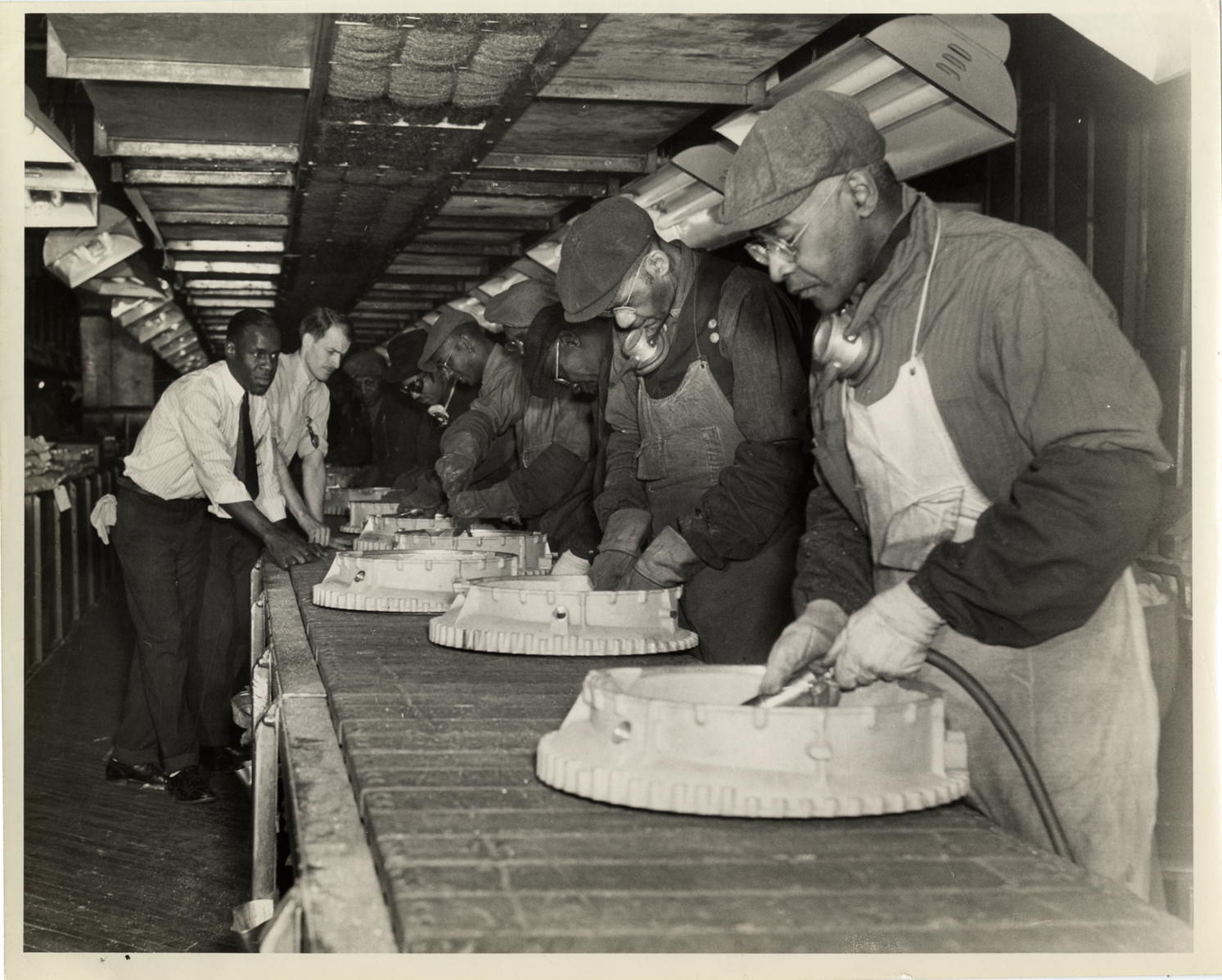
            In addition to descriptions of the production process, Arnold and Faroute took iconic photographs of Ford’s workers, but their “classic” observations were about machines, not laborers. In a description of “Assembling the Steering and Front Axle,” they wrote, “there are two operations to be performed: (1) to press the arm in its seat in the sub-axle hub boss; (2) to screw the nut on the threaded end of the steering arm.”25 No attempt was made to describe the three men in the photograph.

            The assembly line initiated what scholar Harry Braverman has called the “degradation of work.”26 Braverman’s thesis was subsequently modified and pursued by sociologist David Gartman in Auto Slavery: The Labor Process in the American Automobile Industry, 1897-1950.27 Gartman asserted that the assembly line was born of class antagonisms rather than a technological rationality. Motivated by the “narcotic” of profit, capitalists wrestled production away from the craftsman. The craftsmen, having lost the ability to control pace and accuracy, became vulnerable to exploitation. Labor was reduced to repetitive, mindless motions. To vindicate his thesis, Garman distinguished between “repressive” capitalist and “non-repressive” natural controls of labor. Finally, bureaucracy and occupations were created to buttress the capitalist order, and gave birth to the modern corporation. 

            Marxist sociologists have enhanced the view of the assembly line, but historians have revealed that what happened at Ford’s plants was a complex social process. The reactions of workers to monotonous labor defy simple Marxist explanations. Historian Joyce Shaw Peterson wrote:

Scholars analyzing the labor process in capitalist industry have sometimes seen the progressive deskilling of jobs as synonymous with the degradation of labor. There is no question that deskilling characterized the development of the automobile industry during its successful emergence as a “giant enterprise.” The question concerns how that deskilling was experienced by the workers themselves, whether as progress, or loss, or something else entirely. No single answer to this question is possible. Those workers for whom deskilling was experienced as degradation . . . were those who personally lost the need for their particular skills and saw their pride in workmanship diminished as machines took over their jobs and their own autonomy was diminished by a division of skills and increased management planning. For these auto workers degradation was very real, diminishing their pride and status and undoubtedly contributed to making them the most militant and union conscious of their fellows. Such workers comprised a minority of the workforce. Much more common was the experience of the auto worker for whom machine tending replaced simple heavy labor or the semi variegation of farm work. Not only could such workers make more money as automobile workers, but they also experienced their work itself as more modern and sometimes identified with the skill of their machines and indeed with their own skill in running them.28

            Personal responses to working on the assembly line are difficult to assess historically, but whatever took place on the microscopic scale, Fordism transformed the social relations of the macroscopic work place. The individual became anonymous, and the division of labor reduced tasks to mindless repetitive actions. Peterson noted that visitors lamented at the monotonous labor, but the worker’s response was “complicated, as it could not be a simple choice between monotonous, repetitive tasks, and challenging interesting work . . . no such choice was offered.”29

            While the assembly line contributed to the “degradation of work,” the opportunity to labor brought workers from Southern and Eastern Europe, the American South, and Mexico to the Midwestern United States. This opportunity was particularly powerful for Mexicans and African Americans.30 In 1900, the population of Detroit was half native-born Whites, and half immigrants from northern and western Europe.31 By 1913, the workforce included Russians, Poles, Croats, Hungarians, and Italians.32 The workforce also came to include social outcasts. In 1919, “the Ford Motor Company employed hundreds of ex-convicts and 9,563 ‘substandard men’ – a group that included amputees, the blind, deaf-mutes, epileptics, and about 1,000 tubercular employees.”33 In contrast to Gartman, Meyer argued that “between 19081913 Ford officials gradually discovered that workers required just as much attention as machines and the flow of materials.”34 The droves of workers were not “completely plastic and malleable,” and “as Ford mass production became a reality, Ford officials and managers gradually uncovered a massive labor problem.”35

            To stabilize his workforce, Ford announced the $5 dollar day. “This was not a simple wage increase,” wrote Stephen Meyer “but a sophisticated profit-sharing scheme to transform the social and cultural lives of immigrant workers and to inculcate the life-style, personal habits, and social discipline for modern factory life.”36 Ford used methods inspired by the Progressivism of the early twentieth century to stipulate how families should take care of their homes and how single men should take care of themselves.37 From 1914 to 1921 Ford embarked on a social experiment steeped in a paternalism that aimed to “Americanize” the immigrant workforce. While immigrants were willing to work in coal mines, iron and steel mills, meatpacking plants, and tanneries, in addition to automobile factories, they lacked industrial experience. When WWI ended the flow of European immigrants into Ford factories, recruitment of Black and White rural Americans became the norm. 

            Ford aimed to eliminate the lackluster “dude employee,” who talked and walked more than he worked. The application of scientific management to achieve mass production required a regulated “human element.” From 1920-1923 the assembly line underwent a “speed-up.” The pace of the assembly line was grueling, and in addition, smiling, laughing, and sitting were prohibited. But factories were safe, ventilated, and well lit. Nevins and Hill observed that, “as in all mass production industries of the time, they were the rules of an army, not of a cooperative community.”38 Joyce Shaw Peterson argued that while Ford was union free from 1903 to 1933, workers used turnover rates, absenteeism, restriction of output, and walkouts to convey disapproval.39 Autoworkers accepted the high wages, adopted the new habits, and endured the degraded labor. 

            Historians have given a fair amount of attention to Black labor in the automobile industry.40 The demographic shift inspired by Ford’s factories provided reason for Blacks to migrate to Northern industrial centers. In 1917 Packard employed 1,100 Blacks, but Ford quickly overtook Packard and employed 5,000 Blacks in 1923 and 10,000 by 1926.41Despite Henry Ford’s personal racial outlook that Blacks were racially inferior and should remain segregated, his factories were interpreted as places of inspired racial uplift. Ford felt that the superior race was obligated to facilitate the uplift of subordinate races with philanthropic services, and this earned him a reputation as a friend of the Black race. Yet, life for Black workers in Detroit remained mixed.

            Joyce Shaw Peterson historicized the new Black industrial community forged in Detroit. Despite high wages, most African Americans were segregated at the plant and in life outside of it.42 When Peterson inquired, “Apart from their existence inside the factory walls, what kind of life did black auto workers find in Detroit?” she answered with frustrating segregation, higher rates of disease, and overcrowded housing. In an industrial city the comforts of the home were paramount to the ability to endure monotonous and dirty work. Peterson noted that “migrants confronted the ironic situation of earning much better wages than they ever had before and still being unable to rent decent lodgings.”43 For Blacks, “segregated housing patterns . . . not only were blows to comfort, pride, self-esteem and family life; they could also kill.”44 Peterson concluded that more racial tension existed in Detroit due to residential patterns and competition for housing than over jobs. Beyond the factory and housing, entertainment facilities, and recreational activities provided by the companies, such as sports leagues; were segregated. Peterson noted that, “by far the most important social institutions were black churches,” which “became the most vital institution trying to both integrate rural blacks into the urban atmosphere and cement and develop a sense of racial community.”45

            In Black Detroit August Meier and Elliot Rudwick noted, “the income of Ford’s Black workers was the cornerstone for the prosperity of the black community’s business and professional people.”46 Blacks “were employed in the laboratories and drafting rooms; as bricklayers, crane operators, and mechanics; and . . . as electricians and tool-and-die makers.”47 James C. Price became an expert in purchasing abrasives and diamonds.48 Eugene J. Collins became head of the die casting department in 1924, and was later named the first Negro foreman.49 Meier and Rudwick point out that, “Ford established his own contacts among key black leaders, especially among the clergy.”50 Ford’s paternalism extended to local African American communities. This won Ford praise from African Americans, so much so that “black workers at Ford felt themselves superior, and wore their company badges to church on Sunday.”51

            African Americans comprised a significant portion of Ford’s workforce. James Flink pointed out that, “Ford’s black workers were concentrated at the Rouge, where by 1926 they number 10,000 and constituted about 10 percent of the work force.” At the Rouge, African-Americans were concentrated in “the most dangerous, dirty, and disagreeable jobs – chiefly in paint spraying and foundry work.”52 Blacks were employed in positions that required the greatest physical exertion, the highest accident rates, and most exposure to health hazards. Despite the racial victories of foremen like Eugene J. Collins, most Blacks were forced into hazardous jobs in separate parts of the factory. 

View of men working on assembly line in Packard Motor Company factory. Handwritten on back: "Manufacturing scenes. Factories--Packard, 1939” Photograph from Detroit Public Library

            Ford countered the critics of mass production in his own time in his 1926 article on the topic in Encyclopedia Britannica. He argued that

            The need for skilled artisans and creative genius is greater under mass production than without it. In entering the shops of the Ford Motor Co., for example, one passes through great departments of skilled mechanics who are not engaged in production, but in the construction and maintenance of the machinery of production. Details of from 5,000 to 10,000 highly skilled artisans at strategic points throughout the shops were not commonly witnessed in the days preceding mass production. It has been debated whether there is less or more skill as a consequence of mass production. The present writer’s opinion [Ford’s] is that there is more. The common work of the world has always been done by unskilled labor, but the common work of the world in modern times is not as common as it was formerly.53

            Fordism completed a revolution in the making of things that originated with the notion of interchangeable parts first proposed by Eli Whitney in 1798. Combining the practice of interchangeable parts as employed in nineteenth century armories with that of the moving disassembly line in the meat packing industry and techniques involving metal stamping from the bicycle industry, the assembly line led to what is called deskilling and monotony. But Fordism had its advantages. Fifteen million Model Ts were produced by 1927, and profits exceeded $7 billion.54 The following chart shows the actual production volume at Ford from 1903 through 1927.55

Year

Number of Cars

Year

Number of Cars

1903

1,708

1916

734,811

1904

1,695

1917

622,351

1905

1,599

1918

435,898

1906

8,729

1919

820,445

1907

14,887

1920

419,517

1908

120,202

1921

903,814

1909

17,771

1922

1,173,745

1910

32,053

1923

1,817,891

1911

69,762

1924

1,749,827

1912

170,211

1925

1,643,295

1913

202,667

1926

1,368,383

1914

308,162

1927

352,288

1915

501,462


            Ford and the Ford Motor Company’s accomplishments were more than simply making complex mechanical things in quantity, however. As Anthony Patrick O’Brien has demonstrated, beginning around 1910 or 1911 Ford also pioneered controls on mass distribution in the automobile industry.56 “Telegraphic ten day reports” were sent by branch managers to Detroit summarizing current dealer stocks, production levels, and dates of customer purchases. Later data that also included the number of salesmen employed and live prospects on file came from dealers. This accounting system was in part responsible for Ford weathering recessions in 1910-11 and 1920-21 far better than its competitors. And contrary to the interpretation that it was General Motors that developed a tight connection between production and distribution by the mid-to-late 1920s, it appears that Ford did it first. Ultimately then, GM’s eclipse of Ford by the late 1920s was not due a process control and distribution network advantage, but rather to the fact that GM offered more products in more price ranges. After all, while GM during the 1920s was trying to anticipate what customers wanted in a car, Henry Ford staunchly remained convinced that only he had the right idea about what a car should be.

            By the early 1920s, there would be not just one Ford Model T assembly line, but many, in factories all over America. Surprisingly, perhaps, the factory with the largest output during the 1920s was not the Highland Park facility, but one located in Kearny, Nebraska. Large facilities were also located in Atlanta, Buffalo, Cambridge, Chicago, Cincinnati, Columbus, Dallas, Des Moines, Houston, Indianapolis, Kansas City, Louisville, Memphis, Milwaukee, Minneapolis, Oklahoma City, Omaha, Philadelphia, Pittsburgh, San Francisco, Seattle, and St. Louis.57

            Henry Ford also demonstrated his genius by implementing the $5 day in 1914. While economists and industry experts asserted that Ford’s $5 day would lead to his bankruptcy, Ford’s motives were based on common sense mixed with a vision of the firm in which returns on investment were not maximized, but rather acceptable. It was both good business and an expression of concern for the common man. The assembly line in its early days had already led to an unacceptable labor turnover rate; in response, Ford raised hourly wages so that workers would stay despite the repetitive and exhausting nature of the job. And if a worker didn’t like conditions, there were many – Poles, African Americans, and other minorities – outside the gates waiting to replace anyone dissatisfied. The $5 day was just another reason why many viewed Ford as a hero. As Ford correctly recognized, the $5 day resulted in more business, not only as his own workers bought Model Ts, but also for service industries that provided for line workers and their families. Ford had envisioned and then implemented a giant technological and economic feedback loop that accelerated his own profits while stabilizing his labor force. 

Monday, January 9, 2023

The Origins and Early History of the Internal Combustion Engine (ICE), and Its Automotive Applications


From my The Automobile and American Life, 2nd edition.

Compact Power:  The Internal Combustion Engine (ICE)

            Along with the development of the bicycle, the internal combustion engine was most critical to developments in early automobile history. Credit for the ICE is normally given to Belgian inventor Etienne Lenoir (1822-1900), although his efforts followed a long succession of pioneering experiments going back to the 17th century, when Christian Huygens used gunpowder to drive pumps that supplied Versailles gardens with water.  Others who tried to harness the explosion of gas in a cylinder were British inventors Robert Street, Samuel Brown, Lemuel Wellman Wright, and William Barnett. In France Phillippe Lebon, and in Italy Eugenio Barsanti and Felice Mattecucci worked on the same problem between 1853 and 1857.

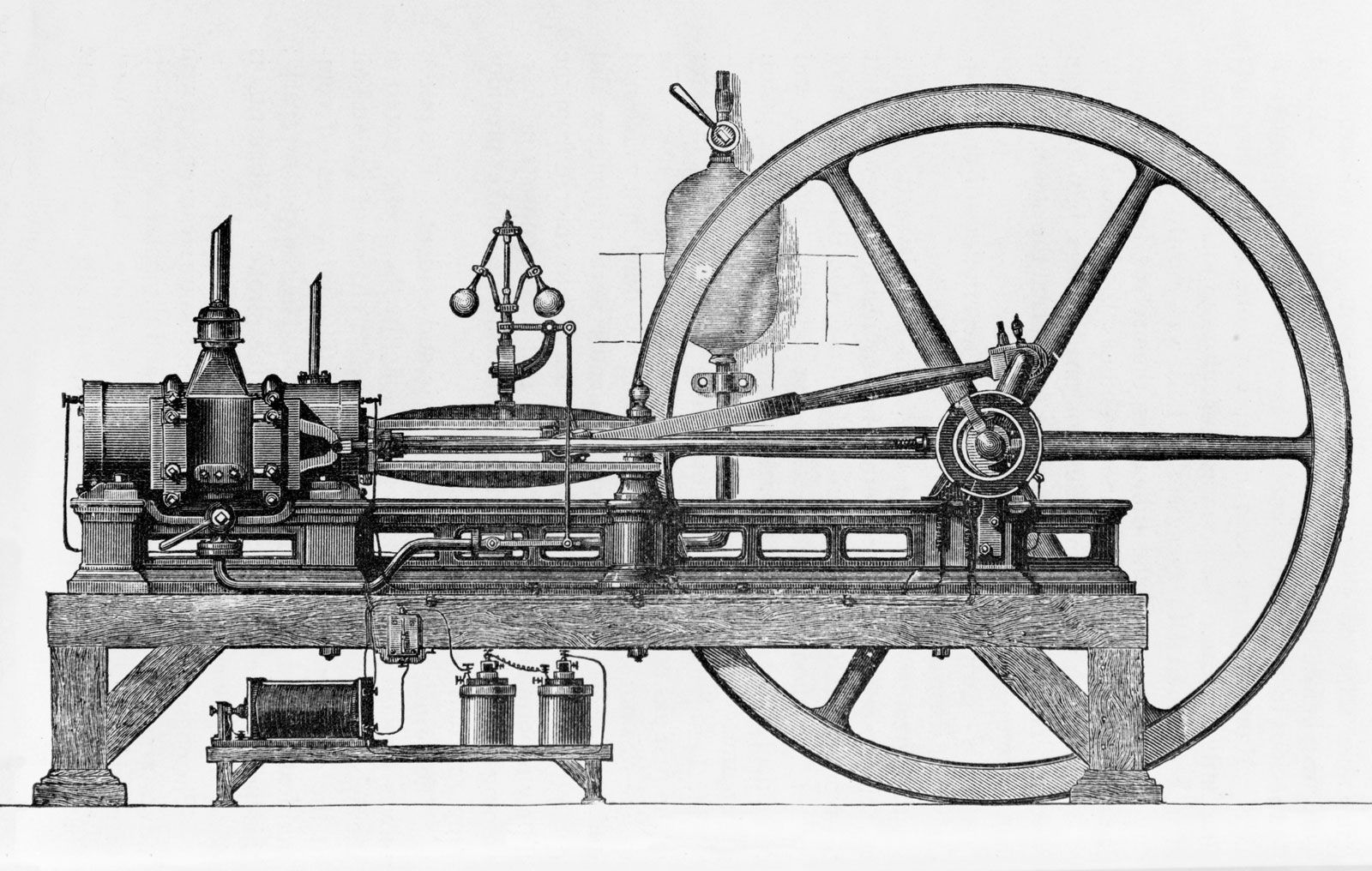
Three-horsepower internal-combustion engine fueled by coal gas and air, illustration, 1896. Library of Congress.


                                                            Ettienne  Lenoir (1822-1900)


            Living in France, Lenoir patented a two-stroke engine in 1860 that used illuminating gas (gas derived from heating coal in large retorts) that was ignited by a spark generated by a battery and coil. Lenoir’s engine was noisy and inefficient, and it tended to overheat. Used in stationary applications to power pumps and machines, some 250 were sold by 1865. And while the editor of Scientific American proclaimed in 1860 that with the coming of the Lenoir engine the Age of Steam was coming to an end, it took more than four decades before the ICE would eclipse the steam engine.16

            In 1876, Nicholas Otto (1832-1891) developed a four-cycle “Silent Otto” engine (intake, compression, power, and exhaust), and Lenoir came up with a similar design during 1883 and 1884. Two engineers who had once worked for Otto at the Deutz Gas motor Factory, Gottleib Daimler (1834-1900) and Wilhelm Maybach (1846-1929), designed a 1.5 horsepower, 110 pound, 600 rpm “high speed engine” in 1885, and built several experimental vehicles between 1885 and 1889. Maybach, one of the most important engineer-inventors of this early period, designed the modern carburetor for mixing air and gasoline in 1893.17


The Otto/Langen atmospheric engine of 1867  


An 1880s era American Otto engine for stationary use


 In the meantime, Karl Benz (1844-1929) designed a two-stroke engine in 1881 in his small shop located in Mannheim, Germany and began selling them in 1883. Because Deutz Co. patents had been invalidated in the courts in 1884 and 1886, Benz could design his own 4 cycle engine, and in placed that engine on a tricycle between 1885 and 1886. This 2/3 horse power vehicle with its unreliable ignition took wife Bertha Benz on the road trip from Mannheim to Pforzheim and back in 1886, and was the basis a model placed on sale in 1888. Benz exhibited a design at the 1889 Paris Exhibition.

Daimler, Maybach, and the “Grandfather Clock” Engine, 1885


 By 1893 he had constructed an improved four-wheel car with a three-horsepower engine that sold well and was fairly reliable. More than 100 Benz vehicles were sold by 1898. An early leader, Benz was soon passed technologically, especially by French manufacturers.


Daimler Reitwagen,1885, in the Mercedes Benz Museum in Stuttgart            


James Laux, in his book First Gear, characterizes in detail the French automobile industry before 1914.18According to Laux,  Emile Constant Levassor was the key French inventor-engineer of the late nineteenth century European automobile industry. Levassor took  Gottleib Daimler’s engine and placed it in the front of the vehicle where for the most part it has stayed to this day. Before Levassor’s untimely death, he proved the merits of his design as practical in the 1895 Paris-Bordeaux-Paris race. 


1895 Panhard-Levassor Paris to Bordeaux Vehicle


At first, and for only a relatively short time, Paris was the center of the nascent global automobile industry. Perhaps this was due to excellent French roads or social, economic, or political factors that remain to be explicated and are currently discounted. James Flink has argued that the importance of Paris was accidental rather than a crystallization of a complex network of relationships that included German, French, and Belgian inventors and businessmen.19

            The importance of the early French auto industry is reflected in the following chart20:

Year

Total Vehicles in Use

1899

1,672

1900

2,897

1901

5,386

1902

9,207

1903

12,984

1904

17,107

1905

21,543

1906

26,262

1907

31,286

1908

37,586

1908

46,000


            While a number of entrepreneurs in England, America, and Germany were only beginning to catch up to the French by the end of the nineteenth century, there was a concurrent Darwinian-like competition among three rival technologies in terms of power–the ICE already mentioned, steam, and electricity. In the end the most economically efficient technology would prevail, but that was by no means clear to those living in 1900.