Popular Posts

Sunday, April 24, 2011

Donks -- Cincinnati, the Individual, and Common Sense


Hi Folks -- Visiting back in Centerville, I read the Dayton Daily News this rainy Easter morning and found an rather lengthy article on Donks and the City of Cincinnati trying to take them off the road. Seems that the police argue that these cars are unsafe, and expose gas tanks and other parts to vulnerability during a crash. The owner of Fatt Boyz accessory shop in Kettering Ohio is worried that his business will lose lots of money if Cincinatti's stand starts a trend among municipal governments. Donk owners claim racial profiling, while anti-crime advocates assert that these cars are associated with gangs. Another example of American individuality being squelched for the common good.
Well, these cars are stupid. They can't handle, they are a total waste of money, and probably their owners have IQs in the range of 80. But -- if Cincinnati does this, will they also take off the road all the good old boys with their jacked up pickups that are equally as unstable and stupid? Give me examples of crashes involving these Donks? Show me statistically that they are unsafe?

Is this really about about traffic safety?

Saturday, April 23, 2011

Easter Musings: Jesus and the cars he would drive


Hi folks -- this Easter, as we think of Jesus an God, my thoughts go back to the What would Jesus Drive question that emerged during 2002 as a response to the question of SUVs and the environment. Years ago I wrote an essay on Christianity and automobiles, and in revised form that can be found in Chapter 5 of my book "The Automobile and American Life."


On another website, T.J. Nelson had this to say back in 2002:

This week, an organization called the "National Religious Partnership for the Environment" has started a national campaign to make people feel guilty for driving SUVs. The centerpiece of this campaign is the slogan, "What would Jesus drive?". This, of course, has driven people into paroxysms of laughter, with jokes like "A Christ-ler" and comments that, being a carpenter, He would have needed a van with a ladder rack on top. White, of course. With a statue of his mother on the dashboard.

Guaranteed Overnight Delivery truck One person suggested that Jesus, the ultimate eternal surfer, would most likely drive "a cherry 1940s flathead V-8 Ford woody with surfboards on the roof".

...

However, in all seriousness, this question can be answered authoritatively. One need only turn to the Bible to find what cars were driven in those days.

In the beginning, God himself made mention of His favorite car, when He described to Jeremiah His plans for the Israelites.

  Jer 32:37
Behold, I will gather them out of all countries, whither I have
driven them in my Anger, and in my Fury, and in great wrath; and I
will bring them again unto this place, and I will cause them to dwell
safely.
Clearly, God was driving, not a bus, but a Plymouth Fury and a car called an "Anger", which is no longer being produced. Later, however, the Lord was seen driving people around in a Valiant:
  Jer 46:15
Why are thy Valiant men swept away? they stood not, because the LORD
did drive them.
The Lord frequently drove people out to important occasions, if they didn't have their own car:
  Judg 1:19
And the LORD was with Judah; and he drove out the inhabitants of the
mountain; but could not drive out the inhabitants of the valley,
because they had chariots of iron.

Station wagons were also popular in early times. God saw that they were good, as they could not only carry an assembly of people, but would shield them in a crash.

  Ezek 23:24
And they shall come against thee with chariots, wagons, and wheels,
and with an assembly of people, which shall set against thee buckler
and shield and helmet round about: and I will set judgment before
them, and they shall judge thee according to their judgments.
Unfortunately, his followers, being generous in the ways of the Lord, tended to give them away:
  Num 7:6
And Moses took the wagons and the oxen, and gave them unto the
Levites.

Fords, then as now, were popular, but not universally so, often being left behind in emergencies.

  Gen 32:22
And he rose up that night, and took his two wives, and his two
womenservants, and his eleven sons, and passed over the Ford Jabbok.
Ford dealerships were commonly used as gathering points for women.
  Isa 16:2
For it shall be, that, as a wandering bird cast out of the nest, so
the daughters of Moab shall be at the Fords of Arnon.
The Israelites also drove customized automobiles. There was a distinct preference for brass and molten parts, which are rarely used today because of the difficulty in handling them.
  1Kgs 7:30
And every base had four brazen wheels, and plates of brass: and the
four corners thereof had undersetters: under the laver were
undersetters molten, at the side of every addition.

1Kgs 7:33
And the work of the wheels was like the work of a chariot wheel:
their axletrees, and their naves, and their felloes, and their
spokes, were all molten.
The ancient Israelites took great pride in their wheels. Often they were of unusual design, with wheels inside other wheels instead of at the four corners like today's cars. This may have been done to facilitate performing stunts such as "wheelies".
  Ezek 1:16
The appearance of the wheels and their work was like unto the color
of a beryl: and they four had one likeness: and their appearance and
their work was as it were a wheel in the middle of a wheel.

Ezek 1:20
Whithersoever the Spirit was to go, they went, thither was their
Spirit to go; and the wheels were lifted up over against them: for
the spirit of the living creature was in the wheels.
Clearly, the Israelites considered the wheel to be the most important part of the car. But they were also fond of powerful engines:
  Ezek 26:10
By reason of the abundance of his horses their dust shall cover thee:
thy walls shall shake at the noise of the horsemen, and of the
wheels, and of the chariots, when he shall enter into thy gates, as
men enter into a city wherein is made a breach.

Of course, God, with an infinite expense account, could afford to occasionally drive a Rolls Royce.

  Ezra 6:1
Then Darius the king made a decree, and search was made in the house
of the Rolls, where the treasures were laid up in Babylon.

Dodge is one of the oldest car companies, selling the Triumph, Avenger, Colt, and Charger in Biblical times.

  2Sam 1:20
Tell it not in Gath, publish it not in the streets of Askelon; lest
the daughters of the Philistines rejoice, lest the daughters of the
uncircumcised Triumph.
Of course, in modern times, circumcision is no longer performed on automobiles.

They were popular gifts.

  Mark 6:28
And brought his head in a Charger, and gave it to the damsel: and the
damsel gave it to her mother.
The Dodge Ram was greatly admired, and frequently customized with aftermarket accessories such as custom leather seats and extra horns of different pitch.
  Dan 8:3
Then I lifted up mine eyes, and saw, and, behold, there stood before
the river a Ram which had two horns: and the two horns were high; but
one was higher than the other, and the higher came up last.
Collisions, however, were frequent.
  Dan 8:6
And he came to the Ram that had two horns, which I had there seen
standing before the river, and ran unto him in the Fury of his power.
Here we see one of the earliest documented cases of road rage.
  Dan 8:7
And I saw him come close unto the Ram, and he was moved with choler
against him, and smote the Ram, and broke his two horns: and there
was no power in the Ram to stand before him, but he cast him down to
the ground, and stamped upon him: and there was none that could
deliver the Ram out of his hand.
There are also very few Japanese cars in the Bible. The Honda Accord is mentioned several times, although one might question the driving skills of the ancient Israelites.
  Acts 5:12
And by the hands of the apostles were many signs and wonders wrought
among the people; and they were all with one Accord in Solomon's
porch.

Acts 19:29
And the whole city was filled with confusion: and having caught Gaius
and Aristarchus, men of Macedonia, Paul's companions in travel, they
rushed with one Accord into the theatre.
However, the AMC Spirit was unquestionably the most popular car of Biblical times. They were so highly prized that they were sometimes even described as "holy", and unlike the Spirits of today, had powerful engines, probably V-6 or V-8 turbines with fuel injection and dual overhead cams. Often people were said to be driving around "in an excellent Spirit". The Lord Himself even reputedly owned one, undoubtedly because of their reputation for reliability. They would go wherever you wanted them to.
  Ezek 1:20
Whithersoever the Spirit was to go, they went, thither was their
Spirit to go; and the wheels were lifted up over against them: for
the Spirit of the living creature was in the wheels.

Friday, April 22, 2011

Engineering the Ride: Ford Engineering, 1952, and the "mechanical man"


An early type two arm friction shock absorber
Ride control certainly has gone scientific!


Hi folks -- one area of auto history that needs much more study centers on ergonomics, ride comfort, and research studies done on ride comfort. These studies have been around at least since the 1920s. As I was reading a 1952 issue of Speed Age last evening I came upon this entry that was a part of a story by Charles J. Yarbough, "A Day with the Ford Engineers." In this article the author goes on to say:
"Close to the top in the fantastic array of instruments used in seeking the ultimate in comfort is a gadget billed as "a mechanical man with a seismograph in his stomach." Engineers developed the 'man' using the human form as a model.
The 'man' is designed with a center of gravity and weight distribution determined from statistics of the average person. Head and legs were omitted and when in use, 'his' lap is covered with instruments.
'He' could be the ideal back-seat driver. Placed beside the driver, its uncanny instruments provide information on riding comfort an car performance, tests springs, shock absorbers and cushions.
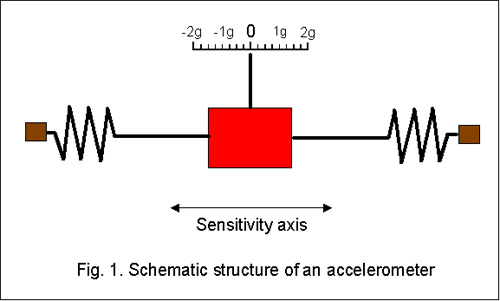
Three accelerometers measure the slightest quiver or shake, up, down, or sideways and the unbiased report is an audible as an irate wife.
To determine the course over which the 'man' goes for a ride, survey teams actually built a highway of potholes and bumps. Some of Detroit's worst highway surfaces have even been duplicated on the testing grounds."

Sunday, April 17, 2011

Drunk Driving Tragedies: In Song and Photograph


Hi folks -- an incredible contribution by Ed Garten. I will try to insert song lyrics lter today, as I had difficulty with spacing in copying from email to blog site.


DRUNK DRIVING TRAGEDIES: IN SONG AND PHOTOGRAPH As a young boy and then as a teen, the connections between driving and the use of alcohol were deeply impressed on my mind. My grandfather Carlos Garten, who operated Garten Motors Ford/Mercury in the small town of Hinton, West Virginia from 1945 through the early 1960s, had the only wrecker service in the country. Accordingly, nearly every car accident, both minor and tragic, typically was met first by the ambulance and then by Grandfather's Ford F-350 wrecker truck. My father, Johnny Garten, was the wreaker driver for several years and sometimes would invite me to ride with him when called to the scene of an accident -- a car driven into the river, a car wrapped around a telephone pole, or several cars having met head-on to where one can could not be distinguished from the other what with the intertwined twisted metal. I can recall telephone calls at our home late at night or early in the morning with the dispatcher saying: "Johnny, there's been a bad wreck up on Route 7 just outside of Forest Hill. Get here as fast you you can. Best not to bring Eddie with you this time, its real bad." Several times the wreaks were so horrible and with deaths that my father would stop the wreaker about 500 yards from the accident scene and tell me to sit off to the side of the road and wait for him and he'd pick me up a bit later. Clearly he didn't want me to see the tragedy, the blood, and the death scene. Sometimes on Saturdays while visiting grandfather's dealership I'd sneak behind the shop and look at the car wreaks that had been pulled in from a previous Friday or Saturday night. Certainly the favorite two nights for drinkin' for hillbilly boys. Many times I'd peer into broken windows and see liquor bottles or beer cans on the floor. Other times I'd pull a driver's side door open and see a bloody dried seat. On other occasions I'd silently look at steering wheel columns that had clearly pierced a human body or a broken windshield that had met with an unfortunate head. Youthful curiousity, perhaps, but images that still play on my mind over 50 years later. Tragically, so many of these car crashes had involved alcohol. Why are we often so fascinated with the scene of such tragic accidents? Why do we try to avert our eyes when passing such horrible accidents on the highway, yet turn just before passing to catch a glimpse of the destruction? As John Heitmann knows I have a "coffee table" book (for lack of a better name in the case of this book) whose title is "Car Crashes & Other Sad Stories" by Mel Kilpatrick (Taschen, 1974). This picture book is not an easy one to spend even a few minutes with as all of the photos are of car accidents many of which have involved drunk driving. The phototographer focused on death -- violent death in small town America of the late 1940s and early 1950s. When night fell, he tuned in the crackling police radio band, always ready to rush to the scene of yet another bloody drama with his photographic equipment. Kilpatrick documented these tragedies and produced several thousand horrific photos in black and white But above all he sought out traffic accidents and their victims, who paid for America's post-war cult of the automobile and speed with their lives. Before seat belts and before air bags, Kilpatrick graphically proved why alcohol and driving don't mix. Kilpatrick's photos, unearthed in his darkroom in Anaheim, California, 35 years after his death, are ones that even a strong person can only stare at for so long. Repeat after me: Alcohol and driving motor vehicles don't mix. Recently I was wondering about the many "car crash" songs that have appeared over the years on record. Wikipedia lists a large number of them some dating back to the mid-50s with the song titled simply as "The Death of James Dean." http://en.wikipedia.org/wiki/List_of_car_crash_songs But then I wondered: What might have been the very first "drunk driving car crash" popular song? (Not that this genre of song is popular, mind you). My own research, however, suggests that perhaps the first such song was "Wreck on the Highway" by Dorsey Dixon in 1938. The song became so popular, especially in the rural South, that its lyrics became a US Army basic training chant for soldiers stationed in the South. Dixon's lyrics are haunting: "Whiskey and blood ran together, but I didn't hear nobody pray." The Wreck on the Highway http://www.youtube.com/watch?v=d43g8unp7Wk Audio File (MP3 file, ca. 2.9MB, 3:09 min.)


Dorsey Murdock Dixon (14 Oct. 1897-18 Apr. 1968), millworker, songwriter, and country musician, was born into a family of Darlington, S.C., factory workers. His father, William McQuiller Dixon (1875–1939), was a steam engine operator in the Darlington Cotton Manufacturing Company whose seven children followed him into the mill. Dorsey left school after the fourth grade and began working in the Darlington mill when he was twelve. He learned traditional and sentimental songs from his family and neighbors, who would gather at the Dixon house for music making. A local schoolteacher gave him violin lessons, and by the age of fourteen he had taught himself to play the guitar. A disastrous fire in a Cleveland, S.C., school-house in 1923 had lingered in Dixon's memory, and in 1929 he expressed his reaction in a poem. His mother and his brother Howard noted that the words could be set to the popular tune, "Life's Railway to Heaven." Encouraged by their enthusiasm, Dorsey began to compose in earnest, developing a pattern he would follow all his life. His first-hand experiences were cast into poetry and set to traditional and traditionally inspired tunes. His subject matter was overwhelmingly drawn from his religious speculations on local tragedies. A song Dixon had composed on a fatal car accident in East Rockingham, which the brothers recorded in 1938 as "I Didn't Hear Anybody Pray," was recorded by Roy Acuff in 1942 as "Wreck on the Highway." It is unclear where Acuff had learned the song, but he chose to copyright it under his own name. "Wreck on the Highway" quickly became a country music standard and, still today, one will occasionally hear old time country musicians playing it for their audiences at bluegrass festivals. If an earlier "drunk driving, car wreak tragedy" song exists I'd certainly like to know about it, but for now let's assume that this haunting song may have been the first to bring the tragedy of drinking and driving to the attention of a wider public. Again, don't drink and drive, or you may end up in the lyrics of a song.

Wednesday, April 13, 2011

A Visit to RM Restorations and Auctions, Chatam, Ontario

One of several beautiful cars parked outsidethe restoration facility
Two red M-B 300SLs were parked outside the shop.
I wan't supposedto take any photos of the restoration shop but took one before I knew it was prohibited!


Two examples of the many auction cars and motorscycles for sale!

Hi Folks -I attended the Society of Automotive Historians spring business meeting on Monday in London, Ontario. Tuesday we took a trip to Chatham, Ontario to the home of RM Restorations and Auctions. We were given a super tour of the shop -- some 30 people (including two shop women) work at a craft shop where each lead artisian is given a project car. Metal shaping, painting, and all work except fine machine work on done on the premises.

Next to the shop there is a building that contains cars slated for auction.
A sublime morning tour!

Sunday, April 10, 2011

Reflections on Detroit


Hi folks, so I started my trip east at the end of last week with a stop over in Detroit before going on to London, Ontario. If you ever get to DEtorit, i heartily recommned staying at the Inn on Ferry Street. This Hotel consists of 3 grand old homes converted into large hotel-like rooms. The staff is most helpful and friendly, and they will run you all around Detroit in one of their vans. It is close enough to downtown Detroit that you can get down to the center of the city and Greektown in five minutes, or the new ball park. Around the corner from the Inn is the Detroit Art institute and the main public library, along with the historical museum. And Wayne state is right there as well.

This morning I took a short walk around the cultural district, and had plenty to think about. I like aspects of Detroit, despite all the press that attack its present condition. The architecture remains quite beautiful, and the near empty streets evoke a kind of melancholy. But one can still feel the greatness of a city that once was at the heart of American industrial and economic growth. The churches downtown are still beautiful if only sparsely attended.

Will it come back? Probably not in my lifetime. Will it become a ghost town? Equally unlikely. Is Detroit's decline a forerunner of a larger decline that all of America will experience within the next two decades? Maybe.