Popular Posts

Tuesday, January 15, 2013

The Light Brown or Tan Buick -- what it says about my neighbors in the suburbs

Hi folks -- I was just going over my lecture material this morning for the first real class tomorrow and thought of the ever-pervasive brown or tan Buick that is driven by those typically over 50 in my suburb of Centerville Ohio. I can't get away from them around here, and I seemingly always encounter one lagging in the left lane on Far Hills as I go to and from work. If the driver is male, he seems to always have pattern baldness. Whether male or female, time is catching up with them. One in four and five are so short they are shrunk below the headrest, almost all wear some kind of glasses, and sunglasses can be those plastic wrap-around kind
The color, light brown, suggests a kind of blandness, like life is for all purposes no longer exciting, but rather placid.  The owner wants to be in the background, and perhaps the color also is a reflection of youth spent in the 1950s, when consensus in America ruled the day. But I should not be so hard, for I am quickly becoming one of these folks. After years of toil and trouble, there is a longing for peacefulness, for things that work without any trouble, for reliability without time  or money spent on much upkeep. We of this generation have earned a rest from the tumult of life, and the Buick delivers with little fan fare.

Sunday, January 13, 2013

When an historian admits that he might be wrong: The Corvair


Hi folks -- what follows is a section from my book The Automobile and American Life concerning the Chevrolet Corvair. The more I learn, the more my views shift.  History is never set in stone.  And in the case of the Corvair, I took the easy way out initially, following well-worn interpretations.  When you read history, beware. You need to question assertions, not only because some are based on deception and lies, but also a few like mine here is derived from taking the path of least resistance.  Dig deep!  It amy well be that the Corvair was "assassinated" during the second half of the 1960s.  It may be that had the Corvair succeeded, the entire American auto industry would have taken a different direction at a critical time in its history, thus avoiding the decline that it has experienced. Yes, the Corvair had quality problems, but it was built in an era when quality was rarely considered.  It was fun to drive, and economical. So in the weeks ahead I will be addressing the Corvair story with new information and at the same time exploring the context of mid-to-late 1960s America.


"And as much as Ralph Nader attacked GM for its Corvair in his Unsafe at Any Speed, he also broadened his critique to include the engineers who worked in Detroit. Perhaps more than anyone else since Thorsten Veblen, Ralph Nader focused on the shortcomings of engineers and in the flawed institutional arrangements that existed where they worked. Published in 1965, Unsafe at Any Speed accused automotive engineers of disregarding ethical principles and ignoring public safety. The publicity given to his critical analysis, and Nader’s own crusade spurred the consumer movement and the work of trial lawyers, both of which have led to powerful social changes since the early 1960s.[1]
            At the heart of Nader’s early work was his attack on the safety of General Motor’s Corvair. In Nader’s opinion, “the Corvair was tragedy not a blunder.” The tragedy was a consequence of engineers who cut corners to shave costs. This was a common occurrence in the auto industry and indeed all manufacturing, but with the Corvair it happened in a big way. Fatefully, during the late 1950s, General Motors, under the leadership of engineer Ed Cole, developed the Corvair, in part the consequence of the unexpected success of the Volkswagen Beetle, but also the result of two decades of engineers’ fascination with the concept of a vehicle with its engine placed in the rear. While the Corvair had its supporters who argued that the car got a raw deal by consumer advocates, it was generally regarded as one of a number of post-1960 Detroit products that were egregiously unsafe and based on flawed designs. It was hubris, economics, and blind obedience on the part of engineers working in a flawed institutional environment that led to the Corvair tragedy. The Corvair was the wrong car at the wrong time in American history.
            The tragedy can be translated into human terms. For example, in August 1961, Mrs. Rose Pierini of Santa Barbara lost control of her new Corvair while driving 35 mph. The car flipped on its top, and Mrs. Pierini was trapped underneath, blood gushing from a dismembered arm that was lying in the street. She would later receive $70,000 after being worn down by GM attorneys and deciding not to go any further with her lawsuit. In a similar fashion, GM Truck and Bus Vice-President Calvin J. Werner, living in Dayton, Ohio, purchased a Corvair for his daughter. She was afraid to drive the car, but her brother was not. That brother would also die in a low-speed accident, the consequence of the vehicle’s inherent instability. The Werner family’s plight is reflective of just how little the public, and indeed even GM insiders, knew about the inherent design flaws of the Corvair during the first few years after its introduction. There was a conspiracy of silence about unsafe vehicles before the era of recalls.
            Indeed, during the 1960 to 1964 model years, the Corvair could go out of control at 22 mph with a turning radius of 50 degrees and front rear and tire pressures of 26 psi. Ford engineers quickly discovered this fact, when in 1959 two of them lost control of an early Corvair on the Dearborn, Michigan test track.
            The tragedy began with conception and development of the Corvair by leading GM engineers – Edward Cole, Harry Barr, Robert Schilling, Kai Hansen, and Frank Winchell. Cole, an long-time devotee of rear-engined cars, saw a market as early as 1955 for a small, compact car, and in 1956, after rising to the head of the Chevrolet Division, put his finest engineering talent to work on the project. By 1957, the program was given a full go ahead, even though executives knew that several design obstacles had yet to be overcome.
            As early as 1953, GM executives were aware of the main problem that was associated later with the Corvairs. In that year, one of the GM’s brightest engineers, Maurice Olley, wrote a technical paper, “European Postwar Cars,” that contained a sharp critique of rear-engined automobiles with swing-axle suspension systems. He called such vehicles “a poor bargain, at least in the form in which they are at present built,” adding that they could not handle safely in wind even at moderate speeds, despite the tire pressure differential between front and rear. Olley went further, depicting the “forward fuel tank as a collision risk as is the mass of engine in the rear.”[2]
            Despite these warnings, GM went ahead, with its primary aim being a target rate of return on investment. The 1960 Corvair came off the assembly line at two-thirds the weight of a standard Chevrolet, with a selling price $200 lower than standard models, but to keep costs down and profits high, compromises had to be made. Suspension stabilizers were left off, and a peculiar kind of swing axle was used that created “oversteer” or instability when deviating from a straight path. To compensate for oversteer, Corvair engineers recommended that owners maintain critical tire pressure differentials between front and rear wheels. This whole design, confessed one GM engineer, was based on lower cost, ease of assembly, ease of service, simplicity of design, and the desire to create a soft ride.
            The biggest problem with the Corvair was that GM was slow to react to a known problem – the large number of accidents due to loss of control. The company was silent when questioned on the matter. Until Nader gained a wide public audience, GM did little or nothing. The moral of the story is that the corporations of the early 1960s only faced the consequences of their actions when threatened with government sanctions, expensive litigation and court judgments, or public hostility on a massive scale. Indeed, it took GM four years and 1,124,076 Corvairs to correct the problem.[3]
            The convergence of forces for change took the industry by total surprise in the months immediately after the 1964 presidential election. The Johnson administration's willingness to sponsor social reform legislation, the appearance on the Washington scene of Ralph Nader, Abraham Ribicoff, and the American Trial Lawyers' Association are all part of the story. Significantly, a 1966 landmark case, Larsen vs. General Motors, marked a new trend in automobile liability decisions.[4] Manufacturers were now held responsible for inadequate designs that resulted in injuries due to a collision. Other cases followed Larsen, but it was this case, involving the dangerous design of the Corvair steering column, that made possible an additional recourse for consumers. With agencies like the Department of Transportation often influenced by industry, the judiciary was a second route to ultimately enhancing automobile safety."


[1] Ralph Nader, Unsafe at any Speed (New York: Grossman, 1965). On Nader, see Justin Martin, Nader: Crusader, Spoiler, Icon (Cambridge, MA: Perseus, 2002). See also Mervyn Kaufman, “Ralph Nader: “Crusader for Safety,” Automobile Quarterly 5 (Summer 1966), 4-7.
[2] Maurice Olley, “European Postwar Cars,” SAE Transactions 61 (1953): 503-28.
[3] Corvair enthusiasts and apologists abound, despite the historical record concerning its safety in models manufactured between 1960 and 1963. See David E. Davis, “Why Ralph Nader was Wrong,” Automobile (January 2006): 87-90.
[4] “Automobile Design Liability:  Larsen v. Genera Motors and its Aftermath,” University of Pennsylvania Law Review 118 (December 1969), 299-312; Ralph Nader and Joseph A. Page, “Automobile Design and the Judicial Process,” California Law Review 55 (August 1967): 645‑77.

Friday, January 11, 2013

A Quick Trip to Flint MI, the Birthplace of General Motors

 Hi folks-- just back from an SAH trip to get information so I can better arrange the future board meeting, slated for April 25-27, 2013.
 One glimpse of the Scharchburg Archives, Kettering University

The home of Charles Nash
The second floor was where Durant had his sales office and where carriages were on display for sales

 The surviving section of the carriage factory

The office of J. Dallas Dort, now a meeting room


Statues of Billy Durant and J. Dallas Dort by the river


Flint has some attractive scenes

Sunday, January 6, 2013

Hip Hop, Rap and Cool Rides

In part taken from Automobile, December 2012, p. 20.

Some show and prove rhythms about rides:

"I got bodyguards, I got two big cars
That definitely ain't the whack
I got a Lincoln Continental and a sunroof Cadillac."

Sugarhill Gang, "Rappers' Delight," -- 1979

***********

"I got a big long Caddy, not like a Seville
And written right on the side it reads:
'Dressed to Kill."
Run-DMC, "Sucker MCs," -- 1984


**********


"Hit the boulevard in my AMG
Ladies catchin' whiplash tryin' to glimpse the T"

Ice T, "6 'N the Mornin," -- 1987.


**********

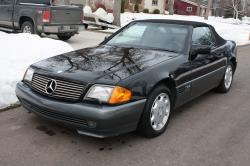
F***the past, let's dwell on the 500SL
the E&J and ginger ale

Notorious B.I.G., "One More Chance" -- 1994


**********
Picture me rollin'in my 500 Benz

2Pac, "Picture Me Rollin" -- 1996

**********

No matter how you try you can't stop it
I catch ya stuntin' in the
Bentley coupe cockpit

50Cent, "Like My Style" -- 2003

**********

Church's chicken in my Lambo

Gucci Mane, Stupid Wild" -- 2009

**********

Lambo-mercy-lago
She go wherever I go
whereever we go, we do it pronto

Kayne West. "Mercy" -- 2012

**********

What goes around comes around
in the form of karma
Nah, that's probably just me
ridin' around your town in a Fisker

Slaughterhouse, "Weight Scale" -- 2012


Syllabus "Automobile and American Life" Spring 2013


 HST 344  -- Science, Technology and the Modern Corporation: The Automobile and American Life

            Class Meeting: MWF 1-1:50 p.m., HM 125

            Instructor: John A. Heitmann

            Office: 435HM (x92803).

            Office Hours: 2:00-2:50 MW or by appointment
            E-Mail: Jheitmann1@udayton.edu
            Blog page: http://www.automobileandamericanlife.blogspot.com

            Texts:  John Heitmann, The Automobile and American Life.
                        Jack Keroauc, On the Road.
                        Ben Hamper, Rivethead.
Jason Vuic, The Yugo: The Rise and Fall of the Worst Car in History

                        Grades: The final grade for this course will be based on two hour exams, (60%), occasional quizzes, and final exam (30%). The grade scale is as follows: A  94 to 100; A-  90 to 93; B+  87-89; B 84-86; B-  80 - 83; C+ 77-79; C 74-76; C- 70-73.  A similar pattern applies to lower grades.  Letter grades are assigned a mid-point numerical grade. Additionally, attendance can influence your final grade: if you miss more than 3 classes, one letter grade will be deducted from your grade; if you miss more than 6 classes, a two letter grade reduction will take place.  A good grade for this course is a C+.  Grade averages may be influenced by such factors as trends over the time of the course; for example, how you finish is far more important than how you start. Policies for exams strictly follows History Department Guidelines, and make-ups will only be offered with a valid, documented excuse.

            Attendance at lectures is crucial if you are to expect a good grade in the course, and I want you to be at every class if that is at all possible. On many occasions material presented is not covered in the readings, and so many of the ideas discussed central to the development of modern science are complex and often confusing. Your attitude and what you bring in to the classroom can make the difference between a mediocre offering and a most positive educational experience. 
            Cheating and plagiarism will not be tolerated and offenses will be punished accordingly. A first offense will result in a failing grade for the exam or paper in question; a second offense will result in a failing grade for the course.
           
Course Purpose:  It has been said that the automobile is the perfect technological symbol of American culture, a tangible expression of our quest to level space, time and class, and a reflection of our restless mobility, social and otherwise. In this course we will explore together the place of the automobile in American life, and how it transformed business, life on the farm and in the city, the nature and organization of work, leisure time, and the arts. This is a most complex transition that we will study, as the automobile transformed everyday life and the environment in which we operate.  It influenced the foods we eat; music we listen to; risks we take; places we visit; errands we run; emotions we feel; movies we watch; stress we endure; and, the air we breathe.


SCHEDULE OF LECTURES AND ASSIGNMENTS

            The week of:

Week 1/January 14                  Introduction; What our cars tell us about ourselves. The car in everyday life: the automobile age and its contradictions.  Automotive Pioneers
                                                            Reading: Heitmann, Introduction, Chapter 1.
Films: “Wild Wheels”; “Horatio’s Drive.”

January 21 -- MLK Day -- No Class
                                                                  
           
Week 2/January 23                  Putting America on the Road; Henry Ford and the Model T
                                                            Reading: Heitmann, Chapter 2.
                                                            Film: “Automobile Parade;” “Gussle’s Day of Rest.”
                       

            Week 3/January 28                  Stealing Cars; The Rise of General Motors
                                                            Reading: Heitmann, pp. 54-63.
                                                            Film: “Master Hands;” "Roger and Me."


Week 4/February 4                  Advertising, Styling, Design and the Art of the Automobile
                                                            Reading: Heitmann, pp. 64-71.
                                                            Film: “Automobile Advertising 1910-1940.”  

            Week 5/February 11                On the Road
            Reading: Heitmann, Chapter 4.
Films: “Grapes of Wrath;” “Route 66;"            “Detour;” Keroauc: On           the Road"

February 15:  Exam 1 -- on this exam you will be tested on the Keroauc book.
           

Week 6/ February 18               Religion, Courtship and Sex
                                                            Readings: Heitmann, Chapter 5.
Films: “Thelma and Louise”; “Motorcycle Diaries”


Week 7/ February 25               The Interwar Years: The Great Depression, Aerodynamics, and Cars of the Olympian Age            
                                                            Readings:  Heitmann, Chapter 6.
                                                            Films: “The Crowd Roars;”  “Burn Em’Up Barnes.”

           
            Mid-Term Break: Holiday March 1


Week 8/March 4                      World War II:  Detroit, the Arsenal of Democracy
                                                Readings:  Heitmann, Chapter 7
Film: “Jitterbugs.”       

Week 9/ March 11                   The Post War Industry and Technological Suppression
Readings: Heitmann, pp. 133-154.
                                                            Film: “Tucker”
           
            Week 10/ March 18                 Chrome Dreams of the 1950s
                                                            Jan & Dean and  the Beach Boys          
                                                            Readings: Heitmann, pp.154-163.
                                                            Film:  “American Graffiti”
           
Week 11/ March 25                 The Rise of the American Muscle Car
                                                            Readings: Heitmann, pp.164-178.
                                                            Films: “Goldfinger;” “Thunderball” “Bullitt.”

            Test 2 March 27 -- Exam #2 -- you will be tested on the Vuic  book at this time
           
            Easter Recess, March 28-April 1
           
            Week 12/ April 3         Oil Shock I: Japan, James Bond, and Mobile Lovemaking
                                                            Readings: Heitmann, pp. 178-184.
                                                            Film: “Easy Rider;” Toby Halicki's "Gone in Sixty Seconds"
           

            Week 13/ April 8         The Automobile World Upside Down, 1980s to the Present.

                                                Readings: Heitmann, pp.185-194.
                                                Film:  “Fast and Furious; Tokyo Drift;”  "The Last Truck: Closing of a GM Plant"

Week 14/ April 15/19   The Automobile Industry and the Future; Sum Up
Reading:  Heitmann, pp.194-206.
Film:  “The Revenge of the Electric Car”
                                               

April 17  Stander Symposium
           
Week 15/April 22        Last Day of Classes
                                    Heitmann, Epilogue.
           
FINAL EXAM, Tuesday, April 30, 2:30 --4:200 p.m. On this exam you will be tested on the Ben Hamper Book.

Saturday, January 5, 2013

Arnold Schwarzenegger and his M47 Patton tank


Arnold Schwarzenegger and his M47 Patton tank (Photo: Matt McDaniel)

Arnold Schwarzenegger owns his own tank. Because of course he would.
If any private citizen was going to possess their own tank, obviously it would be Arnold Schwarzenegger. But it’s not just for joy rides and smashing cars – though he did drive me around on it, and he did roll over and flatten an old clunker with it. It’s a tank that does have personal meaning to him, and he uses it for an altruistic purpose.
The tank in question in an M47 Patton. Produced between 1951 and 1953, the 50-ton behemoths are still in service across the globe 60 years later. And Schwarzenegger told me and an assembled group of around 15 journalists on Friday that this was “exactly the very tank that I drove in the Austrian Army when I was 18 years old.”

Schwarzenegger was required to serve at least a year in the military, and he told us he went in right after finishing trade school. He said, “I learned how to drive the tank, which was always my fascination, I think, because I grew up after the war, and I saw the British troops that occupied our area. So I always wanted to be a tank driver.”
Schwarzenegger recounted how they would go off on maneuvers for weeks at a time. In the evenings, they would dig out a trench that he would roll the tank over, and he and his crew would sleep on the dirt underneath. He also revealed that the side of the tank featured a large tool box, but he used his to house his weightlifting equipment. He kept his barbells and dumbbells on hand so he could train every night while they were away from base. That way he was able to stay in shape so that a few months after leaving the service, he was able to compete in his first Mr. Universe competition in 1966. He came in second that year, and then won the amateur title the next (and the pro title the three following years).