Popular Posts

Wednesday, September 3, 2014

The Automobile: "European by Birth, American by Adoption"

1903 Panhard et Levassor
1903 Mercedes 60 HP at Goodwood Festival of Speed, 2013

1903 DeDion-Bouton


European by Birth, American by Adoption
An apt but worn-out cliché concerning the early history of the automobile is that “the automobile was European by birth, American by adoption.” Indeed, the visionary idea of the automobile – in the words of James Flink, “the combination of a light, sprung, wheeled vehicle; a compact, efficient power unit; and hard surfaced roads” gradually became a reality during the last half of the nineteenth century, primarily in Europe and to a lesser degree in America.2 The idea was transformed into a complex artifact, one that quickly hardened in fundamental design. For example, the basic configuration of the modern automobile with the radiator and engine in the front, followed by the clutch, transmission and rear axle drive, the système Panhard, was devised in France in 1891.3 A decade later, the 1903 De Dion-Bouton followed this scheme with a honeycomb radiator, sliding design four-speed transmission, and a steel frame, clearly distinct form the horseless carriage. Most importantly, the De Dion used an ingenious rear axle that replaced the cumbersome chain drive with half shafts transmitting power to the drive wheels. And finally, the 1903 “Sixty” Mercedes, despite its chain drive, had a magneto ignition, six-cylinder engine, and speeds capable of 60 miles per hour.4 In fundamental terms, the modern automobile crystallized technologically very quickly, and thus its origins are a most important object for study.
            After the idea and pioneering artifact came the commonly-used term automobile. Tracing its introduction (a semantic history) tells us much about the early history of the automobile in America. As Patricia Lipski skillfully pointed out, the word was French, but key to its adoption in America was its acceptance by New York City’s high society.5 A French term first used in America in 1895 and fully adopted in the U.S. by 1899, other words were proposed and debated during this time – horseless carriage, motocycle, motor vehicle, automation, mocle, autom, polycycle. Members of high society in New York City owned the first cars, including William Rockefeller, George Gould, Edwin Gould, John Jacob Astor, Jacob Ruppert, C. P. Huntington, and Claus Spreckels. This Gilded Age aristocracy paraded their vehicles at Newport, Rhode Island in the summer of 1899, and influenced the newly-published editorial writers of the magazines The Automobile and The Automobile Magazine to endorse automobile as a universally accepted term. In sum, while the beginnings of the automobile are often attributed to a group of visionary tinkerers, engineers, inventors, and mechanical geniuses, the upper classes were the consumers of this product, and they cast a lasting imprint on its place in culture in ways perhaps more complex than just the choice of a term.
            The key innovations associated with this new transportation technology, its gradual diffusion and acceptance, first public impressions, and initial cultural responses are the most significant areas of research. These topics have received considerable scholarly attention.6 While my own interests tend to focus on a later period, coverage must begin here, at the critical moment of creation.
            While the origins of a new technological system are undoubtedly important, historians often work backwards in time to fully trace strands of seminal ideas and techniques. That tendency can often prevent scholars from addressing more recent pressing and relevant matters. With the passage of time, perspectives become clearer, records are discovered and catalogued, and historical actors with a penchant to refute one’s story die. Yet the recent past often has the most relevance for the living, despite the many methodological and practical obstacles in pursuing it.
            Whatever the time frame under investigation, the tension between continuity and change challenges the historian in a unique manner. What distinguishes the historian from the sociologist or philosopher, however, is the scrupulous adherence to chronology and time.
            Technological antecedents to the automobile included the work of Nicholas Joseph Cugnot between 1765 and 1770 on a three-wheel steam tractor for pulling cannons; Richard Trevithick and his experiments with a steam locomotive conducted during the years 1801 and 1803; and Philadelphia inventor Oliver Evans and his “Orukter Amphibolos” or “Amphibious Digger.” All of these early efforts have been described in more extensive detail elsewhere, but are mentioned here to provide a sense of the long sweep of history concerning this form of transportation technology.

            Steam carriages appeared on the scene primarily in England beginning in the 1820s, although in 1865 horse-drawn transportation interests suppressed mechanical road vehicles with the passage in Parliament of the so-called Red Flag Act. This legislation limited the speed of “road locomotives” to 2 mph in towns and 4 mph on the open highway. It also required that an attendant walk 60 yards ahead carrying a red flag by day and a red lantern by night. Until its repeal in 1896 at the request of wealthy automobile pioneers, the act militated against the development of the automobile idea in Great Britain, for by 1890 there were light steam vehicles capable of speeds of 15 mph over long distances. David Beasley’s The Suppression of the Automobile: Skullduggery at the Crossroads discusses this chapter in history, important in terms of British developments, but tangential to mainstream developments in the emergence of the internal combustion engine (ICE) that would prove key to the automobile’s acceptance in Europe and America.8

Monday, September 1, 2014

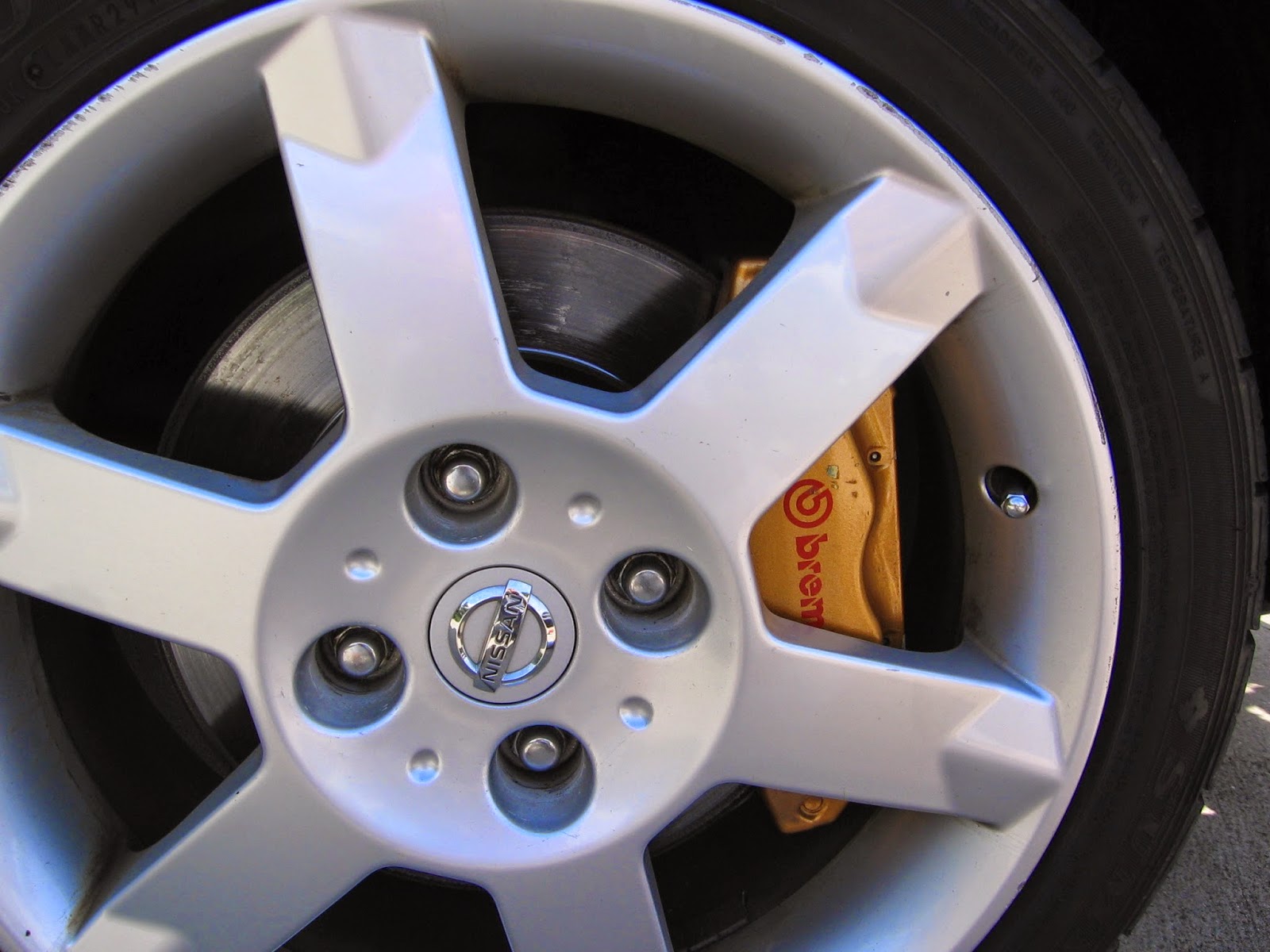
For Sale: 2006 Nissan Sentra Spec V with Brembo Brakes

Hi folks,
I need to start clearing out garage space, so here is  the first of my offerings. The car is in Centerville Ohio. It has been in my family from the beginning, and has 106,000 miles on it. Brembo Brakes, sunroof, 6-speed transmission. A few minor scratches here and there, but otherwise in outstanding condition, as it was well cared for.  Oil changed every three thousand miles. Very good Sumohito 17 inch touring tires. A terrific find for the right person looking or a high performance smaller vehicle in great shape. If interested, call me at 937-435-5120 or email at Jheitmann1@udayton.edu.


Tuesday, August 26, 2014

1950s Chevy speedometers as art forms


From a 1954 Corvette
From a 1956 Chevrolet


Friday, August 22, 2014

Another Conference Announcement: Automobile Film Festival, Toledo, OH, Spring, 2015

Message: Greetings! This notice is an initial contact inviting you and/or your organization to participate in the inaugural Automobile Film Festival in Toledo, Ohio. The festival will be held in the spring of 2015 and will feature special automobile-related events associated with the films. An academic conference, in conjunction with the festival, will also be held; this conference will address automobiles and their effect on society, especially through the medium of motion pictures. This project is a direct effort of Destination Toledo and a select group of individuals interested in the development of a special events film festival for the region. This project began solely as an academic effort and has been expanded to include the aforementioned film festival and other relevant special events to enhance the experience. The entire experience will be an exploration of cars and their influence on society. An initial feasibility study and operational plan have been developed under the direction of the academic partners involved, which include both Bowling Green State University and Northwestern Michigan College. A special non-profit organization will be formed to administer the film festival as funding is obtained. The film festival, itself, will be directed with the cooperation of Destination Toledo and the academic representatives who have developed and nurtured the idea from the beginning. The inaugural academic conference will focus on film because it is an instrumental popular medium that tends to romanticize the automobile. There is desperate need for research outlets regarding the socio-cultural and/or psychological aspects of automobiles in order to develop a body of theory. The automobile industry is significant â�� an industry that has grown around individual and societal needs and has a major effect upon our global economy. Automobiles are engrained in our shared mindset and have a profound influence on the societal and cultural elements of civilization. The primary objective of this conference is to develop a high quality/high visibility event that will encourage an interdisciplinary approach to how ideas might be explored and exchanged. An academic journal will be published from the original research presented at the conference for the benefit of scholars, policymakers, and practitioners. This journal will cover all manner of vehicles including cars, trucks, iconic makes and models, race cars, and the like. The conference will be a bridge across several academic disciplines. This bridge will help develop a more focused approach to research without the influence of the parent sciences. A new body of scholarly literature will enhance the uniqueness of the automobilesâ��/motorsportsâ�� discipline. Right now, most submissions to journals define themselves in terms of their associated parent sciences. This proposed new journal will help widen the perspective of submissions and focus specifically on newly-emerging paradigms. There is a distinct possibility that this new journal will be forced to develop academic credibility, and this may prove to be a struggle. Therefore, the emphasis will be on quality presentations that could find a home in any scholarly journal. This is a formal invitation for you and/or your organization to become involved in this project as you have information that is very important to the development of an active research community. We are looking for cooperators who might build bridges across research databases to further the understanding about automobiles and their influence on society, as well as on their importance to individuals. Your involvement is essential to the success of this project. Please submit abstracts for review and/or possible session topics. Even though the primary topic is film, other important issues will also be developed during the academic conference. If you are not interested, please share this announcement with your colleagues. If you know of a person or group that may be interested, please forward the contact to us and we will send them an invitation of their own. Many thanks for your time and attention. We look forward to hearing from you and hope you will consider getting involved with this unique and exciting opportunity. Send all correspondence to Dr. Mark Howell. Dr. Mark D. Howell Professor of Communications Northwestern Michigan College & Ferris State University SH 214 F 1701 East Front Street Traverse City, Michigan 49686(231) 995-1192 mhowell@nmc.edu Dr. David Groves Professor Emeritus Eppler North Bowling Green State University Bowling Green, Ohio 43403dgroves@bgsu.edu

Announcement: "Motoring and Heritage," UNESCO Worldheritage Tourism Expo, September 19-21, Padova, Italy


This year, the Worldheritage Tourism Expo (WTE), an international event devoted to the promotion of the UNESCO World Heritage Sites, will host the first international conference on „Motoring and Heritage". The event (see general details on http://www.worldheritagetourismexpo.com) is taking place in Padova, Italy on September 19-21. 

Central aim of this conference is to built bridges between the world of cultural heritage and the community of historic vehicle enthusiasts and to start a fruitful, sustainable dialogue. Supported by an international board of professional from both fields, this years’s subjects will be:

- Motorism as an important part of our cultural heritage
- UNESCO and motoring: examples of designations
- Recent developments in historic vehicle restoration
- The role of the private collectors for the preservation of  historic vehicles
- The role of the museums for the preservation of  historic vehicles
- The role of events for the preservation of  historic vehicles
- The role of training for the preservation of  historic vehicles

Friday, August 15, 2014

Beavercreek, OH Cruise-In: a Very nice 1939 Chrysler

Hi folks -- never seen on of these before.  I really liked the art deco dash arrangement (minus the aftermarket radio!).