Popular Posts

Thursday, September 4, 2014

American Automobile Industry Pioneers

Charles and Frank Duryea

Edgar and Elmer Apperson


Elwood Haynes
Ransom Eli Olds
George Pierce, Buffalo, NY
Albert Pope


American Pioneers
            The transition in national automotive leadership away from Europe and to the United States that took place during the first decade of the twentieth century is complex. One aspect that remains to be explored is the immigration of European automotive engineers to the United States. This matter of technology transfer is a phenomenon that certainly happened in the case of the Thomas Company located in Buffalo, New York where a number of French engineers were employed, and may have occurred elsewhere as well.25 The automotive history literature celebrates American innovation, but ignores European influence on the early development of the industry. It is as if the American industry evolved out of virgin soil, which is highly unlikely given the nature of the trans-Atlantic connections of that day. Certainly the United States had its native pioneers in terms of constructing prototype vehicles, or those made in small numbers, and also automobile manufacturers, who more often than not had previously been bicycle or carriage and wagon manufacturers.
            The pioneers included Charles and Frank Duryea, who assembled their first vehicle in 1893.26 The brothers would later engage in bitter priority disputes that continued to the early 1940s. Elwood Haynes, along with Edgar and Elmer Apperson, built their first car in 1894 in Kokomo, Indiana. In 1895 Hiram Maxim installed a gasoline engine on a tricycle, and a year later Henry Ford demonstrated his Quadricycle.27 Alexander Winton, a bicycle manufacturer in Cleveland, Ohio would soon follow with an unoriginal design of his own, but he was also among the first to manufacture vehicles in some quantity, marking him as a leader in the early automobile business, along with Colonel Albert A. Pope of Hartford, Connecticut.
            While Pope’s influence in the business would last only two years, to 1899, the Winton Motor Carriage Company flourished into the early twentieth century. Winton, like Henry Ford, raced his cars, and in 1903 a Winton became the first car to cross the continental United States. Other manufacturers of the period included George N. Pierce in Buffalo and Thomas L. Jeffery, who built the Rambler. Most significant was Ransom Eli Olds, whose curved-dash “Merry Oldsmobile,” built in Michigan, became an industry leader, with a production volume of 5,000 units in 1904. A dispute unfortunately followed – disputes were all too common among pioneer inventors and manufacturers of the era – and while Olds would later set up another company called REO, his influence on the industry diminished. Former employees of Olds who got their start there and then proved to be influential later in the automobile industry included Jonathan D. Maxwell, Robert C. Hupp, Roy D. Chapin and Howard E. Coffin.
            During the first decade of the twentieth century, the number of firms active in the industry is staggering by today’s standards. Some of the names of the early car companies were Orient, Monarch, Walker, Gale, Wolverine, Maxwell, Stoddard-Dayton, Wayne, Holsman, Logan, and Lambert. John Rae summarized the state of the infant industry as characterized by easy entry, virtually no government restrictions, literally hundreds of companies, and sources of capital varying from giants like J. P. Morgan to local banks and patrons.28
            As the superiority of the gasoline automobile was increasingly demonstrated over its steam and electric competitors, the geographic center of automobile manufacturing in the U.S. shifted from New England to the Midwest. The early, overwhelming choice of the internal combustion engine by Midwestern manufacturers was influenced by the region’s poor roads, which were nearly impossible for electrics to negotiate, relatively vast spaces when compared to the East, and by the availability of gasoline for fuel in sparsely-settled rural areas that lacked electricity. Since village blacksmiths were accustomed to repairing wagons and carriages, they can be considered the first generation of auto mechanics.
            The presence of a vibrant carriage trade and other economic and geographic factors contributed to the emergence of Detroit as the hub of automotive manufacturing in America. Most certainly, however, the elusive factor of personality and the presence of the likes of Ransom Olds, Henry Ford, Henry Leland, and Billy Durant proved critical to the rise of Detroit as the “Motor City.”
            To make a single prototype of a car is one thing, but to make it with uniform quality and in quantity is a very different challenge. The importance of high tolerance, uniformly machined parts like crankshafts and engine blocks, is usually credited to Henry Leland.29 Leland learned machine tool techniques from a craft tradition that can be traced back to Eli Whitney at the Mill Rock armory and then later diffused and improved upon by Simeon North at Springfield and Roswell Lee and Harpers’ Ferry. High volume and economies of scale would be the central achievement of Henry Ford and his key employees at Ford Motor Company after 1908. The spectacular rise in American auto production is reflected in Table 1:
Table 1: American Motor Vehicle Production, 1899-1910
Year
Number
Value ($)
1899
600
1,290,000
1903
10,576
16,000,000
1904
13,766
24,500,000
1905
20,787
42,000,000
1906
23,000
50,000,000
1907
42,694
105,000,000
1908
49,952
83,000,000
1909
114,891
135,000,000
1910
200,000
225,000,000
Source:  “Motor Vehicles,” Encyclopedia Britannica (13th Edition), vol. 18, 920.

            Despite the presence in Cleveland, Ohio of pioneering firms that included Winton, Stearns, Gaeth, Washburn, Marr, Owen Rogers & Hanford, and Pennington, Richard Wager made the argument that Cleveland’s decline as the center for the automobile industry was the consequence of conservative bankers. In contrast, Detroit’s financial institutions were far more willing to take risks.30

Wednesday, September 3, 2014

The Early Automobile: Internal Combustion verses Steam and Electric Power

Lenoir Engine, 1861


Drawing of 1885 Benz engine, showing similarity in general appearance to Duryea engine. From Karl Benz und sein Lebenswerk, Stuttgart, 1953.


Compact Power:  The Internal Combustion Engine (ICE)
            Along with the development of the bicycle, the internal combustion engine was most critical to developments in early automobile history. Credit for the ICE is normally given to Belgian inventor Etienne Lenoir (1822-1900). Living in France, Lenoir patented a two-stroke engine in 1860 that used illuminating gas (gas derived from heating coal in large retorts) that was ignited by a spark generated by a battery and coil. Lenoir’s engine was noisy and inefficient, and it tended to overheat. Used in stationary applications to power pumps and machines, some 250 were sold by 1865. And while the editor of Scientific American proclaimed in 1860 that with the coming of the Lenoir engine the Age of Steam was coming to an end, it took more than four decades before the ICE would eclipse the steam engine.16
            In 1876, Nicholas Otto (1832-1891) developed a four-cycle engine (intake, compression, power, and exhaust), and Lenoir came up with a similar design during 1883 and 1884. Two engineers who had once worked for Otto, Gottleib Daimler (1834-1900) and Wilhelm Maybach (1846-1929), designed a 1.5 horsepower, 110 pound, 600 rpm “high speed engine” in 1885, and built several experimental vehicles between 1885 and 1889. Maybach, one of the most important engineer-inventors of this early period, designed the modern carburetor for mixing air and gasoline in 1893.17
            In the meantime, Karl Benz (1844-1929) built a tricycle in 1885 to 1886 and exhibited a design at the 1889 Paris Exhibition. By 1893 he had constructed an improved four-wheel car with a three-horsepower engine that sold well and was fairly reliable. More than 100 Benz vehicles were sold by 1898. An early leader, Benz was soon passed technologically, especially by French manufacturers.
            James Laux, in his book First Gear, characterizes in detail the French automobile industry before 1914.18 The key French inventor-engineer of the late nineteenth century was Emile Constant Levassor, who took Gottleib Daimler’s engine and placed it in the front of the vehicle. Before Levassor’s untimely death, he proved the merits of his design – that a vehicle of his design could be practical – in the 1895 Paris-Bordeaux-Paris race. At first, and for only a relatively short time, Paris was the center of the nascent global automobile industry. Perhaps this was due to excellent French roads or social, economic, or political factors that remain to be explicated and are currently discounted. James Flink has argued that the importance of Paris was accidental rather than a crystallization of a complex network of relationships that included German, French, and Belgian inventors and businessmen.19
            The importance of the early French auto industry is reflected in the following chart20:
Year
Total Vehicles in Use
1899
1,672
1900
2,897
1901
5,386
1902
9,207
1903
12,984
1904
17,107
1905
21,543
1906
26,262
1907
31,286
1908
37,586
1908
46,000

            While a number of entrepreneurs in England, America, and Germany were only beginning to catch up to the French by the end of the nineteenth century, there was a concurrent Darwinian-like competition among three rival technologies in terms of power–the ICE already mentioned, steam, and electricity. In the end the most economically efficient technology would prevail, but that was by no means clear to those living in 1900.
Choices Made:  Competition from Steam Engines and Electric Motors
            The early designs of the internal combustion engine were primitive to say the least, and thus these power plants were anything but reliable and smooth running. At the turn of the century steam cars dominated the automotive field. An alternative was the electric car; but they were expensive and limited in range and speed. As it turned out, there was a short window of time in which these three technological rivals were engaged in a contest that revolved around which would be the chief power source for this new form of flexible and personal transportation, the automobile. The end result would have enormous consequences for the remainder of the twentieth century, economically and environmentally. As Tom McCarthy has pointed out, during the first decade of the twentieth century, a number of experts warned of the environmental consequences of ICE-powered vehicles, including the issues of oil depletion and toxic exhausts. However, McCarthy contends that the widespread adoption of the automobile by a consuming public allayed concerns at a time when adjustments could have been far more easily made than those that we, in the early twenty-first century, are now making.21
            Steam had a long history going back to the eighteenth century as the chief power source for factories, railroad locomotives, and electrical generation. For automobiles, steam engines were quieter than internal combustion. With fewer moving parts, steam engines had been manufactured for generations, and with less exacting tolerances. In addition, a steam engine had remarkable torque, especially from a dead stop. Steam pressure could be built up and stored, to be released at full force on demand. An internal combustion engine must turn within a narrow range of revolutions per minute to operate efficiently. Additionally, as anyone who has looked at a schematic of a transmission or differential knows, gears and small parts result in a power transmission system that can only be deemed ingenious to the mechanically uninitiated. Moreover, in the cylinder of a gas engine, the greatest force is exerted at the explosive instant of ignition, with the power dissipating as the piston completes its stroke. But in the cylinder of a steam engine, the steam enters, expands and continues to push for as much as 90 percent of the stroke.
            Steam engines had both limitations and advantages.22 With its extensive piping and metalwork, a steam car was heavier than an ICE car of comparable horsepower. Steam engines ran at lower thermal efficiencies than gas engines, losing much of their heat to the atmosphere. And while the working parts of a steam engine were quite simple and durable, the ancillary equipment – boiler, burner, and all manner of pumps, valves, and gauges – were dauntingly complex, demanding constant attention and maintenance. Most critically, the popular steam cars of the early 1900s – Stanley, White, and Locomobile – took 10 to 30 minutes to work up adequate steam pressure from a cold start and then had to stop for water every 30 to 100 miles. ICE-powered cars started faster and had greater range, an advantage in rural areas where service stations were sparse.
            After the turn of the century, steam car technology remained essentially stagnant for years until Abner Doble introduced advanced designs, while ICE-powered cars quickly improved. By the end of the first decade of the twentieth century, steam cars were technologically obsolete and economically unviable. Given these winds of change, White and Locomobile both converted to internal combustion by 1910, leaving only Stanley to fill a market with a curiosity that in recent times has been resurrected in as an interest in “buff” circles by car collector and comedian Jay Leno.

            In addition to the ICE- and steam-driven automobiles, there were also electric models at the turn of the century, partly the consequence of work by Thomas Edison and others related to improved battery designs.23 Electrics had several distinct advantages. They were especially attractive to those in the taxi business and women who wished to avoid the crank starting, noise, vibration, and pollution of ICE-powered vehicles. Low-end torque characteristics of electric motors ensured quick starts. However, in the early twentieth century any advantages were greatly outweighed by the many serious liabilities. Electrics were far more expensive than the gasoline automobile to manufacture and about three times more expensive to operate. Batteries could weigh a ton or more. There was the ever-present wire or cord that had to connect to a discharged electric car. As late as 1910, their range was only 50 to 80 miles on a battery charge, charging facilities were virtually nonexistent outside large cities, the storage batteries of the day deteriorated rapidly, and its hill climbing ability was poor due to excessive weight of the batteries for the horsepower generated.24 These relative liabilities have persisted to the present, despite recent improvement in storage batteries.

Technological Antecedents to the Automobile: The Bicycle


Technological Antecedents – The Bicycle
            Concurrent to ICE technological advances were developments related to the bicycle that took place in America between 1880 and 1900. The bicycle created a widespread demand for flexible, personal transportation, and it brought freedom to both women and young people. While the nineteenth century railroads exposed Americans to rapid (for the day) land transport, the very fact that tracks limited transverse spatial mobility opened the door to possibilities for more adaptable movement on roadways. Bicycles, despite their shortcomings associated with muscle power, difficult terrain, and weather, put urban dwellers in motion. In particular, their introduction and diffusion raised important questions concerning the quality of roads, manufacturing techniques, social changes, and legislation. Without exaggeration, the bicycle set the stage for the automobile that followed.
            The bicycle story began in Europe around 1819 with the introduction of a hobbyhorse design. Its historical evolution is traced in David Herlihy’s beautifully illustrated monograph.9 The first mechanical bicycle is credited to the Scotsman Kirkpatrick MacMillian, who in 1839 constructed a home-built, treadle-driven device so that he could more easily visit his sister who lived some 40 miles away. This invention was for the most part ignored until the 1860s, when in France so-called pedal velocipedes were manufactured by carriage maker Pierre Michaux and his son Ernest. These designs were a cross between the modern bicycle and the wooden hobbyhorse. The velocipede’s wheels consisted of wooden spokes and rims held together by a steel band. The front wheel was larger than the rear, and pedals were attached directly to the axle. With ivory handlebar grips, and a seat resembling an animal’s spine, this awkward-looking device weighed sixty pounds. It quickly earned itself an appropriate nickname – “the bone-shaker” – as it traversed the rough roads of that era. In 1869 the velocipede made its way to American shores, where a number of American firms improved its design. An American version incorporated hollow instead of solid steel tubes, and a self-acting brake. To stop, the rider pushed against the handlebars, thus compressing the seat spring and causing a brake shoe to engage against the rear wheel. It was seat-of-the-pants driving at its best, more a curiosity and sport than everyday technology.
            A brief velocipede craze followed in the late 1860s. At the same time, several social clubs were organized. It was difficult to ride the velocipede on the bumpy roads of the day, and one had to walk it uphill. But after 1871 interest in this less-than-practical device waned, in part because so many of the machines built were poorly designed. A radically new design was needed, and that would come as a result of the efforts of Englishman James Starley, who, to this day the British honor as the father of the bicycle industry.
            In 1870 Starley introduced his Ariel bicycle. Like its predecessors, the Ariel featured front drive pedals. However, for greater efficiency Starley made the front wheel as large as it could be, limited only by the length of the rider’s legs, and thus increased the wheel circumference and relative efficiency. Correspondingly, the rear wheel was reduced in size, making it just large enough to maintain balance. Thus, the era of the bone-shaker had ended and that of the “high wheeler” or “ordinary” began.
            English production techniques soon incorporated steel tubes, ball bearings, and solid rubber tires. One riding a high-wheeler could reach 20 mph, but it was dangerous and there was always the possibility of the rider “talking a header,” and flying over the handlebars. It was awkward and precarious, but in Britain a wide following soon emerged as clubs of cyclists were formed.
            The American ordinary craze was fueled by the efforts of manufacturer Colonel Albert A. Pope, a Civil War veteran from Boston who traveled to England, began importing British models, took the lead in establishing the American League of Wheel Men in 1880 and built his own models under the Columbia trademark. By 1884, Pope’s firm made some 5,000 “Columbia” units, and the technological gap between the U.S. and the British narrowed.10 The inherent problem with the ordinary, however, was that its size was connected with the stature of its rider, and thus standardization was impossible. Therefore, economies of scale in manufacturing could not be truly achieved.
The greatest advantage of British bicycle manufacturers during the 1880s lay in superior metallurgical techniques. Birmingham’s W.C. Stiff (an appropriate name given the technology he developed!) perfected a method of weld-less tube manufacture that permitted the brazing of light tubing to solid forging. By limiting the use of heavy gauge metal to stress points, a considerably lighter bicycle could be made without any loss of strength. Throughout the 1880s, American manufacturers were forced to use English tubes if they aspired to build first-class products. The British also modified the ordinary’s design by introducing gearing in the front of the vehicle, thus allowing the rider to pedal easier. These geared bicycles were called Dwarfs or Kangaroos, but most bicyclists saw them as no safer than the conventional design. If safety was an issue, and it certainly was for many women, they moved to a tricycle. American designers also attempted to reverse the large and small wheels of the ordinary, putting the large wheel in the back and gearing it, thus reducing the possibility of a rider going over the handlebars due to a sudden stop or maneuver.
            Americans made valuable technical contributions to bicycle design, particularly during the 1880s and 1890s. Just as the Americans seemed to be taking a lead in bicycle technology, in the mid-1880s John Kemp Starley, nephew of the creator of the Ariel, came up with the concept of the safety bicycle. This design featured a triangular frame, two wheels of about 2 feet in diameter, and a rear wheel driven by a sprocket connected to a chain. While the idea was not totally new, it was the industrial commitment to this design that was so important. Indeed, what emerged was the notion that safety was important, so much so that high wheelers became market curiosities by 1890.
            The social impact of the safety bicycle was enormous, particularly after 1888 when the design was coupled with John Boyd Dunlop’s pneumatic tires. The cycling population expanded greatly, and women, who had shunned the earlier models, embraced the dropped frame safety bicycle design. The dropped frame was introduced in 1888, and shortly thereafter women bicyclists’ skirts were shortened and their ankles exposed. Women began wearing bloomers, leading Elizabeth Cady Stanton to remark, “Many a woman is riding to the suffrage on a bicycle.”11 Further, young men and women could now go for rides without third party supervision. Patriarchal and matriarchal controls were increasingly being challenged by a machine, and as machines would become more complex with the coming of the automobile, so would the resulting social changes.
            Sales leaped forward in the 1890s, and an acetylene flame lamp was introduced in 1895 so that cyclist could travel safely at twilight and in the dark. For several years during the trend-driven Gay 90s, bicycling became a full-fledged boom. Bicycle racing became a popular sport, and many colleges established bicycling teams. Further, the bicycle inspired sheet music, trading cards, and board games. Undoubtedly the most famous of all songs inspired by the bicycle was Harry Dacre’s “Daisy Bell,” composed in 1892 with its chorus:
Daisy Daisy,
Give me your answer do!
I'm half crazy,
All for the love of you!
It won't be a stylish marriage,
I can't afford a carriage,
But you'll look sweet on the seat
Of a bicycle built for two!12
            By 1900, some 300 firms made more than a million bicycles in the U.S., making it a world leader. Innovations that followed included the coaster brake, a springed fork in the front, and cushioned tires. The cost of the bicycle halved from $100 to $50 during the 1890s, and thus American industry liberated the bicycle from its status as a plaything for wealthy sportsmen to a far more popular tool for travel. In doing so, the bicycle literally paved the way for the automobile, including the innovations of Henry Ford that would follow in the first decade of the twentieth century.
            Apart from raising consciousness concerning flexible travel and its impact on road improvements in the United States, no preceding technological innovation – not even the internal combustion engine – was as important to the development of the automobile as the bicycle. The bicycle was the object of scorn by horsemen and teamsters long before the appearance of the horseless carriage. Further, bicyclists gained the legislative right to use public roads in Massachusetts as early as 1879. Key elements of automotive technology that were first employed in the bicycle industry and then subsequently made their way into early automobiles included steel-tube framing, ball bearings, chain drive, and differential gearing. The bicycle industry also developed the techniques of quantity production using specialized machine tools, sheet metal, stamping, and electric resistance welding that would become essential elements in the volume production of motor vehicles.
            An innovation of particular note is the pneumatic bicycle tire, invented by Dr. John B. Dunlop in Ireland in 1888.13 Dunlop was far from working in a vacuum, however, as numerous inventors patented similar designs during the late 1880s and early 1890s. Also, the rubber tire had a long history that Dunlop undoubtedly built upon. Solid rubber tires were first introduced around 1835, and in 1845 Robert William Thompson, a civil engineer from Middlesex, England, patented a pneumatic tire similar to Dunlop’s design. An important issue was how to keep the tire on the rim, and it was not until the early part of the twentieth century before a system employing a wire-reinforced bead was widely adopted. Bicycle tires were the basis of automobile tires in France by 1895 and in the United States in 1896 when the B. F. Goodrich Company scaled up a single-tube bicycle tire for one of Alexander Winton’s early vehicles.

            The greatest contribution of the bicycle, however, was that it provided its owner with the ability to go when and where one wanted to. Sunday trips to out-of-the-way scenic places were now within the reach of the common man and his family. As one commentator of the period poignantly remarked, “Walking is on its last legs.”14 Thus, the bike was the first freedom machine, as it remains to this day for younger children who want to travel beyond the pale of an observing and controlling parent. It demanded, however, muscle power and a willingness to be exposed to the weather. To this day in many European cities the bicycle is an environmentally-friendly alternative to the automobile.15

The Automobile: "European by Birth, American by Adoption"

1903 Panhard et Levassor
1903 Mercedes 60 HP at Goodwood Festival of Speed, 2013

1903 DeDion-Bouton


European by Birth, American by Adoption
An apt but worn-out cliché concerning the early history of the automobile is that “the automobile was European by birth, American by adoption.” Indeed, the visionary idea of the automobile – in the words of James Flink, “the combination of a light, sprung, wheeled vehicle; a compact, efficient power unit; and hard surfaced roads” gradually became a reality during the last half of the nineteenth century, primarily in Europe and to a lesser degree in America.2 The idea was transformed into a complex artifact, one that quickly hardened in fundamental design. For example, the basic configuration of the modern automobile with the radiator and engine in the front, followed by the clutch, transmission and rear axle drive, the système Panhard, was devised in France in 1891.3 A decade later, the 1903 De Dion-Bouton followed this scheme with a honeycomb radiator, sliding design four-speed transmission, and a steel frame, clearly distinct form the horseless carriage. Most importantly, the De Dion used an ingenious rear axle that replaced the cumbersome chain drive with half shafts transmitting power to the drive wheels. And finally, the 1903 “Sixty” Mercedes, despite its chain drive, had a magneto ignition, six-cylinder engine, and speeds capable of 60 miles per hour.4 In fundamental terms, the modern automobile crystallized technologically very quickly, and thus its origins are a most important object for study.
            After the idea and pioneering artifact came the commonly-used term automobile. Tracing its introduction (a semantic history) tells us much about the early history of the automobile in America. As Patricia Lipski skillfully pointed out, the word was French, but key to its adoption in America was its acceptance by New York City’s high society.5 A French term first used in America in 1895 and fully adopted in the U.S. by 1899, other words were proposed and debated during this time – horseless carriage, motocycle, motor vehicle, automation, mocle, autom, polycycle. Members of high society in New York City owned the first cars, including William Rockefeller, George Gould, Edwin Gould, John Jacob Astor, Jacob Ruppert, C. P. Huntington, and Claus Spreckels. This Gilded Age aristocracy paraded their vehicles at Newport, Rhode Island in the summer of 1899, and influenced the newly-published editorial writers of the magazines The Automobile and The Automobile Magazine to endorse automobile as a universally accepted term. In sum, while the beginnings of the automobile are often attributed to a group of visionary tinkerers, engineers, inventors, and mechanical geniuses, the upper classes were the consumers of this product, and they cast a lasting imprint on its place in culture in ways perhaps more complex than just the choice of a term.
            The key innovations associated with this new transportation technology, its gradual diffusion and acceptance, first public impressions, and initial cultural responses are the most significant areas of research. These topics have received considerable scholarly attention.6 While my own interests tend to focus on a later period, coverage must begin here, at the critical moment of creation.
            While the origins of a new technological system are undoubtedly important, historians often work backwards in time to fully trace strands of seminal ideas and techniques. That tendency can often prevent scholars from addressing more recent pressing and relevant matters. With the passage of time, perspectives become clearer, records are discovered and catalogued, and historical actors with a penchant to refute one’s story die. Yet the recent past often has the most relevance for the living, despite the many methodological and practical obstacles in pursuing it.
            Whatever the time frame under investigation, the tension between continuity and change challenges the historian in a unique manner. What distinguishes the historian from the sociologist or philosopher, however, is the scrupulous adherence to chronology and time.
            Technological antecedents to the automobile included the work of Nicholas Joseph Cugnot between 1765 and 1770 on a three-wheel steam tractor for pulling cannons; Richard Trevithick and his experiments with a steam locomotive conducted during the years 1801 and 1803; and Philadelphia inventor Oliver Evans and his “Orukter Amphibolos” or “Amphibious Digger.” All of these early efforts have been described in more extensive detail elsewhere, but are mentioned here to provide a sense of the long sweep of history concerning this form of transportation technology.

            Steam carriages appeared on the scene primarily in England beginning in the 1820s, although in 1865 horse-drawn transportation interests suppressed mechanical road vehicles with the passage in Parliament of the so-called Red Flag Act. This legislation limited the speed of “road locomotives” to 2 mph in towns and 4 mph on the open highway. It also required that an attendant walk 60 yards ahead carrying a red flag by day and a red lantern by night. Until its repeal in 1896 at the request of wealthy automobile pioneers, the act militated against the development of the automobile idea in Great Britain, for by 1890 there were light steam vehicles capable of speeds of 15 mph over long distances. David Beasley’s The Suppression of the Automobile: Skullduggery at the Crossroads discusses this chapter in history, important in terms of British developments, but tangential to mainstream developments in the emergence of the internal combustion engine (ICE) that would prove key to the automobile’s acceptance in Europe and America.8

Monday, September 1, 2014

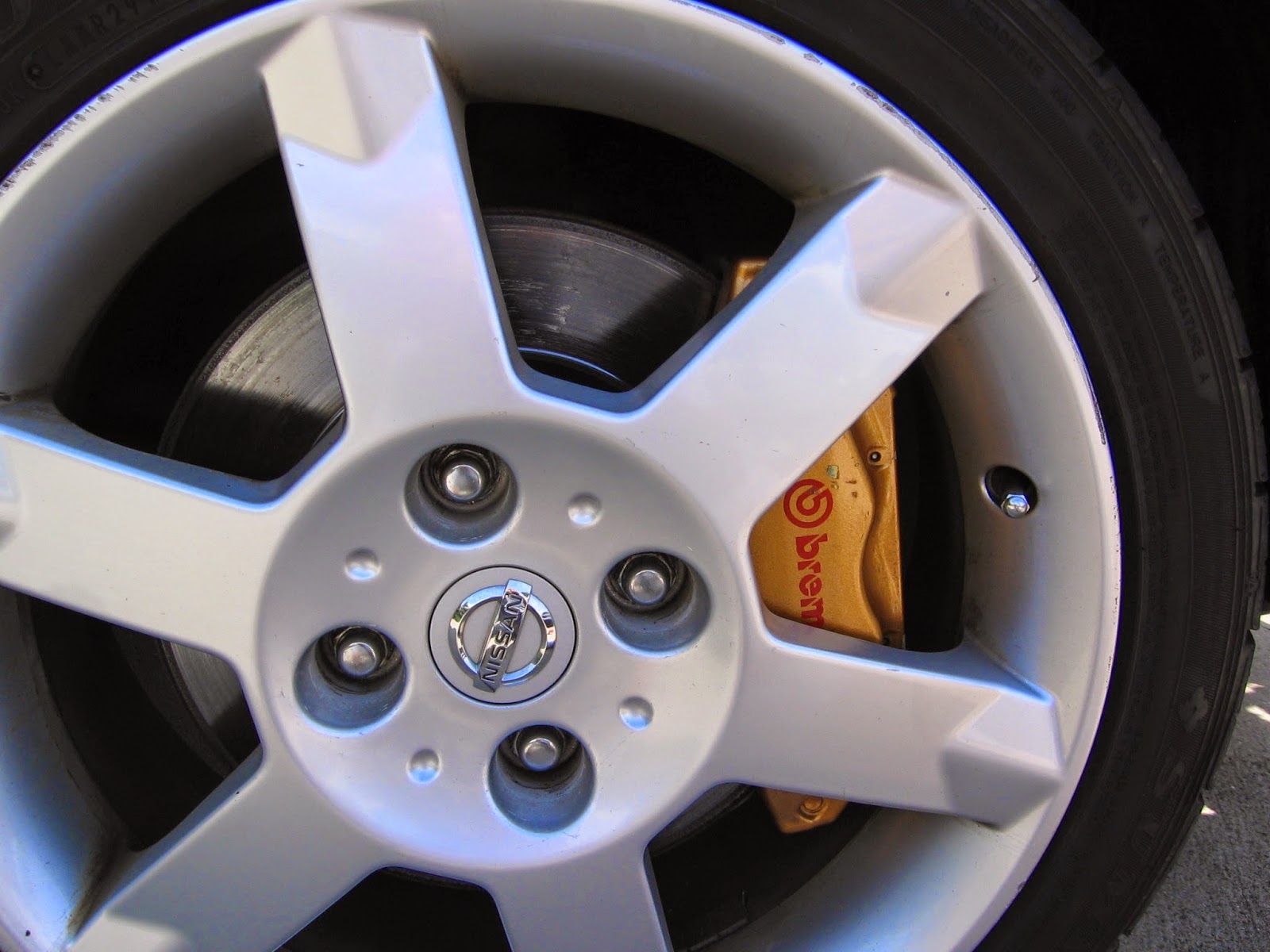
For Sale: 2006 Nissan Sentra Spec V with Brembo Brakes

Hi folks,
I need to start clearing out garage space, so here is  the first of my offerings. The car is in Centerville Ohio. It has been in my family from the beginning, and has 106,000 miles on it. Brembo Brakes, sunroof, 6-speed transmission. A few minor scratches here and there, but otherwise in outstanding condition, as it was well cared for.  Oil changed every three thousand miles. Very good Sumohito 17 inch touring tires. A terrific find for the right person looking or a high performance smaller vehicle in great shape. If interested, call me at 937-435-5120 or email at Jheitmann1@udayton.edu.