Popular Posts

Friday, January 10, 2020

A G-Series Porsche 911 Urban Rally Car!


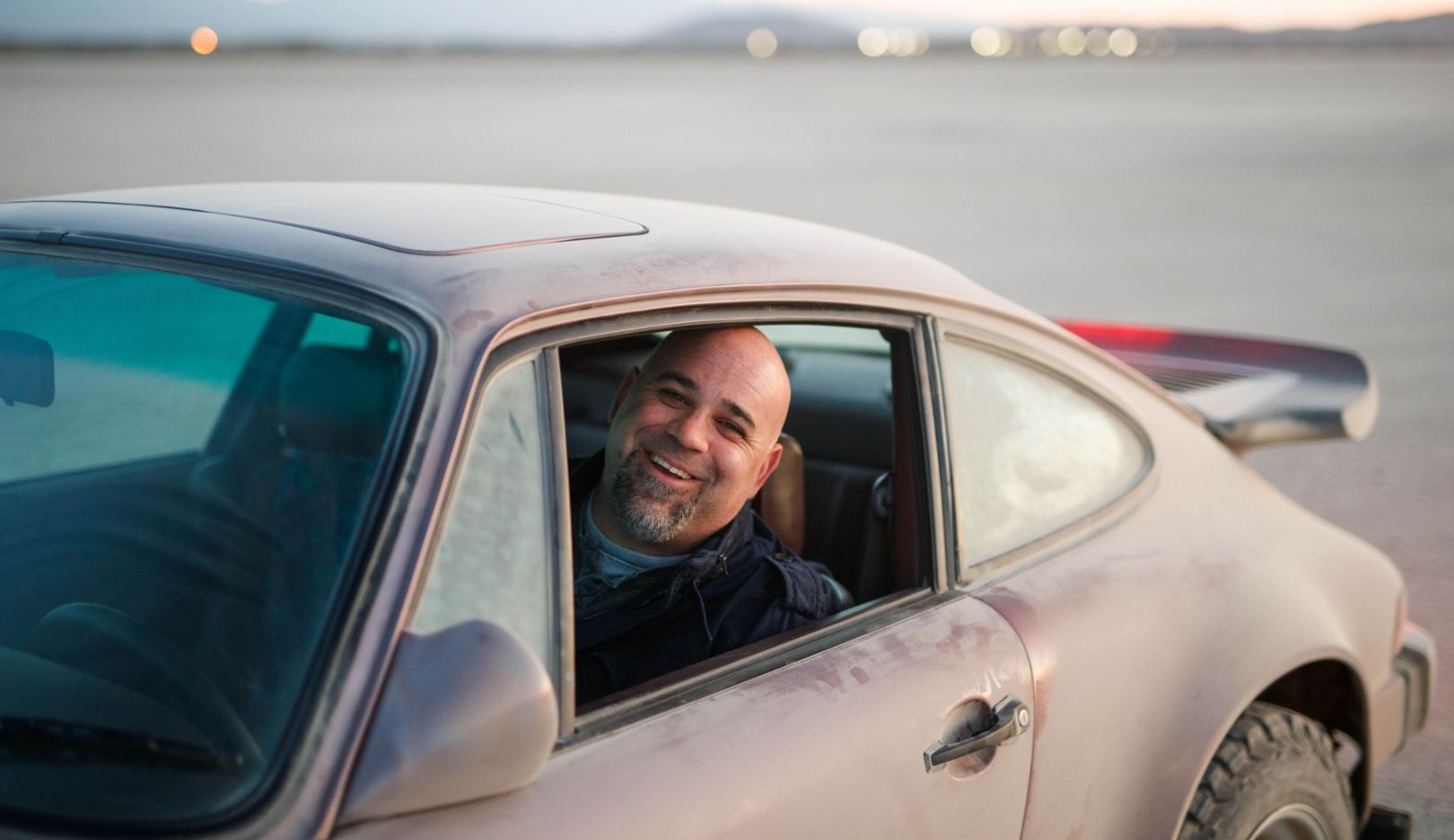
Matt Farah, ’87 3.2 Carrera, 2019, Porsche AG

A Sunset (Boulevard) Safari


Meet automotive journalist Matt Farah’s solution to urban travel. 

Not all city cars are born equal. Well, not according to YouTube star and world-renowned automotive journalist, Matt Farah. Shortly after moving out to the west coast of America from New York, Farah realised that the crumbling infrastructure in LA made his daily drive more like an expedition down a back-country trail than a traditional city commute. From the monstrous expansion joints on Interstate 405 to the cracked roads in downtown Venice Beach, only his Baja inspired pick-up truck was capable of smoothing out the various lumps and bumps. 
”Although we are blessed with places like the Angeles Forest and Malibu Canyons, two of the finest places on Earth to drive a sports car, the city itself is a nightmare,” Farah explains. “The infrastructure is crumbling, repairs are rarely thorough, the freeway expansion joints are a sports car owner’s worst nightmare, and for a city as ‘spread out’ as LA is, it’s awfully crowded all the time. It can be a real challenge in low, modern sports cars.” 
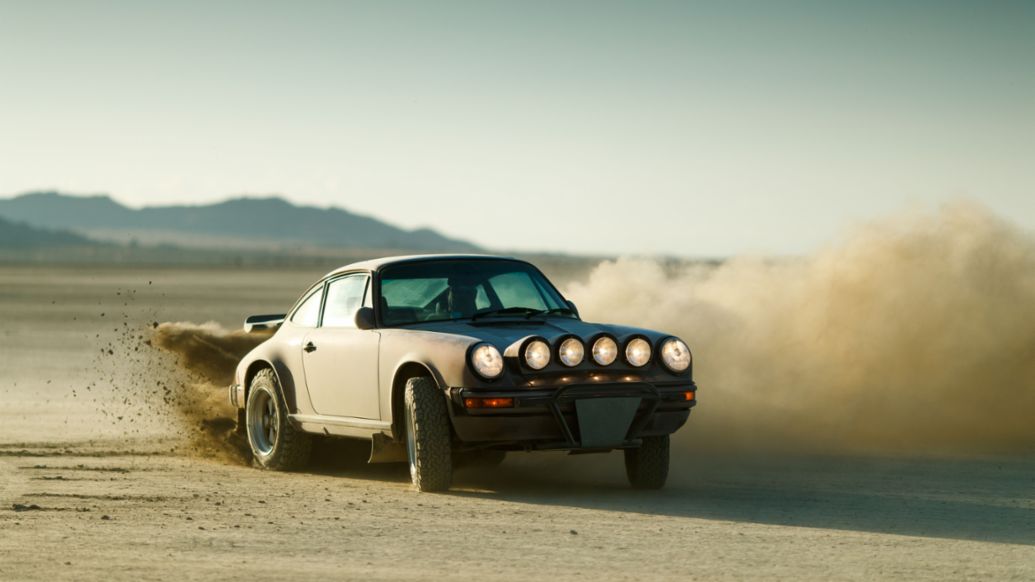
’87 3.2 Carrera, 2019, Porsche AG
Photo: Larry Chen

Which is why his Raptor pick-up with its off-road suspension set-up and huge sidewalls was, as he puts it, a “gamechanger”. But of course, while Baja-inspired trucks ride well, they’re ultimately too unwieldly for tight city streets – even in car-friendly LA. So what was the solution? For Matt, the answer was easy: “I wanted something like the Raptor, but smaller, so the obvious answer was a rally car. Once I drove Leh Keen’s personal Safari 911, it was like a light bulb moment.” 
"For a city as ‘spread out’ as LA is, it’s awfully crowded all the time. It can be a real challenge in low, modern sports cars.” Matt Farah, automotive journalist
A two time Grand Am Rolex GT Champion and lifelong Porsche fanatic, Leh Keen has spent the last half a decade designing and building Safari 911 for people who want the ultimate go-anywhere vehicle. Matt, being a rather well-connected chap, got the opportunity to drive Leh’s first Safari build (that’s right, car No. 1) for his show on the /DRIVE network and although Matt admits the concept, “is totally different to what most people think you should be doing with a 911” he was sold. “I sent him a deposit check almost immediately afterwards.”
As part of what is known as ‘The Keen Project’, Leh is happy to either source a donor car for the customer (the base car must be a G-Body 911 from 1979 to 1989), or they find their own. Matt went with the latter option as he wanted to choose “the colour, the year and the interior.” 
For Matt, it was particularly important to have a 1987-1989 G-body with the G50 gearbox as “it has a more direct shift feel”, so he settled on an ’87 3.2 Carrera in striking Cassis Red; a rare and retro hue that he decided to preserve with an Xpel car wrap, rather than repaint – something the majority of buyers choose to do when moving to a rally spec. 
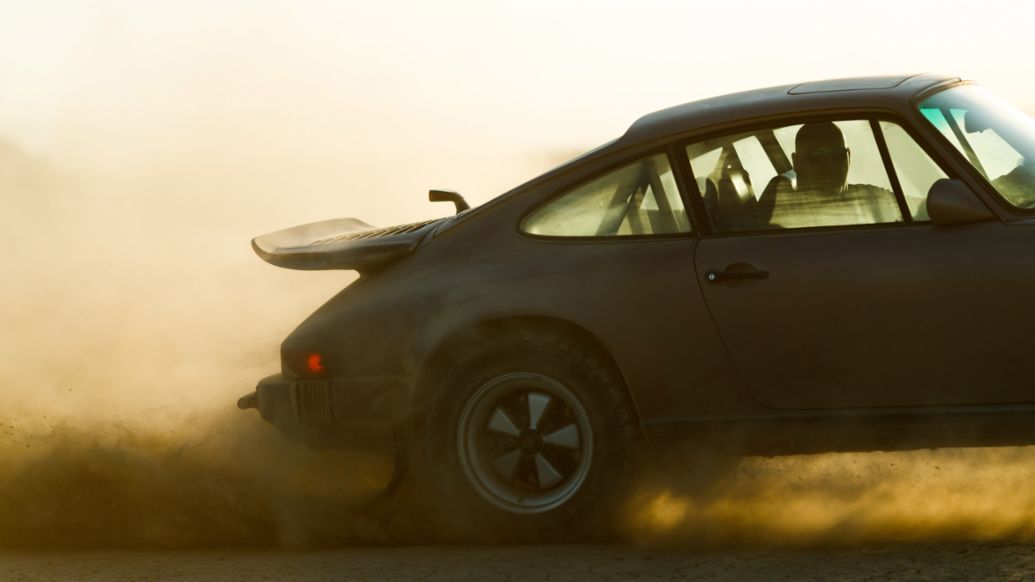
’87 3.2 Carrera, 2019, Porsche AG
Photo: Larry Chen

It was a decision Matt wasn’t sure about at first: “The colour was actually a bit of a controversy. I had originally planned to paint any car I found Dalmatian Blue, which is probably my favourite Porsche colour of all time. I was just looking for any clean coupe with a G50 gearbox and straight body. As luck would have it, the guy I bought the car from was not exactly Annie Leibovitz, and photographed the car at high noon, which makes Cassis Red look horrific; like Cyndi Lauper’s lip gloss. I was sort of down on the colour on Instagram and said I was going to paint it, which caused a bit of a ruckus with the purists. It was priced cheap and seemed to have nothing else wrong with it. When I got there to pick it up and saw that the colour was actually incredible, I decided immediately not to paint it. I frequently get ‘I told you so’ from the fans. Honestly, I’m gonna take some credit for the fact that Cassis Red is cool again.” 
After finding his unusually pristine donor car, it was shipped straight out to Keen in Atlanta for a new interior and the fitment of the Baja-inspired hardware. The parts list reads like a Tamiya brochure: bash bars, skid plates, rally light pods, shaved side door mirrors, tucked bumpers, Braid motorsport Fuchs wheels, Elephant Racing Safari suspension, a Quaife limited-slip differential and BF Goodrich K02 tyres – the same tyres, coincidentally, that are used on his pick-up truck. 
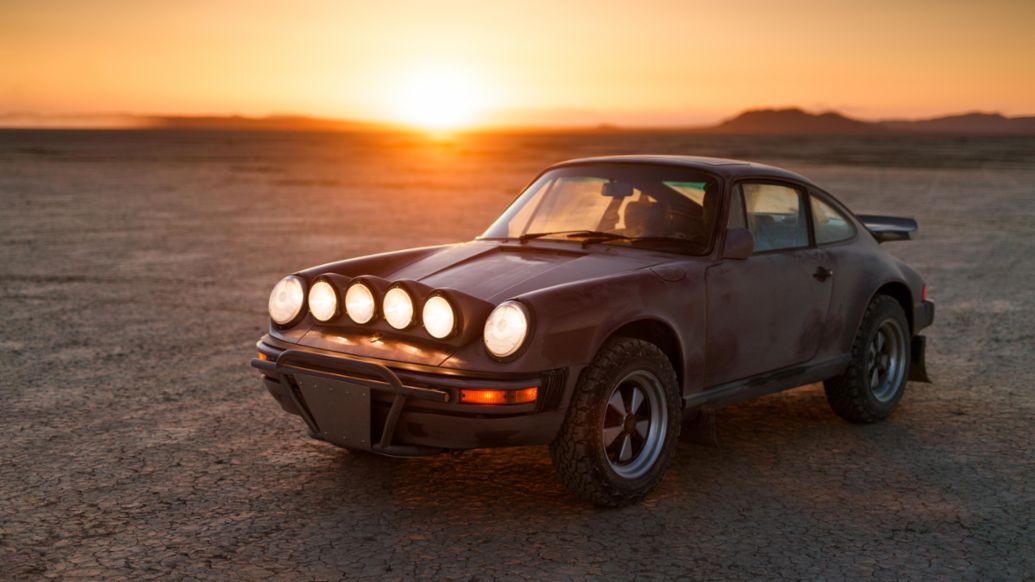
’87 3.2 Carrera, 2019, Porsche AG
Photo: Larry Chen

For the cabin, Matt opted for what he describes as an aggressive interior design: “Leh actually found the commercial grade LA city bus fabric and when I saw it, I was sold almost instantly. The car came with factory Burgundy full leather, and was in incredible condition, so we were able to retain the headliner, door uppers, dash upper, and base carpet. We were nervous if the bus fabric was going to work with the Burgundy leather, but it worked out. The hardest part was the matching leather MOMO Prototipo steering wheel; apparently it took the guy like 20 tries to make it work, and I had a temporary black steering wheel for like six months. But it’s basically the Pasha concept really turned up to crazy, and it’s also super functional because that fabric is designed to last 20 years in a bus; it’ll probably outlast the rest of the car”. 
After some engine work on its return, the car was ready for the road. The finished build couldn’t be further removed from what most drivers would consider to be a ‘city car’, but for Matt, it is perfect. “It is literally my daily driver. I recently loaded three bushels of firewood behind the rear seats. I mean – it’s not meant for attacking the canyons or going to the racetrack, it’s meant for going to the shops, driving to my office, running errands and then taking to the dirt for some fun. It really is the best parts of a Baja truck and the best parts of an air-cooled 911.” 
It seems city cars don’t have to boring. They just have to be fit for LA’s urban safari.
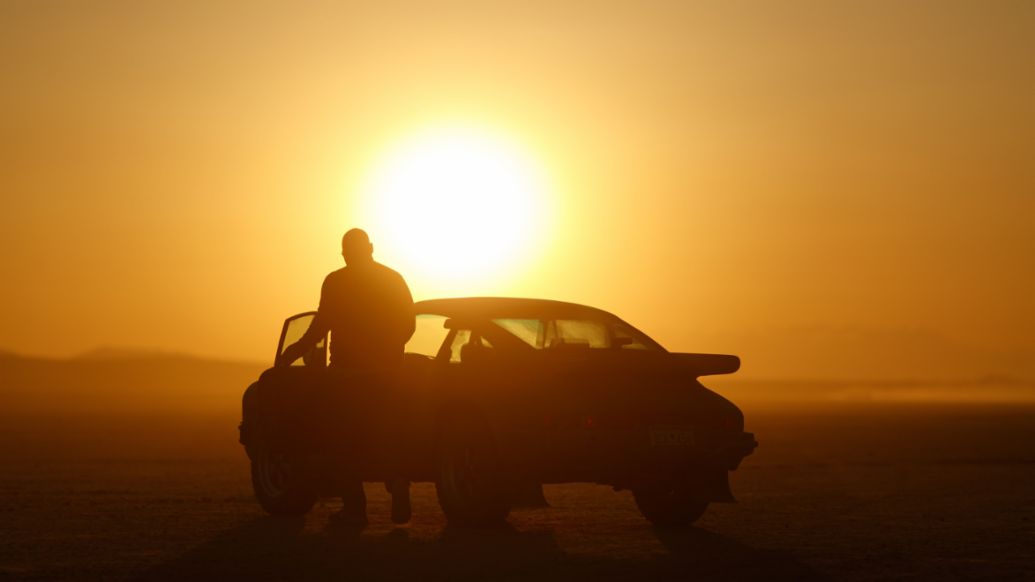
Matt Farah, ’87 3.2 Carrera, 2019, Porsche AG
Photo: Larry Chen

Thursday, January 9, 2020

Hacking into Cars in 2020 -- from Phoebe Wall Howard and the Detroit Free Press


Howard is my favorite automotive journalist -- she writes for the Detroit Free Press. I discussed this issue years ago in my Stealing Cars (Johns Hopkins, 2014).From her article published 1/9/2020.

No, you're not talking crazy.
The threat of regular people having their vehicles carjacked by cyberattackers is real.
Fact is, computer hackers on the other side of the world potentially could — while you’re driving — crash your navigation system, cut your brakes, disrupt your steering or remotely take control of the entire vehicle. Hackers do not need to be in close proximity; all they need is something as simple as internet connectivity. Cars have become heavily connected to the internet.
They are essentially computers on wheels.
That’s why automakers in Detroit, Germany, France, China and Japan are aggressively working to monitor technology protections in private cars,  trucks and SUVs connected to the global internet to provide navigation assistance and so much more. 
“The awareness of cyber security in the entire world has gone up. It’s not a secret there is an existing cyber war between the U.S. and Iran," said Moshe Shlisel, CEO of GuardKnox Cyber Technologies, based in Ramla, Israel. His company is composed of Israeli Air Force veterans who helped pioneer the cyber defense systems still deployed in their fighter jets and missile defense systems.

'National risk'

An even bigger concern is the risk to fleets of vehicles that could cripple the transportation system.
“This would be a national risk,” said Shlisel, who indicated sites of energy companies in the U.S. are also on high alert amid tension between the U.S. and Iran.
The Department of Homeland Security warned this week that the current international conflict “may result in cyber and physical attacks against the homeland and also destructive hybrid attacks by proxies against U.S. targets and interests abroad.”
The federal agency urged companies to “consider and assess” the potential for cyberattacks..
“In the past, to conduct an attack on a specific individual or vehicle, you needed a person on the ground or a tracking device to identify the target. Today, in the era of connectivity, hackers can penetrate a vehicle remotely to find its location and then execute an attack,” Schlisel said.

Now more than ever

Protecting vehicles is like running security protections on your computer non-stop, Shlisel said.
It can be frightening to someone who understands that hackers are working relentlessly from all parts of the world to penetrate our networks and create chaos, and that includes cars.
Holly Hubert, a cybersecurity expert who retired in 2017 from the FBI in Buffalo, New York, said, “Since cars now are run by computers, vulnerabilities can be patched and mitigated just like any other computer. Automotive companies are aggressive in trying to find mitigation strategy for faulty code.”
No question, cyber security experts said, the issue is top of mind now more than ever.
Incredibly, that means competitors in the automotive industry are sharing valuable information and working together on this public safety issue.
“The bad guys share this information all the time. If the good guys aren’t sharing the information, they’re going to get hit,” said Faye Francy, executive director of the nonprofit Automotive Information Sharing and Analysis Center (Auto-ISAC), which specializes in cybersecurity strategies. 
“Very simply, one company’s detection is another company’s prevention,” she said.
One of the reasons the automobile industry brought Francy in to coordinate cyber security is she, too, worked in the aerospace industry. Security for cars and jets have a lot in common.

'Take this very seriously'

“There’s an awful lot going on as far as commitment to implementing cyber security,” Francy said. “As far as automakers go, they take this very seriously, as serious as they take safety. We’re in a nascent area and there’s a great deal of learning going on. We’ve made a lot of strides and there’s still more to be done.”
Remember, cyber crime experts pointed out, wireless technology controls thousands of elements in our cities and connected cars and all those areas are potential targets.
General Motors said it is intensely committed to defending against attacks.
“As vehicle connectivity continues to evolve, GM has continued to strengthen cybersecurity measures.  We have a three-pillar approach which deploys defense-in-depth, monitoring and detection, and incident response capabilities to protect our customers, their vehicles and their data,” said spokesman Chad Lyons.
The company plays a leading role in Francy’s organization, analyzing intelligence and best practices for emerging risks, he said. “The industry has taken product cyber security very seriously and continues to work quickly on new standards and strategies to continue working to stay ahead of the threat.”
GM noted that the new Corvette and Cadillac CT5 actually have new cyber protections.

GM, Ford, and Fiat Chrysler executives all serve on the board of directors of Auto-ISAC. 
“FCA US is deploying both hardware and software technologies to protect against cyber intrusions. But we also improve protection by partnering with others,” says Sandra Hosler, senior manager, vehicle cyber security at Fiat Chrysler.
“Open collaboration with our industry peers through the Auto-ISAC, trust and transparency with our suppliers, and cooperation with security researchers through our bug bounty program, are all critical components of our vehicle cybersecurity program," she said.
It is perhaps because Fiat Chrysler made news in 2015 when Wired magazine wroteabout how researchers hacked a Jeep Cherokee and took control of the windshield wipers, climate system, radio and then cut power to the transmission while the vehicle was being driven by a reporter. 
This particular experiment didn't damage the reputation of Jeep, experts said, it simply illustrated industry-wide vulnerability.
T.R. Reid, spokesman for Ford Motor Co., said, “Ford is constantly creating new technology that improves mobility.  With that comes responsibility for making sure people and their personal information are safe.  We take that very seriously.”
All a hacker needs to identify your vehicle is the computer network.
“You can’t believe how easy it is,” Shlisel said. “They can penetrate the GPS (global positioning system) and understand your location and get your internet address. You can do it remotely by just penetrating the network and do whatever you want.”
If you catch hacking, you can retrofit your car with protections device, he said during a break in activity at the Consumer Electronics Show (CES) in Las Vegas.

Companies must be on alert at all times, cyber experts said The key to safety is establishing a strong defense, monitoring carefully and being prepared for attack.

Wednesday, January 8, 2020

A "Great White Fleet" Ready for Your Last Ride! And Your Widow Can Follow in a Fisker!

From Ed -- 


For whatever reason, recently I've gotten interested in so-called "professional cars" that include funeral cars, hearses, flower cars, and other vehicles used by mortuaries.  You cannot make this stuff up, but this afternoon I decided to take a drive and went to Germantown, Ohio, west of Dayton.  Decided to return home on Germantown Road (Route 4) which, within the last three miles before Dayton, goes through a really deteriorated part of Dayton.  On Germantown Road is a funeral home W. E. Lusain Funeral Home (see website below).  This is a Black-owned funeral home chain that has at least three other funeral homes including one in Birmingham, Alabama.  Lusain also has a funeral home location in Cincinnati.

I am not joking but parked next to the place was their funeral fleet -- see attached photos: Two white Mercedes buses, a white Mercedes truck-like vehicle with open bed that can carry a casket in open-air fashion, another Mercedes SUV also in white, and a white electric Fisker (a funeral home that has a Fisker.......a rare car anywhere but in a Black part of town with a couple of dive bars just down the street?

I would not recommend driving in that part of Dayton, but if you do stop by the Lusian Memorial Funeral Home.  How many widows would like to be driven to the cemetery in a Fisker?

Ed's 1959 Plymouth Fury


Photo attached of a white 1959 Plymouth Fury exactly like my first car and the one that I owned while in college starting in 1965.  This is the car that my stepfather "installed" the heavy-duty spring under the passenger's seat that caused my date to "spring" out of her swivel seat and fall on the dormitory lot pavement.  No second date ensued.  

The car, with push-button automatic and the 318 V-8 engine never failed to start during the three years I drove it.  As I recall, never a mechanical problem during that time.  Never used a drop of oil.

Virgil Exner design at its best and can you believe that on a used car lot in Lewisburg, West Virginia, I bought this car for the grand sum of $450 and it was already six years old?  As I recall it had around 85,00 miles on the clock when I bought it using money I had earned as a newspaper boy.  

Friday, January 3, 2020

A Breakthrough Victory: Mercedes-Benz Monte Carlo Rally , 1-2-3 in 1960.

29th Rallye Monte Carlo, 18 to 24 January 1960. The Mercedes-Benz team at Stuttgart Central Station. From right to left: Roland Ott/Eberhard Mahle, Eugen Böhringer/Hermann Socher, Walter Schock/Rolf Moll and race director Karl Kling with the winning car, a Mercedes-Benz 220 SE (W 111) with start number 128.
29th Rallye Monte Carlo, 18 to 24 January 1960. The team that finally won it: Walter Schock and Rolf Moll in a Mercedes-Benz 220 SE (W 111).


Early post-WWII Mercedes-Benz motorsport successes included the triple victory at the renowned Monte Carlo Rally 60 years ago: the 29th edition of the rally was held from 18 to 24 January 1960 over a route spanning 3567 kilometers. Walter Schock and Rolf Moll led the first German overall victory with the Mercedes-Benz 220 SE (W 111) ahead of Eugen Böhringer and Hermann Socher as well as Eberhard Mahle and Roland Ott – also in 220 SE.
 From the 1950s right until the 1970s, Mercedes-Benz used vehicles that were close to series production highly successfully in rallies. The modifications include the reinforcement of chassis elements, larger fuel tanks, the modification of the engine characteristics as well as adjustments to the transmission and axle reduction ratio. The Mercedes-Benz 220 SE, which won the Monte Carlo Rally 60 years ago, was also prepared in this way. With these “tail fin” saloons, the brand from Stuttgart won the European Rally Championships in 1960 and 1962.

Thursday, January 2, 2020

Top Selling Vehicles in Selected US Metro Areas

From a January 2, 20020 Detroit Free Press article by Mark Phelan:

Top-selling new vehicle in selected metro areas
:Atlanta – Ford F-150
Austin, Texas –  Chevrolet Silverado 1500
Baltimore – Honda CR-V
Boston & Manchester, NH – Toyota RAV4
Columbus, Ohio – Honda Civic
Houston – Ford F-150
Indianapolis – Chevrolet Equinox
Los Angeles – Honda Civic
Nashville – Ford F-150
Oklahoma City -- Chevrolet Silverado 1500
San Antonio – Ford F-150
Washington, DC – Toyota RAV4
Top-selling used vehicle in selected metro areas
Atlanta – Ford F-150
Austin, Texas –  Ford F-150
Baltimore – Nissan Altima
Boston & Manchester, NH – Toyota RAV4
Columbus, Ohio – Honda Civic
Houston – Ford F-150
Indianapolis – Chevrolet Equinox
Las Vegas – Nissan Altima
Miami-Ft. Lauderdale – Toyota Corolla
Nashville – Nissan Altima
Philadelphia – Nissan Rogue
Washington, DC – Toyota Camry